
I cannot believe Congress looked at the transfer portal — the one mechanism that gave college athletes leverage over programs that exploited them — and decided the problem was that athletes had too much of it. The Protect College Sports Act doesn’t protect college sports. It protects the people who profit from college sports. And if you can’t see that after the Senate Commerce Committee voted 19-9 to advance this thing on June 18th, I don’t know what to tell you.
Here is what the bill actually does. Under the Protect College Sports Act’s transfer portal restrictions, athletes get one free transfer. One. After that, sit out a full year. Unless your sport gets discontinued, your coach bolts, or you were sexually assaulted. Those are the exceptions. Think about that framing for a second. The bill’s drafters apparently sat in a room and said, “What are the absolute worst-case scenarios we’ll allow a kid to leave for?” Sexual assault made the list. “My offensive coordinator quit” did not. “I’m stuck at a program where the culture is toxic and a better opportunity exists” did not. That’s the design. That’s the intent.
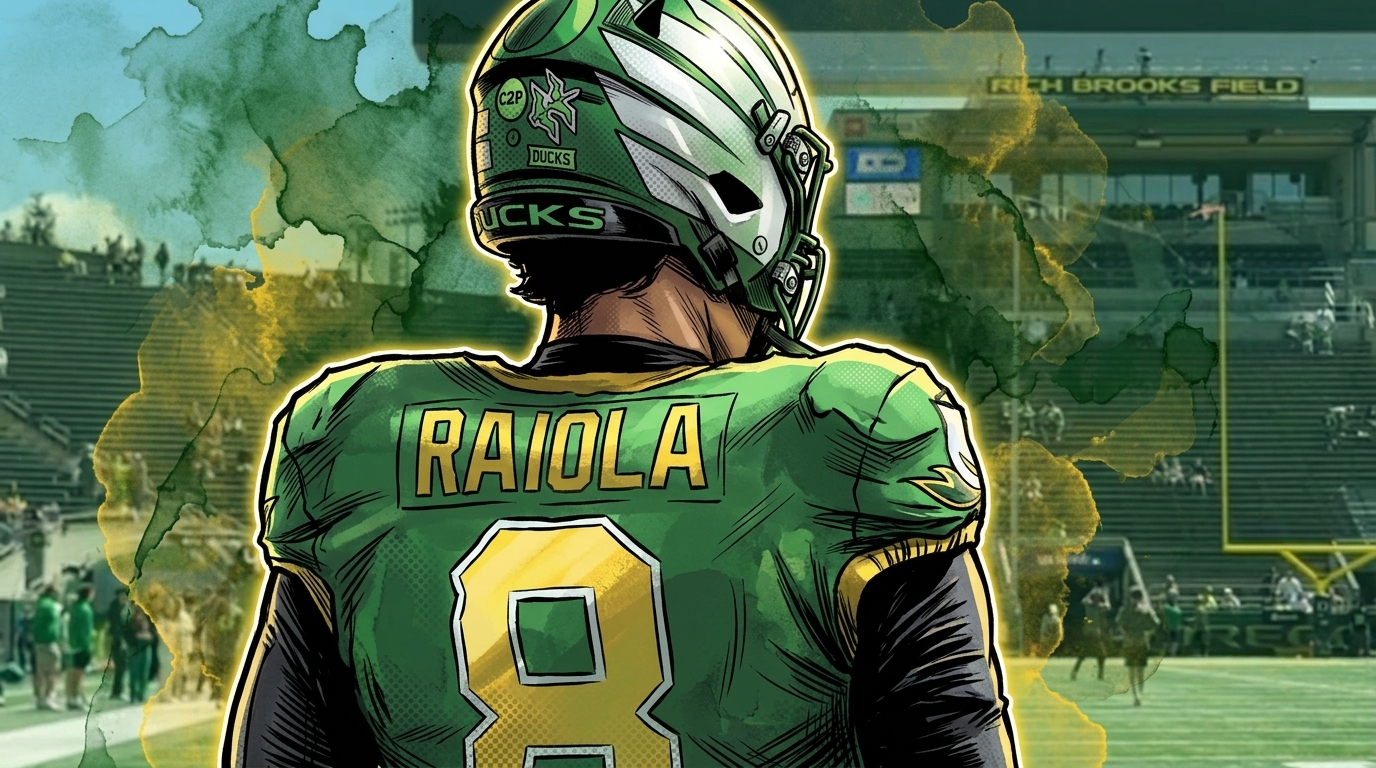
Dylan Raiola transferred from Nebraska to Oregon in January 2026 after breaking his fibula versus USC, after going 6-3 as a starter. A reasonable move. Under this bill, his first transfer is still technically free, so he gets through the gate. But the player who already used their one transfer to escape a bad situation? They’re done. They eat a year. They stay. Darian Mensah is the more instructive case: Duke sued him in January 2026 to block his portal entry, citing a clause in his NIL contract worth up to $4 million requiring him to stay. A North Carolina judge denied the restraining order. Mensah committed to Miami. Now imagine he’d already transferred once before. Under this bill, Duke’s lawsuit becomes secondary. The year-in-purgatory rule does the work for them. You don’t need courts when Congress hands you the cudgel.
The bill also grants the NCAA an antitrust exemption, federally immunizing it to enforce salary caps and eligibility rules that courts previously struck down. The Supreme Court’s Alston decision already made clear the NCAA couldn’t keep doing what it was doing. This bill says: never mind, they can. Even the SEC and Big Ten opposed it — and those two conferences have not agreed on anything since approximately the invention of the forward pass. When the SEC and Big Ten are on the same side as the athletes saying this bill is wrong, you’ve united every stakeholder in college sports against you, except the NCAA.
Ramogi Huma at the NCPA called this “a Trojan Horse Attack on college athletes’ rights” and said it “would play athletes and organized labor for fools.” All three major athlete advocacy groups oppose the bill. The lone athlete on the five-person Senate hearing panel, Utah football’s Lance Holtzclaw, said decisions should be made “with athletes, not for them.” One athlete. Five panelists. Congress held a hearing on athlete rights and couldn’t manage to populate the table with more than one of them.
Senator Maria Cantwell, one of the bill’s bipartisan architects, offered this: “This bill puts new tools and new rules on the table to rein in runaway costs while still preserving NIL, revenue sharing, and women’s and Olympic sports.” Rein in runaway costs. That’s what we’re calling it. The “runaway costs” are kids getting paid for the first time in a century of a system built specifically to prevent that. The “runaway costs” are NIL deals like Cameron Coleman’s that compensate athletes for their labor. The solution to costs running away is not to lock the people generating the revenue inside the building.
Senator Chris Murphy at least had the clarity to say what this actually is:
https://x.com/ChrisMurphyCT/status/2059749298749731104
Bipartisan. Senators Cantwell, Cruz, Schmitt, and Coons. Two Democrats, two Republicans, one unified message: the transfer portal gave athletes too much power and we are taking it back. The Protect College Sports Act transfer portal restrictions passed committee 19-9. That is not a close vote.
What makes this galling is the NCAA’s enforcement track record. They spent decades failing to enforce anything coherently, which is why the Alston case happened, which is why the transfer portal exists. Now Congress hands them back the antitrust immunity courts stripped away, plus a federal mechanism to punish athletes who move. The bill still has to clear the full Senate. It may die in the usual spectacular ways Congress manages to fail at things. But the committee voted 19-9, and the word “bipartisan” is being deployed earnestly. If this passes, the one mechanism athletes had to force accountability gets dismantled by the same people who spent years ignoring them. Protect college sports, indeed.