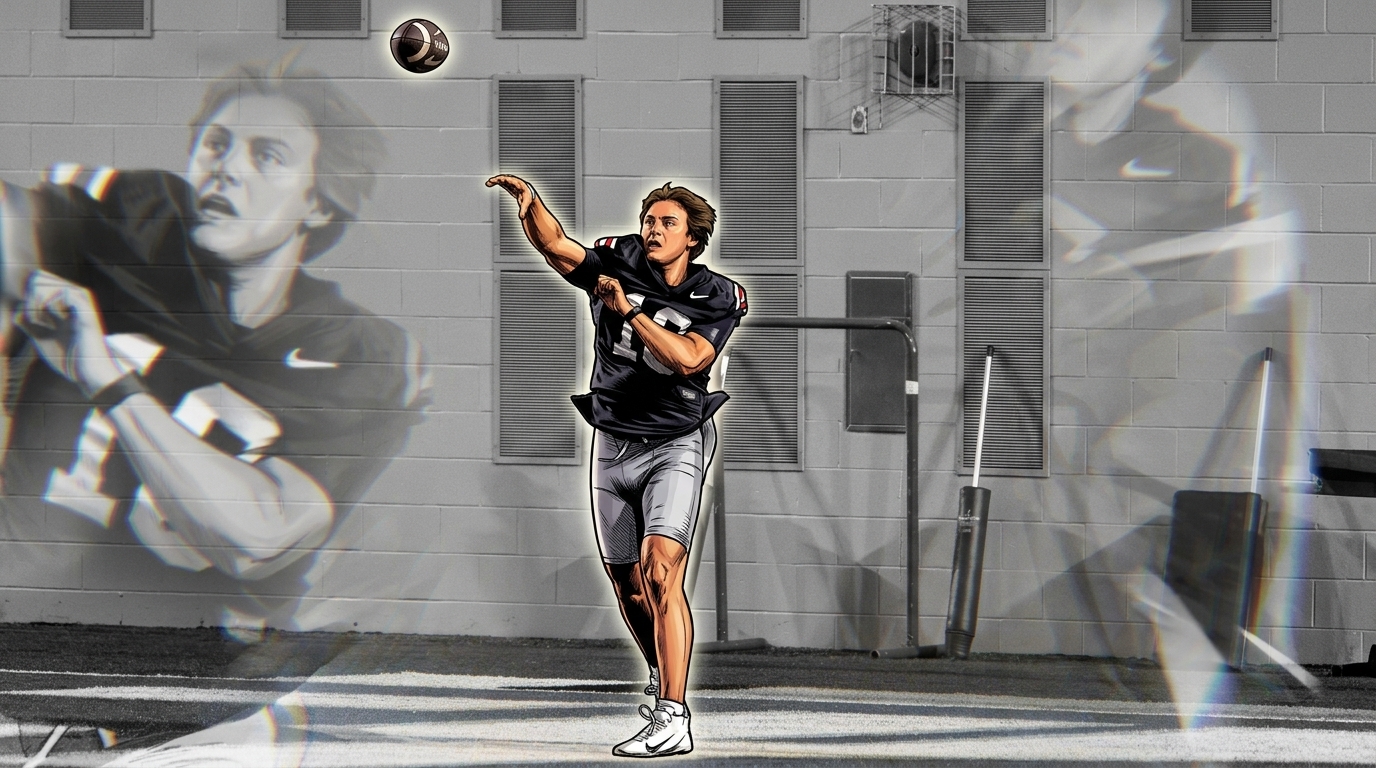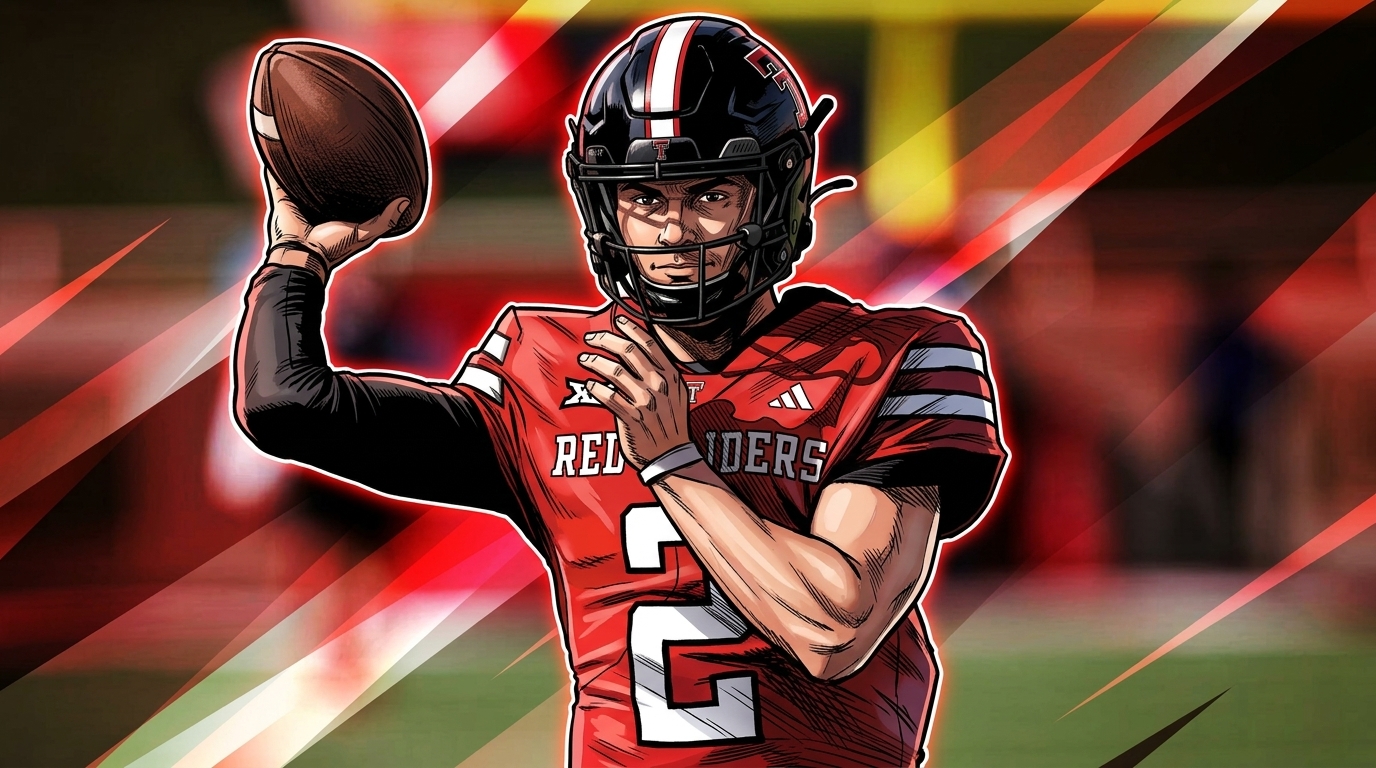

The most clarifying thing about the Brendan Sorsby gambling NCAA saga is that it ended with a conference suing its own member school, an attorney general threatening $200 million in antitrust liability, and the actual quarterback in question simply declaring for the NFL supplemental draft and going home.
Think of college athletics enforcement as a controlled demolition. There are permits to pull, engineers to consult, a carefully staged sequence of charges. The whole thing is supposed to come down in a tidy pile while everyone stands back at a safe distance. What happened here is that every party showed up wearing a hard hat, issued a press release about structural integrity, and then lit a fuse pointed at a different wall. Nobody wanted the building to come down cleanly. They wanted the debris field.
Sorsby, a quarterback who transferred through Indiana and Cincinnati before landing at Texas Tech, placed more than 9,000 bets totaling at least $90,000 on professional and college sports over four years at three universities. At least 40 of those bets were on Indiana football — during the 2022 season, when he was a redshirt freshman on the roster. He also routed money through people in other states to bet illegally from Texas, where sports betting is prohibited. The NCAA ruled him permanently ineligible. A Texas judge handed him a temporary injunction on June 8, allowing him to play in 2026 pending a decision on his lawsuit against the NCAA.
That’s when the demolition went sideways.
Texas AG Ken Paxton sent the Big 12 a letter on June 11 threatening that conference and its member schools with antitrust exposure: “The total exposure — for both the Big 12 and its members, jointly and severally — will be substantially more than $200 million.” The letter was signed by the chief of the AG’s antitrust division. Paxton had found his headline. The Big 12, not to be outdone, filed a 47-page federal lawsuit against Texas Tech and Ken Paxton on June 15 in U.S. District Court in Dallas; Texas Tech, on the same day, informed Sorsby he would not be allowed to play in 2026 regardless of what any judge said. The Oklahoma AG called Paxton’s antitrust arguments “meritless.” Georgia and Nebraska announced they would boycott future games against Texas Tech.
The controlled demolition was now producing shrapnel in every direction.
https://x.com/PeteThamel/status/2064101209128960404
What’s useful to notice about the Brendan Sorsby gambling NCAA story is that nobody in it was actually trying to resolve anything. The NCAA wanted its permanent ineligibility ruling respected; Paxton wanted a culture-war fight with a sports governing body; the Big 12 wanted leverage over a member school that had embarrassed it; Texas Tech wanted its bowl eligibility and its quarterback. Every party issued statements about the integrity of college athletics. Every party meant something different by that phrase, and none of them meant the obvious thing.
Sorsby applied for the NFL supplemental draft — NBC Sports reported Texas Tech had nudged him in that direction — and on June 18 filed a voluntary motion to dismiss his lawsuit against the NCAA. The lawsuit that had set all of this off, gone. The case that had produced a federal injunction, a $200 million antitrust threat, and a conference suing its own school, dropped without prejudice as the QB walked out the door.
https://x.com/RossDellenger/status/2066741878398308626
Big 12 commissioner Brett Yormark offered the institutional eulogy: “It’s been a challenging week for both our conference and the college athletics landscape. The Big 12 looks forward to moving ahead as 16 strong. We wish Brendan Sorsby success in his future endeavors.”
Sixteen strong. There is a federal lawsuit pending against one of those sixteen schools, filed by the conference itself, that nobody has any obvious reason to resolve now that the quarterback is gone. The building came down, all right. The debris is still on fire, and the safety inspectors are arguing about whose permit was valid while the next demolition crew pulls up to the curb.