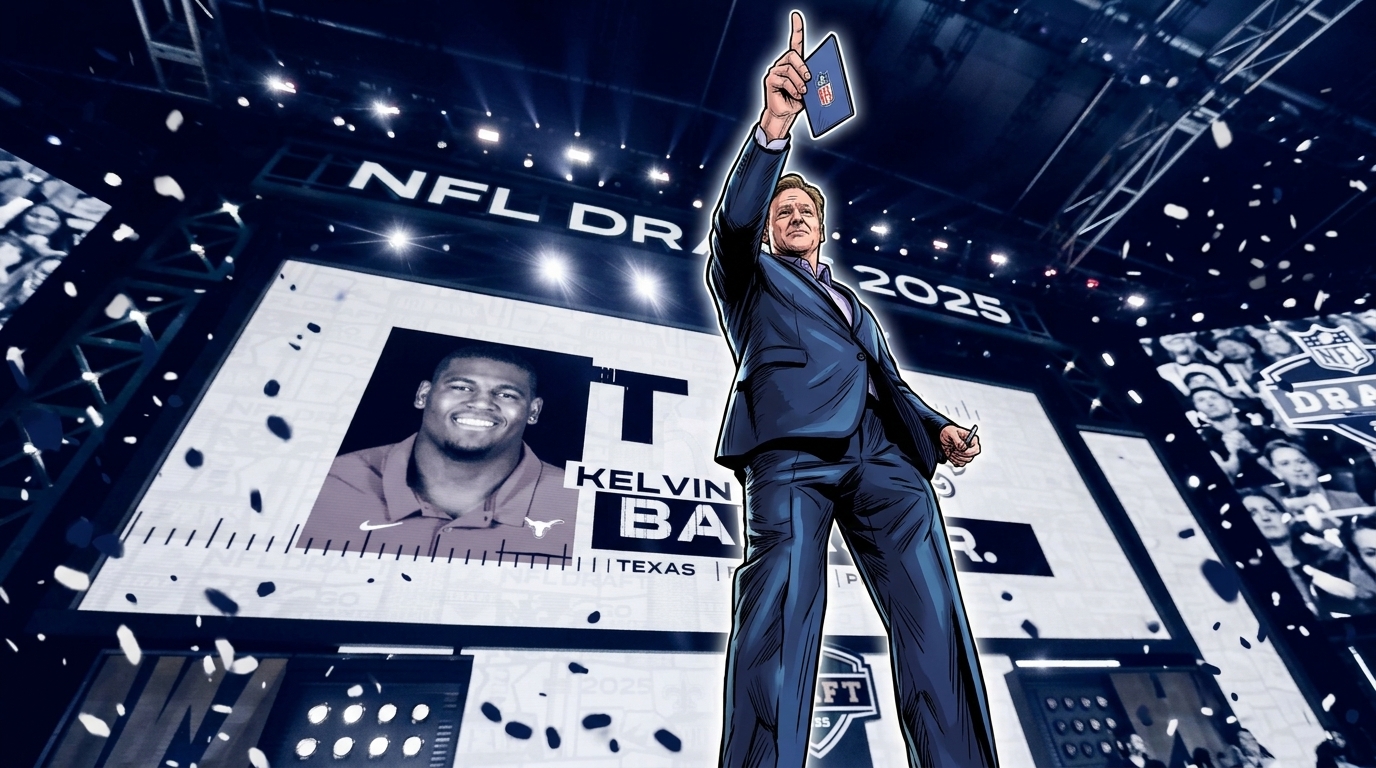

The NFL didn’t have an official sportsbook for five months, and it solved that problem by finding a third one. DraftKings, FanDuel, and Caesars all fell off the league’s books at midnight on March 31, when the three deals lapsed without renewal; together they’d been worth close to $1 billion across the prior five seasons, which is a strange amount of money to just let walk out the door over a pricing dispute.
That’s what it was, though. DraftKings and FanDuel balked at a price increase for official streaming data from Genius Sports, the league’s exclusive data distributor. No data feed, no integrity-approved odds, no ad inventory. Five months of silence followed, which the NFL was happy to let you read as principle. It wasn’t. It was a landlord letting the lease run out so he could show the apartment to new tenants at a higher number.
On Thursday, the NFL announced renewed multiyear terms with both DraftKings and FanDuel, plus a brand-new deal with Fanatics as a third official operator; Caesars did not get invited back. Fanatics’ side of the paperwork was reportedly done first, around August 18-19, ahead of DraftKings and FanDuel actually finalizing theirs. Awful Announcing put it about as bluntly as a trade outlet can: Fanatics, on the outside looking in on one of the league’s three coveted slots last season, “did not hesitate to pay the price” Genius Sports was asking. Translation: the new tenant signed the lease at the higher rent, and that’s what got the old tenants back to the table.
NFL EVP Renie Anderson framed the whole ordeal as a matter of principle rather than leverage: “In order to advertise in our game, you also have to have official data, because you have to agree to our integrity requirements.” Sure. The integrity requirements are real enough — operators are barred from offering bets tied to officiating calls or injuries, which is a good rule and one the league deserves credit for holding the line on. But integrity wasn’t what kept three sportsbooks off the league’s air for five months. Money was, and it’s a little rich to dress up a billing dispute as a stand on principle.
The terms themselves read like a landlord’s checklist: access to official league data, in-game advertising rights, use of team and league trademarks. What the operators don’t get is any of that IP extended to their prediction-market products, which is the NFL quietly drawing a line around the one gambling-adjacent business it doesn’t want its logo anywhere near. DraftKings keeps its separate arrangement as ESPN’s official sportsbook and odds provider; Fanatics picks up an extra title as the league’s official online casino marketing partner, on top of the sportsbook slot. Two operators built to keep people betting just got handed more real estate inside NFL broadcasts, not less.
FanDuel president Christian Genetski’s statement leaned on the relationship angle: “for the last five years, the NFL has been an important partner in helping build a legal and regulated sports betting industry.” That’s a nice way to describe five seasons of ad inventory and a five-month standoff over data fees. Here’s Adam Schefter reporting the news as it broke:
https://twitter.com/AdamSchefter/status/2092949463211909124
Under the old three-way arrangement, the league was reportedly pulling in something like $200 million combined annually from its sportsbook partners. Nobody’s disclosing what the new numbers look like, and the new Fanatics deal is non-exclusive, so there’s nothing stopping a fourth operator from showing up next offseason if the price is right. This was never a two-slot business with a hard ceiling.
Confronting the NFL’s gambling problem was never on the table; patience and a rent increase did the job instead. Five months of dead air got framed as the league taking a beat to think about its relationship with betting money, and the beat ended with more betting money on more shelf space than before. The lease got longer. The building got a third tenant. Nobody downsized.