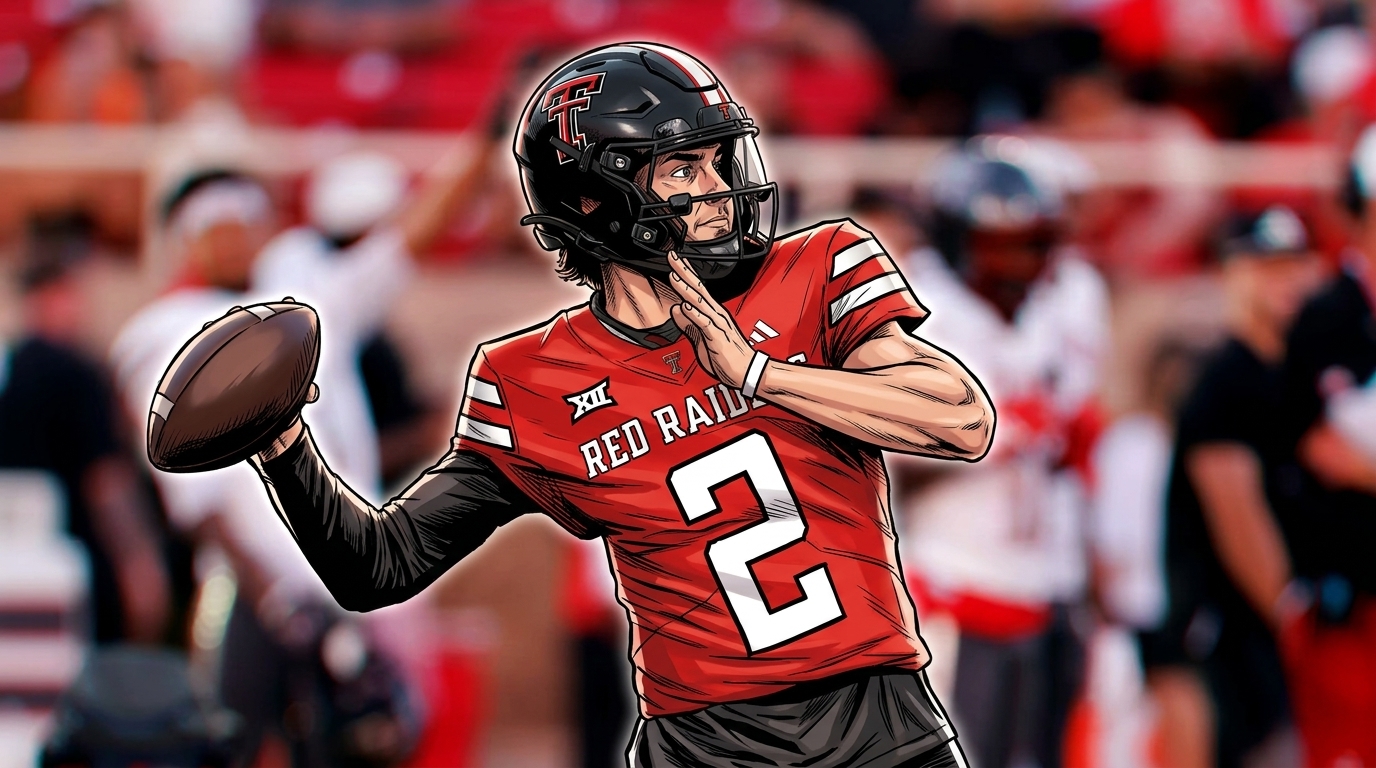

The NFL declined to hold a supplemental draft this year, and I want to be precise about what that means: a 22-year-old with a documented gambling addiction, who checked himself into inpatient rehab and completed 35 days, is now barred from entering the league because he gambled. This same league paid nearly $1 billion to DraftKings, FanDuel, and Caesars Entertainment for the exclusive right to put those companies’ logos inside NFL.com, inside the NFL App, inside every crevice of the product the NFL sells to the public. The NFL normalized sports betting for an entire generation of fans and then used the existence of sports betting to end Brendan Sorsby’s career before it started. That’s not hypocrisy in the conventional sense. That’s load-bearing hypocrisy. The whole structure depends on it.
Sorsby is not a sympathetic case on the numbers. He wagered more than $90,000 according to ESPN while playing at three different programs, placed 40 bets on Indiana football games as a true freshman on that team, and the NCAA declared him permanently ineligible in May 2026 for “a sustained pattern of improper gambling activity.” He set up accounts under intermediaries’ names. It may have violated state criminal law. The enforcement was sweeping. Nobody’s pretending the conduct was minor.
What the NFL actually did with that is something else. NFL general counsel Larry Ferazani called the issues “too significant, and too closely tied to the League’s core integrity interests.” Then the NFL gave the rejection letter to media outlets before it was delivered to Sorsby. He learned he was banned from news reports. Ferazani’s letter also criticized Sorsby for submitting his application only three business days before the deadline “without supporting documentation,” even though attorney Jeffrey Kessler said the NFL previously told them only “a short application” was required and never requested anything more. The NFL then told Kessler’s client to prepare for the 2027 Annual Draft, which is the institutional equivalent of telling someone you set on fire to reapply when the burns heal.
Kessler called the decision “a violation of the CBA and the law” and said he’d be going to the NFLPA immediately.
https://x.com/TomPelissero/status/2069543729686605900
“Integrity of the game” has been doing heavy lifting in American sports for decades, and it never means what it says. It means: we have drawn a line, and the line exists to protect us from whatever specific threat you represent. Sorsby’s threat is an addicted kid whose gambling crossed the wrong party’s interests — not the bookmakers the NFL pays, but the sportsbook-adjacent category of athlete gambling that looks bad in the integrity report. The line isn’t moral. It’s commercial. Sorsby bet on his own sport without a license. DraftKings bets on the NFL sport with an exclusive license worth hundreds of millions. One of them has a logo in the NFL App.
The NFL’s approach to its own players’ off-field conduct has never supported the idea that “integrity” gets applied consistently to anyone. How the NFL handles its own players’ off-field conduct is a full story by itself. What gets a player suspended, what gets a player a second chance, and what gets a player barred from the league entirely is a function of who is being protected from what. Sorsby is now the example. He’s the guy the NFL points at to prove the gambling partnerships are clean.
The scale of legal sports betting the NFL helped normalize keeps growing. The record betting numbers this summer exist in part because leagues spent the last decade making gambling a standard feature of watching sports. The NFL led that. They recruited the sponsors, took the money, built the integrations. A 22-year-old who grew up watching that normalization, who has a documented addiction and completed treatment, cannot now be excluded from the league on the grounds that gambling offends core integrity. Those words don’t survive contact with the NFL’s own revenue line.
Sorsby threw for 7,208 yards and scored 82 total touchdowns at Cincinnati and Indiana before landing at Texas Tech. ESPN had him ranked the No. 1 transfer quarterback before everything fell apart. He spends the next year waiting for a 2027 draft class that may not have room for him. Larry Ferazani’s letter gets filed somewhere. The DraftKings logo stays on NFL.com. I don’t know what Sorsby does from here, but I know what the NFL does: exactly this, again, the next time someone useful needs to be proof that the money is clean.