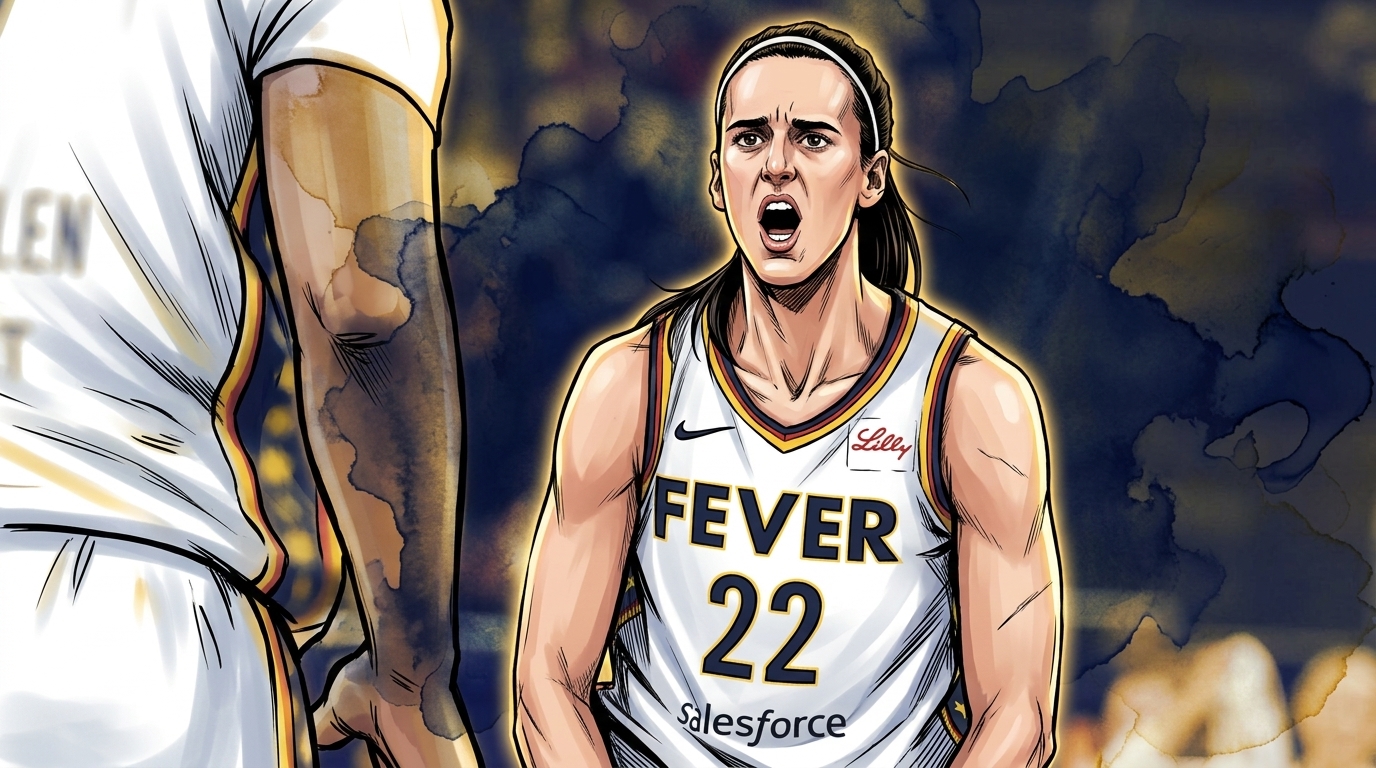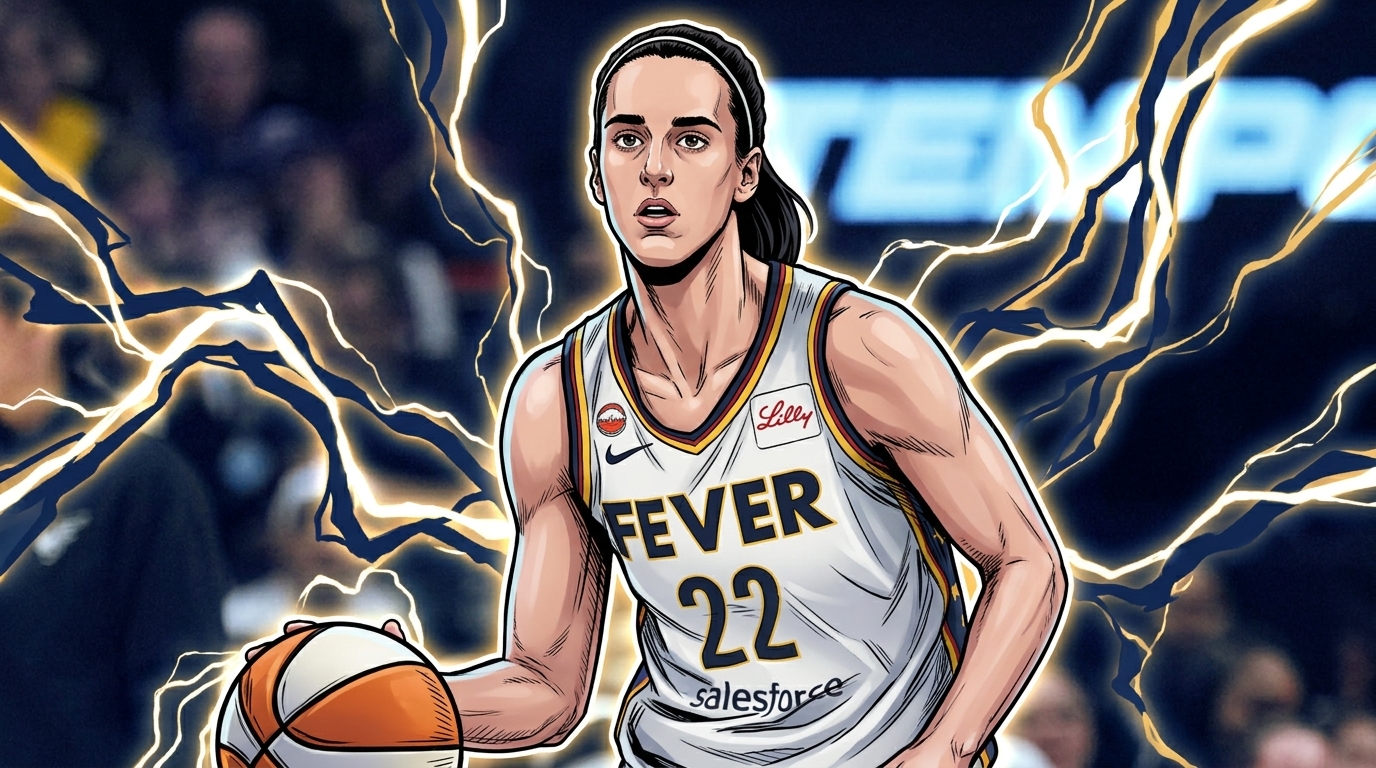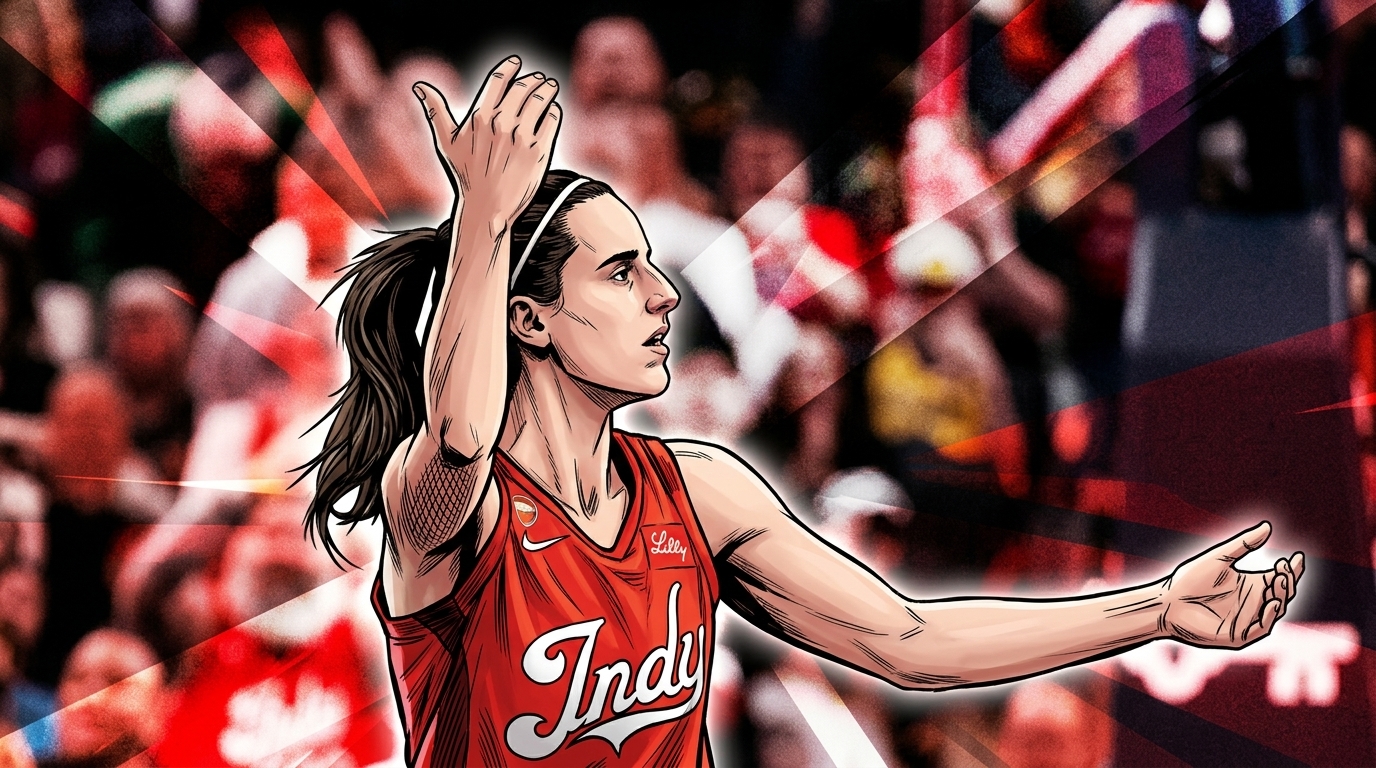

Here is what actually happened on May 30: Indiana Fever head coach Stephanie White challenged her star player about defensive positioning during a timeout, pulled her from the game for roughly two and a half minutes, and then put her back in. Portland won 100-84. Clark finished with 6 points on 1-of-7 shooting in 22 minutes.
That’s it. That’s the whole thing.
What happened next is the story. Skip Bayless reported, based on nothing, that White had been fired. Jason Whitlock claimed on X that White and defensive assistant Briann January had “sabotaged” Clark — intentionally — during a regular-season game they were also trying to win. The conspiracy cycle ran at full speed for 48 hours, until Clark stood at a podium Monday and said, flatly, that people were “blatantly wrong about a lot of things.”
https://twitter.com/ScottAgness/status/2057210069138256297
That credential incident is the actual tell. Scott Agness has covered the Fever since 2013 for Fieldhouse Files. In mid-May, the Fever revoked his press credentials after he tweeted that Clark’s absence from a game was part of a “strategic management plan for the season.” The organization called it “inaccurate and unsubstantiated.” The WNBA issued the Fever a formal warning. The Pro Basketball Writers Association objected in the strongest possible terms. The Fever subsequently listed Clark as “probable” on injury reports — which is to say, they punished a reporter for accurate reporting.
Not the sideline exchange, which was coaching. Not the loss, which happens. The tell is an organization that, when faced with a reporter writing something true about how they were managing their most important asset, chose to revoke his credentials rather than explain themselves.
The Indiana Fever franchise is worth $560 million. That is up more than 500% since Clark arrived in 2024. Every one of their 44 regular-season games in 2026 airs on national television — ABC, ESPN, CBS, NBC, Peacock, Amazon, ION, USA Network, NBA TV. No other WNBA team is anywhere near this arrangement. It is not a basketball schedule. It is a content calendar.
Stephanie White is trying to coach inside a studio.
White is not unprepared for this job. She led Indiana to the WNBA Finals in her first season as a head coach back in 2015 — the first rookie WNBA coach to reach the Finals. She coached the Connecticut Sun to back-to-back playoff appearances. She knows what she’s doing. What she is doing right now is trying to hold a 4-4 basketball team accountable for giving up too many points in the paint, watching Clark get targeted in isolation by expansion teams, and correcting defensive positioning in real time on a sideline that has seventeen cameras on it.
The Caitlin Clark-Stephanie White conflict, such as it is, is a conflict between two incompatible missions operating simultaneously inside the same franchise. One mission: maximize Clark’s visibility and protect the commercial machinery. The other: win basketball games through accountability and execution. These missions require fundamentally different decisions, and the Fever, consistently, have made the commercial decision first.
You can see the shape of it everywhere once you look. Clark earns $528,846 from the WNBA; she earns approximately $16 million annually in endorsements. Roughly 99% of her income comes from outside the sport. That is not a criticism of Clark — it’s a description of the situation the Fever created. They needed Clark to be available, healthy, and visible far more than they needed her to accept hard coaching. The two things are not always the same.
Clark, for her part, was consistent and credible at the Monday presser. “I ride for Steph. I ride for these girls. Steph has my back more than anybody.” She was not performing; she was annoyed at everyone around her for manufacturing a crisis where she didn’t see one. “Two people being competitive. Two people that really want to win.” White said the same thing from the other side: “My relationship with Caitlin is great. I love Caitlin.” White also noted, with some restraint, that this exchange probably doesn’t become a news cycle “if you’re watching it in men’s sports most of the time.”
They’re both right. The relationship is fine. The organization is not.
Indiana is 4-2 at home this season. They are 0-2 on the road, both losses to teams they beat at home earlier in the year. The team ranks 7th in offensive rating and 8th in defensive rating. Aliyah Boston is still on a minutes restriction. Sophie Cunningham said after the Tuesday team meeting — a two-hour session that started as a coaches’ reset and turned into something more player-driven — that “we’re just too soft right now, and that’s not what our identity is.”
That is a basketball problem. It has basketball solutions. White knows them.
What White cannot solve is the 44-game national TV slate, or the credential revocations, or the fact that every timeout with Clark in it carries the implicit weight of a $560 million valuation. The dysfunction in 2026 is not that the coach and the star player disagree — competitors disagree constantly, that’s what the team meeting was for. The dysfunction is that the organization built an entire commercial empire around Clark’s arrival and then tried to run a basketball team inside it.
Building a franchise around a player and building a franchise for a player are two different projects. The Fever only completed one. For more on the machine built around Clark consuming itself, see Dani Cortez’s companion piece from this morning.
Clark said she cried in White’s arms when she got hurt in 2025. “That’s somebody I will ride for for the rest of my life.” The Caitlin Clark-Fever coaching conflict that consumed 48 hours of sports media last week is not located between those two people. It is located between what this organization decided it wanted to be and what it actually needed to become.