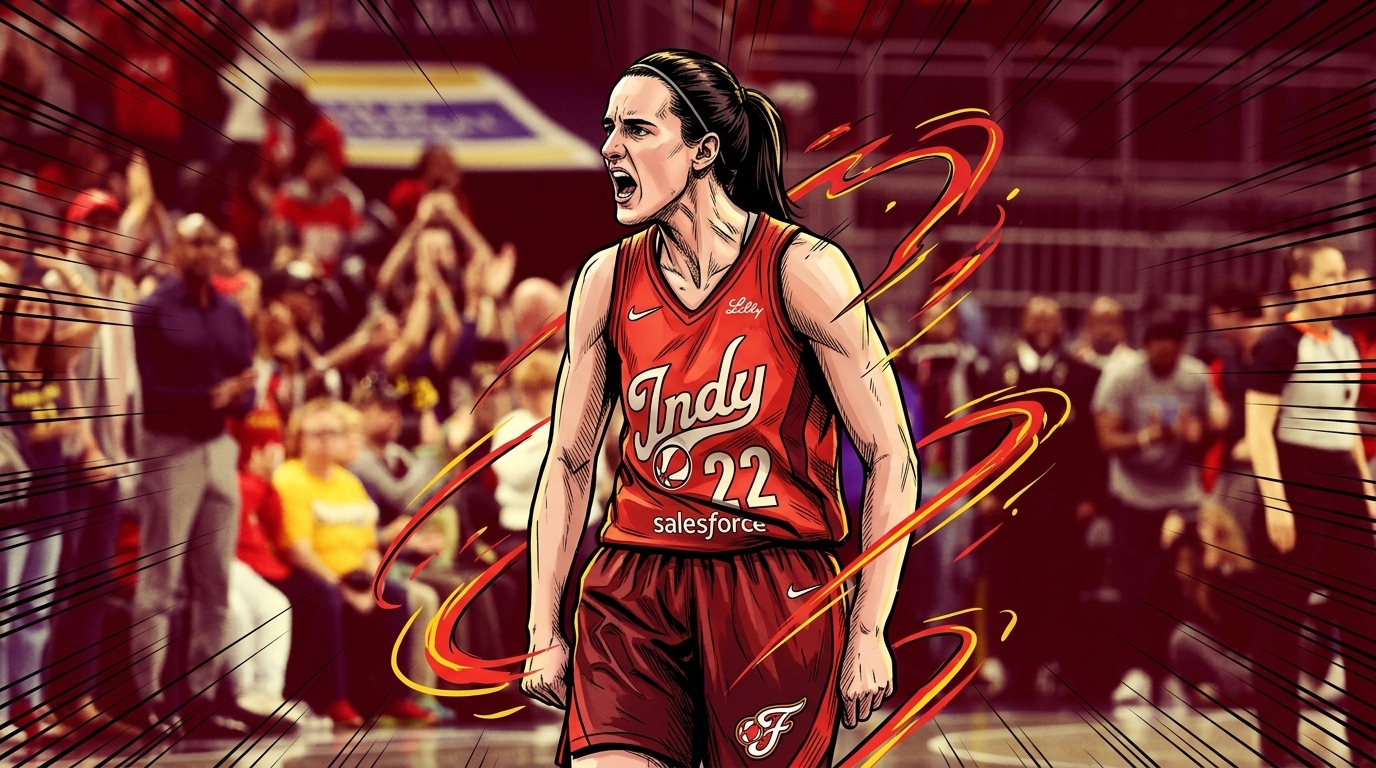

Start with Skip Bayless.
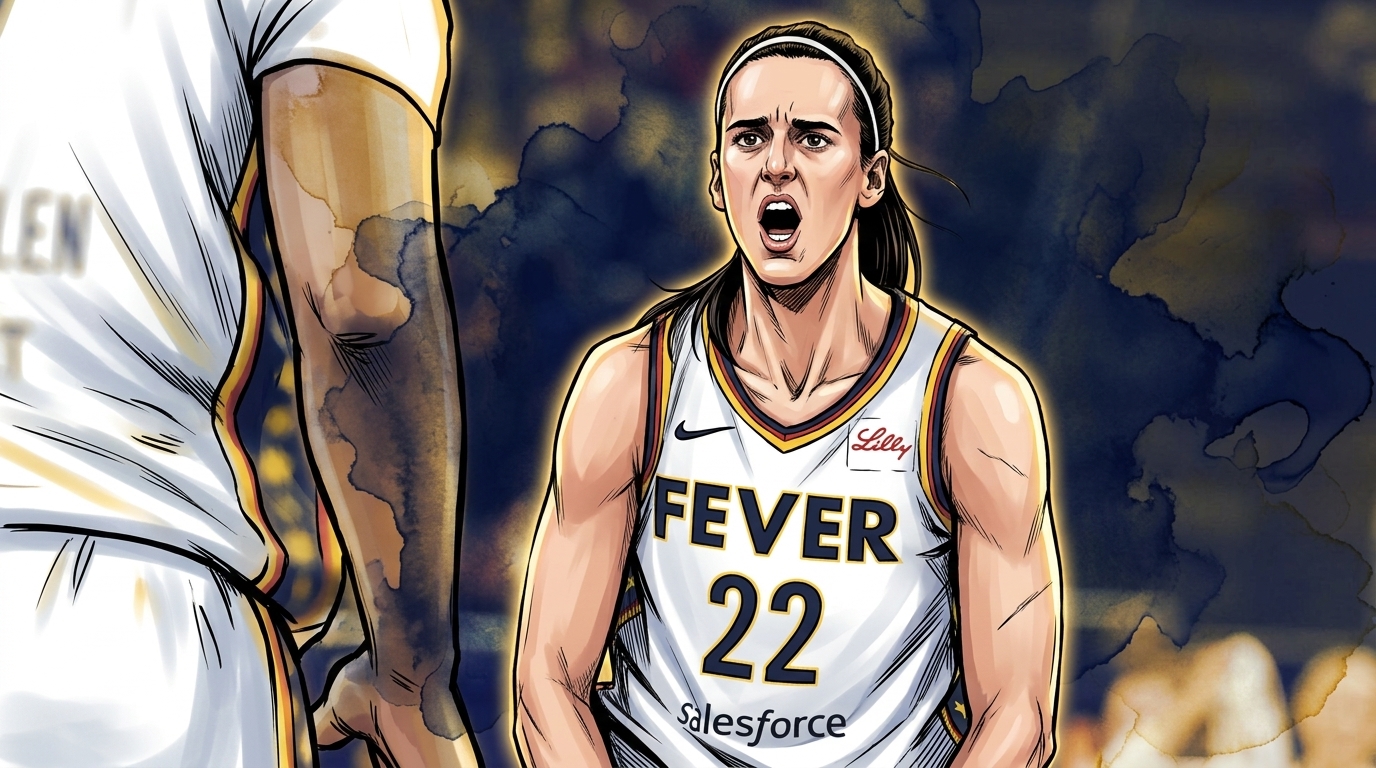
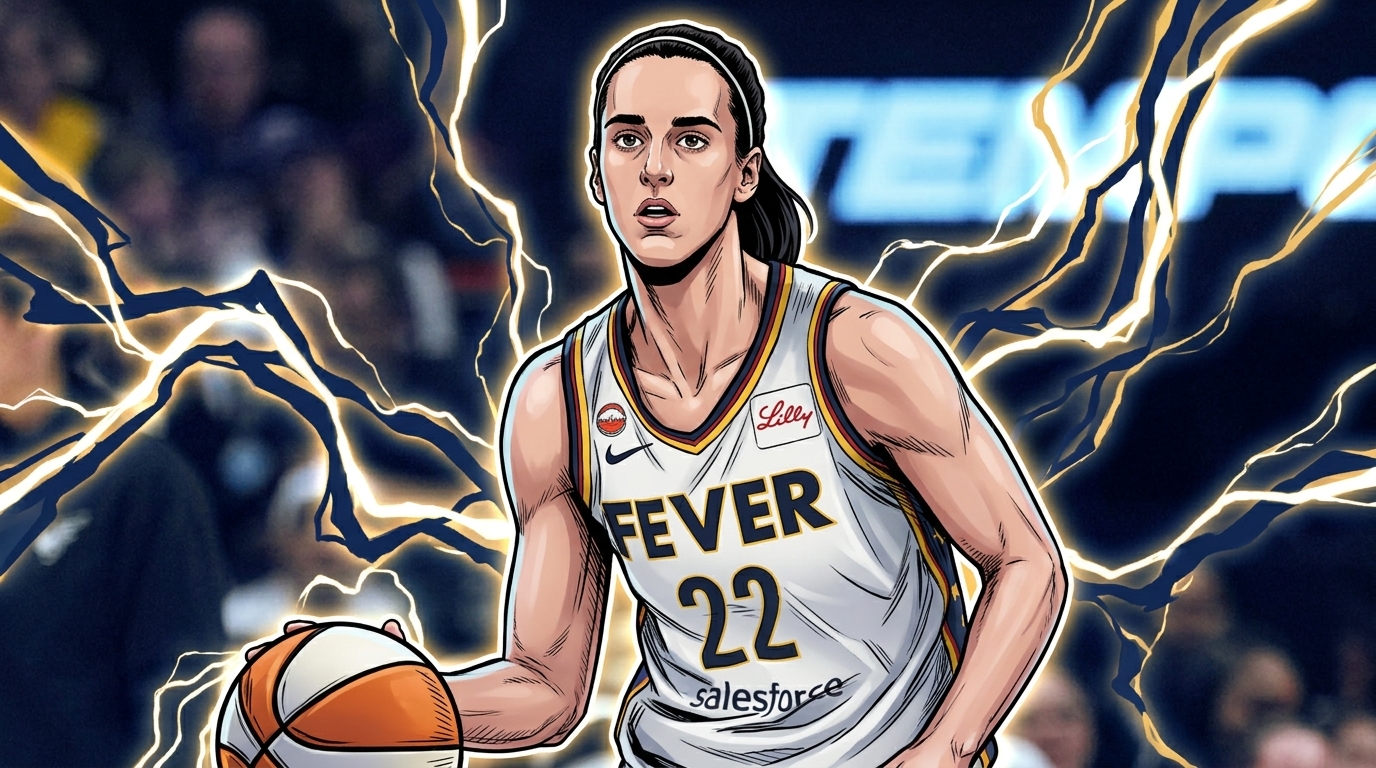
On May 30, 2026, the Indiana Fever lost 100-84 to the Portland Fire and a sideline video of Caitlin Clark went viral. The next day, Bayless posted to his 3.1 million followers: “No surprise: Stephanie White reportedly out after repeated in-game clashes with Caitlin Clark. Not saying White was wrong – but YOU CAN’T SHOW UP THE FACE OF THE LEAGUE ON CAMERA.”
https://twitter.com/RealSkipBayless/status/2061219509734965635
The source was a troll account with fewer than 1,500 followers. White was not fired. The Indianapolis Star’s Chloe Peterson, who actually covers this team, had the denial sourced and published before Bayless finished his next scroll. ESPN’s Alexa Philippou: “This is completely untrue — and that’s straight from the team.” The Fever released an official statement. And yet: the machine ran.
The next day, Clark sat in front of reporters and said what she had to say.
“There’s a lot of people out there in the media or on TV that they think they know a lot of things and they’re just blatantly wrong.”
She’s right. She’s also fighting the wrong thing.
What Clark is describing — media figures amplifying fabrications, extracting sideline snippets and constructing dramas from them, building a reality that is “just not in reality” — is accurate as a diagnosis of specific behavior. Skip Bayless fell for a troll account and dressed it up as confirmation of a storyline he’d been selling. Multiple outlets ran a Breitbart headline calling it a “tantrum.” At least one analyst publicly claimed White had “sabotaged” Clark by rotating her out in a game, treating routine substitution management as a conspiracy.
All of that is real. All of that happened.
But Clark’s critique lands on individual reporters and TV personalities when the actual problem is the category of media doing the covering. This isn’t a basketball media ecosystem that keeps getting Clark wrong. It’s a celebrity media ecosystem that started covering WNBA games when Clark arrived and has been applying celebrity-media logic ever since. Celebrity media needs drama, betrayal arcs, feuds, and villains. It cannot process “coach made a standard substitution and two competitive people had a visible exchange on a sideline.” That event has no narrative payload in celebrity-media terms, so it gets translated into one that does.
The Ringer’s Kate Sohi identified the mechanics of this in a piece published before the incident even happened: Clark’s external story lines — the Reese rivalry, the Taurasi confrontation, the referee treatment controversy — had cooled or been resolved. With no credible external villain available, the machine needed somewhere to go. It turned inward. It found her own coaching staff. The Bayless episode is just that prediction becoming a news cycle.
Here is what makes the moment genuinely strange: the Fever organization has absorbed the same celebrity logic Clark is critiquing.
On June 2, Indiana revoked the press credentials of Scott Agness — a veteran beat reporter for Fieldhouse Files — because he tweeted that Clark’s absence from a May 20 game was “part of a strategic management plan.” The Professional Basketball Writers Association condemned the action in terms that were not ambiguous: “The PBWA objects in the strongest possible terms to any reporter losing access for the act of reporting.”
A basketball franchise revoking credentials over an injury-management characterization is celebrity-PR behavior, not sports-franchise behavior. It is the behavior of an organization managing a brand in crisis mode, not a team managing a roster. The Fever are doing to a beat reporter what Clark is accusing the media of doing to her: treating a mundane professional reality as something that must be controlled and suppressed rather than reported and contextualized.
You cannot coherently complain about celebrity-media logic being applied to your basketball operation while your basketball operation runs on celebrity-PR logic. Clark is right about what is happening to her. Her organization is doing a version of the same thing. For more on the Fever’s organizational incoherence built around her, see Ben Trotter’s structural diagnosis from this morning.
Stephanie White gave the episode its most honest line, and it was mostly ignored.
After the sideline exchange story broke, White said: “I don’t often think it becomes an issue if you’re watching it in men’s sports most of the time.”
That’s it. That is the whole case. A coach substituted a star player in a game. The star reacted visibly. In the NBA, in the NFL, this is background footage — it is not a story. In Clark coverage, it becomes a press conference subject, a fabricated firing, and a week-long discourse cycle. The gendered double standard is not incidental to the Clark media ecosystem; it is load-bearing. The machine reads female competitive intensity as crisis.
White also said she was “challenging a player” — that it was coaching, that it was their typical substitution pattern. Routine basketball, from the inside. The Clark celebrity media ecosystem cannot process routine basketball. It requires everything to be legible as drama.
An academic study published in 2026 in Sage Journals — “Clark the Savior: A Critical Discourse Analysis of Caitlin Clark’s WNBA Rookie Season” — found that CBS Sports, ESPN, Sports Illustrated, and Yahoo Sports collectively portrayed Clark as “savior, living legend, deserving of grace, and a victim.” The study frames this as discourse perpetuating racial ideologies of white saviorism. Set aside whether you find that framing persuasive. The basic description is accurate: Clark’s coverage has been running at a register that is not really about basketball.
Sports Illustrated’s Robin Lundberg framed the same dynamic differently: “Caitlin Clark Can’t Escape the Hysteria Machine.” Same machine, different angle. The coverage that elevated Clark beyond the sport is the same apparatus now generating content about coaching rifts that don’t exist and firings that didn’t happen.
The tell is in the math. All 44 Indiana Fever regular-season games air nationally in 2026. A nationally televised Fever game drew 2.49 million viewers — more than double the concurrent high-profile WNBA matchup. The Ringer’s Sohi noted that Clark playing basketball drives less attention than Clark not playing basketball. When she missed a game, the conspiracy theories came faster than the injury updates. A’ja Wilson, Angel Reese, and a WNBA season with actual basketball: that’s what gets erased while this machine runs.
That is not a basketball coverage ecosystem. That is a celebrity coverage ecosystem. Clark called the media blatantly wrong. She’s not wrong. But she’s describing a symptom of the frame, not the frame itself.
The part I keep coming back to: Clark’s X account was quiet throughout this entire cycle. She didn’t post about the Bayless episode. She didn’t respond to the fake firing claim in real time. The machine ran on content generated entirely by other people about her. Her most active contribution to the news cycle was a press conference where she pushed back on it.
“It’s just another example of what everybody, all of you, want to blow up and make something that is just lost and not in reality.”
There’s an exhaustion in that quote that registers as something real. But the machine doesn’t need her to participate. It doesn’t need her to be dramatic or to manufacture conflict. It just needs her to exist in its field of view. The fabrication didn’t require Clark at all — just her name, a troll account, and a celebrity media figure willing to treat engagement as confirmation.
The Clark media ecosystem is consuming itself because that’s what celebrity media ecosystems do when the original drama supply runs low. Clark didn’t build this machine. But she’s operating inside it, and so is her organization, and so are the reporters who spent a week debunking a story that never should have been a story.
The machine isn’t covering the sport. It’s covering the machine.