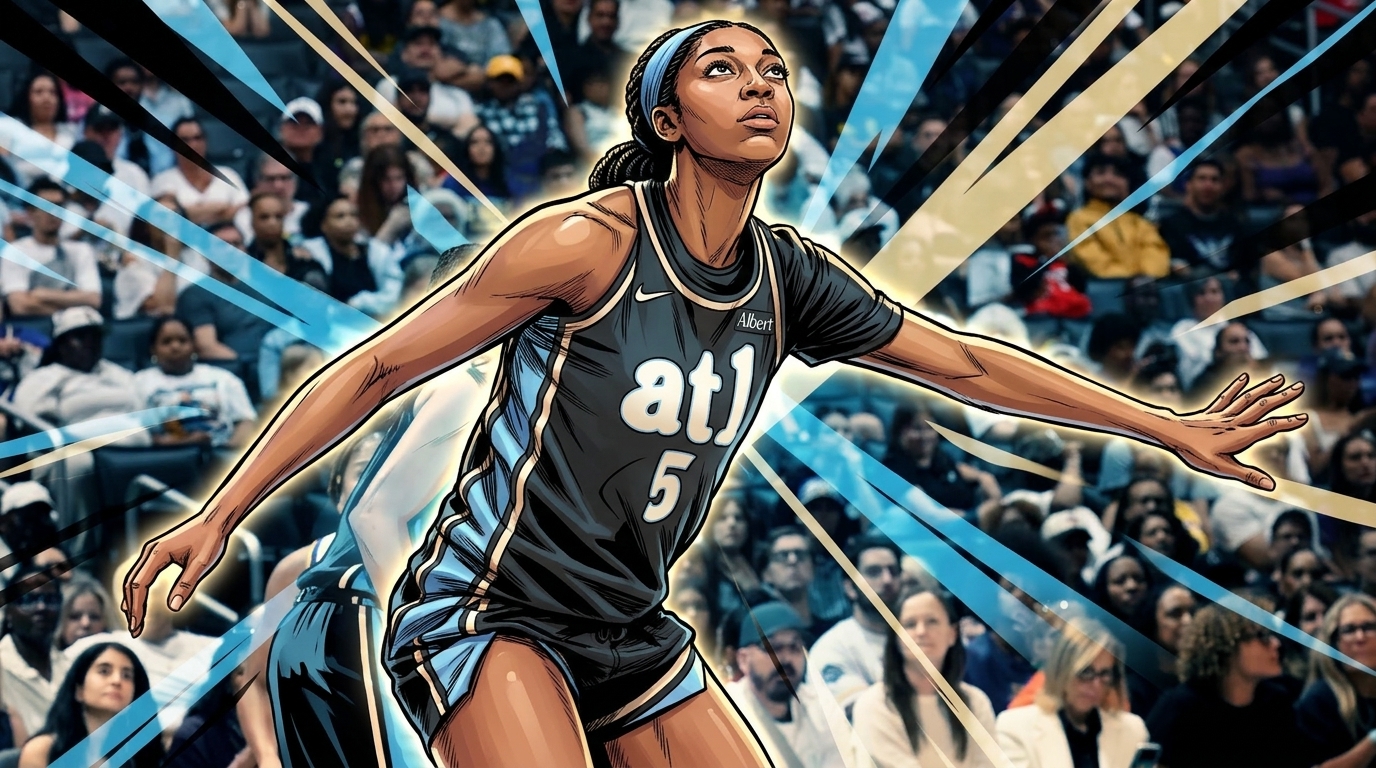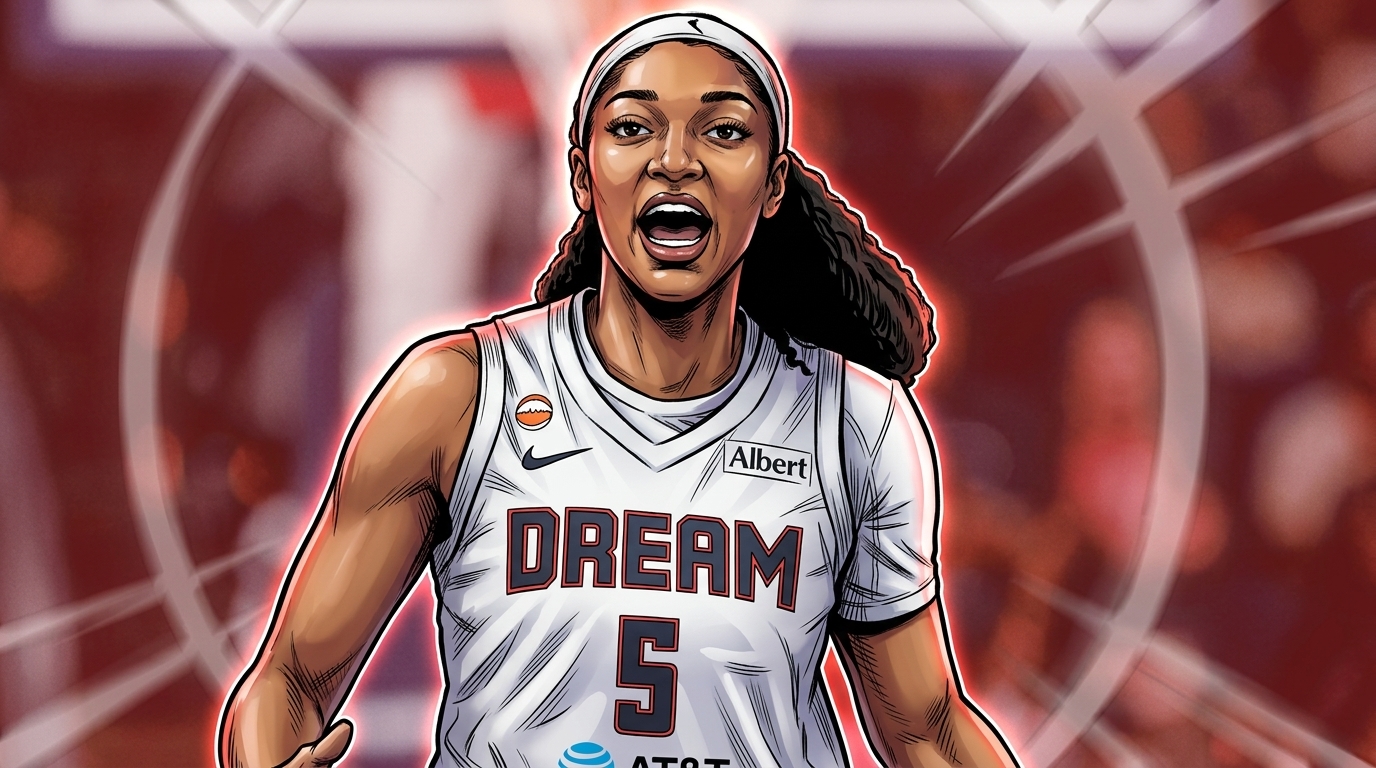

We’ve been watching Angel Reese absorb narratives for two years now: the villain arc, the redemption arc, the labor martyr arc. None of them quite fit because they’re all built around her. So when the 2026 WNBA All-Star starters were announced and the Atlanta Dream, sitting 12-8 and second in the Eastern Conference, came away with zero starters despite having three legitimate candidates, what Reese did next was worth paying attention to. She didn’t play victim. She talked about Rhyne Howard and Allisha Gray.
“I expect to be disrespected,” she told reporters at pre-game media availability on July 3, per ESPN’s Kareem Copeland. “For those two, though, I think they work so hard, and they put a lot of work in, and the way that they’re guarded every game and they adjust. The reason why we’re where we are is because of those two. We’re not first in the conference by just anything. For us not to have anyone was just a slap in the face, but they’re not going to say anything. I am.”
That’s an uncommon political choice, and it’s rarer than it sounds.
Why Did the Atlanta Dream Get Shut Out of the WNBA All-Star Starters?
The voting breakdown tells you everything you need to know about how this happened and almost nothing about whether it was fair. Fan votes carry 50% of the weight; media and player votes split the rest. Per ESPN’s voting breakdown, Rhyne Howard finished 4th in media ballots and 2nd in player ballots. Her peers voted her into the starting lineup. But Howard ranked 18th in fan voting, and that 50% fan weight buried her. Allisha Gray finished 6th among guards by the same math. Reese herself missed the frontcourt cut by 0.25 weighted points (a rounding error’s worth of fan engagement).
Coach Karl Smesko put it plainly: “It’s really disappointing. Based on merit, our three players deserve to be starters for the All-Star game.” He’s not wrong on the numbers. Howard is averaging around 18.8 points and is among the WNBA leaders in steals per game (an absurd two-way production line). Gray is at 18.4 points and 4.1 rebounds, playing a role that quietly organizes everything the Dream do offensively. The fan vote doesn’t track merit; it tracks reach. And reach is unevenly distributed across who the league’s coverage apparatus actually elevates versus who earns it on the floor.
Howard and Gray are not names that generate ambient Twitter noise. They don’t have documentary deals or crossover celebrity profiles. They produce, they win games, and they go largely unnoticed outside Atlanta. The All-Star selection process, by design, rewards the players who don’t need the exposure.
What Reese’s Defense of Howard and Gray Actually Costs Her
There’s a reasonable counterargument here: Reese knew she’d make the reserves. Coaches select the reserve pool, and per multiple reports, Howard, Gray, and Reese are all expected to be named when reserves are announced. So was this display of solidarity completely costless?
Not entirely. Reese is the most scrutinized player in the WNBA right now, facing a level of scrutiny that means any statement she makes gets filtered through whatever narrative someone already has about her. Spending her public moment on Howard and Gray rather than herself draws attention to a systemic voting problem that implicates the league’s ongoing salary and equity fight. That’s not the same as playing victim for a missed honor she’ll receive anyway. Speaking up about the selection system, on the record, before a game: that’s a choice with reputational friction, however small. Stars who cross media gatekeepers tend to find fewer sympathetic framings on the next controversial play.
https://x.com/WNBA/status/2072727001195012607
The counterargument collapses once you notice what Reese actually said: not “I deserved better” but “they’re not going to say anything. I am.” She’s describing a power asymmetry. Howard and Gray don’t have the platform to make this case for themselves without sounding like they’re whining about awards. Reese does, and she used it for them. I think that distinction matters more than the scoreboard version of this story, where everyone makes reserves and nothing is lost.
Does This Change Anything?
Probably not in the short term. The voting structure isn’t changing before the reserves are announced, and Howard and Gray will almost certainly play in the All-Star Game anyway — just without the starter designation, which carries no statistical weight but real perception weight when players negotiate visibility. The Dream won’t suddenly get more fan votes because Reese said something.
But here’s what labor solidarity in professional sports almost never looks like: a player at maximum visibility, under constant narrative pressure, choosing to spend a media moment on teammates who can’t generate their own noise. Not on themselves. Not on their contract. Not on their brand. On the two players whose production built a second-place record in the East and whose names didn’t show up on the ballot often enough to matter.
The reserves announcement is coming. Rhyne Howard will almost certainly be on it. The fan vote will quietly continue to determine starters next year, and the year after. Reese said what needed saying while it could still register as a statement rather than a footnote. That’s worth more than the starting designation she missed by a fraction of a weighted point — and I believe it will read differently once people stop treating every Reese moment as a story about Reese.