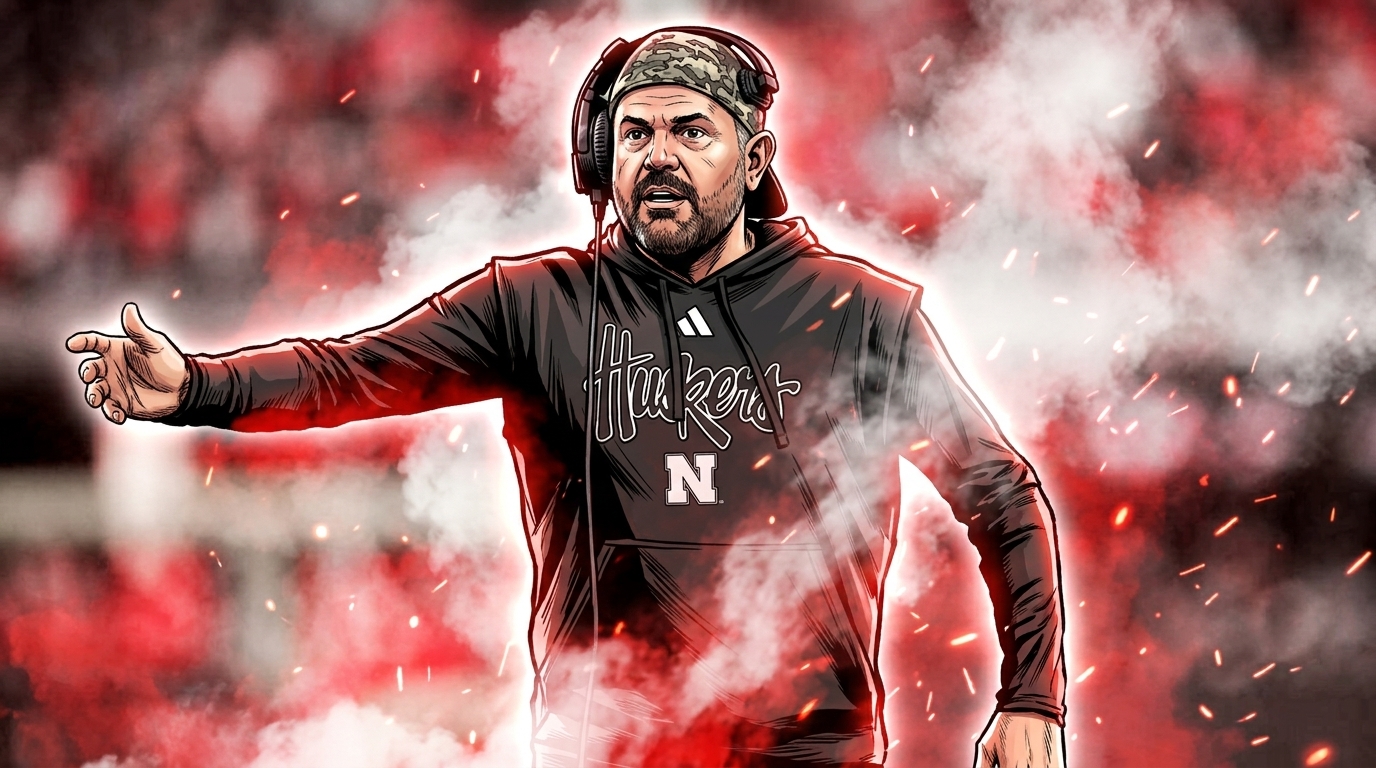

The College Sports Commission, the organization that was supposed to represent a clean break from the NCAA’s decades of paternalistic amateurism enforcement, won its first major arbitration case on May 11. It did so by telling 18 Nebraska football players that $7.5 million in NIL deals they’d signed with Playfly Sports were invalid; that the arrangement constituted something called “warehousing,” which is a prohibited practice under the House settlement. The players were told, essentially, that the money they were promised for podcast appearances, autograph sessions, and social media posts wasn’t real NIL work. It was just money wearing a costume.
And look, maybe it was! Maybe Playfly Sports, Nebraska’s multimedia rights partner, really did structure these deals in a way that amounted to buying future likeness rights without specifying how they’d use them. The arbitrator certainly thought so. But there is something deeply funny about a governing body created to replace the NCAA arriving at the exact same conclusion the NCAA always arrived at: these athletes are being paid too much, and we need to stop it.
https://x.com/RossDellenger/status/2053964792088469974
The Deals, Such as They Were
Here is what the 18 Nebraska players were set to receive: between $50,000 and $750,000 each, paid in installments at the end of January, March, and June. In exchange, they’d do podcast episodes, media interviews, content shoots, and autograph sessions at $5,000 an hour. Social media posts at $5,000 a pop. The NU Board of Regents had authorized Playfly to divert $8 million of its payment to the athletic department toward these NIL arrangements.
The CSC’s arbitrator ruled that none of this constituted a “valid business purpose” because Playfly wasn’t offering goods or services to the general public for profit. The deals were warehousing: the company was stockpiling athlete likenesses without a concrete plan to monetize them. As the arbitrator put it, “Playfly appears to be guaranteeing certain payments to each student-athlete in exchange for performance of as-yet unspecified services.” The arbitrator also determined that Playfly qualified as an “associated entity” under the House settlement, which subjects its deals to additional scrutiny. That designation alone is significant; it means any school whose multimedia rights partner tries a similar arrangement will face the same wall.
CSC CEO Bryan Seeley was pleased. “This process shows the system is working as intended,” he told ESPN. The system, in this case, being one where an unelected body gets to decide which deals between willing parties are legitimate and which ones are too creative for their liking.
The Numbers That Matter
The House settlement caps direct payments to athletes at $20.5 million per year. Industry sources peg the actual market rate for assembling a competitive Power Four roster at $30 to $40 million annually. So there is already a gap between what the rules allow and what the market demands, and into that gap pour arrangements like Nebraska-Playfly: technically NIL deals, functionally salary supplements, structurally the kind of thing a regulator was always going to flag.
Since the NIL Go clearinghouse launched in June 2025, the CSC has declined 1,153 deals. Of those, exactly 21 went to arbitration. Those 21 were consolidated into three cases; Nebraska’s 18 players comprised the bulk. This was the first to produce a binding ruling. The CSC went 1-for-1, which is the kind of record that tends to embolden enforcement agencies. The CSC has also recently hired its tenth staff member, including at least one former FBI investigator. They are not staffing up for a light touch.
What Comes Next (Spoiler: More of This)
The ruling is binding but not necessarily final. The plaintiff attorneys from the House case have asked a judge to review how the CSC applies its rules, with a hearing scheduled for June 10. Nebraska’s attorney general, Mike Hilgers, could pursue state-court relief under a Nebraska law that prohibits any college sports governing body from penalizing athletes for accepting third-party money. The players could sue outright.
https://x.com/RossDellenger/status/2031501168791130314
Nebraska AD Troy Dannen said he was “proud of our football student-athletes,” which is what administrators say when they’ve lost and need to signal they’re still on the players’ side without actually doing anything about it. Nebraska can resubmit compliant deals. They can wait for the courts. They can simply pay the players under state law protections and dare the CSC to do something about it. All of those options involve spending more time and money fighting over whether football players should be allowed to get paid by companies that want to pay them.
The whole thing has a familiar shape. A new institution, built on the ashes of the old one, inherits the same structural incentives and arrives at the same structural conclusions. The CSC exists to regulate a market that powerful people have decided shouldn’t be fully free; it has now demonstrated that it can, in fact, regulate that market. The question was never whether the CSC had teeth. It was whether having teeth meant it would bite the same people the NCAA always bit. The answer, it turns out, is yes.