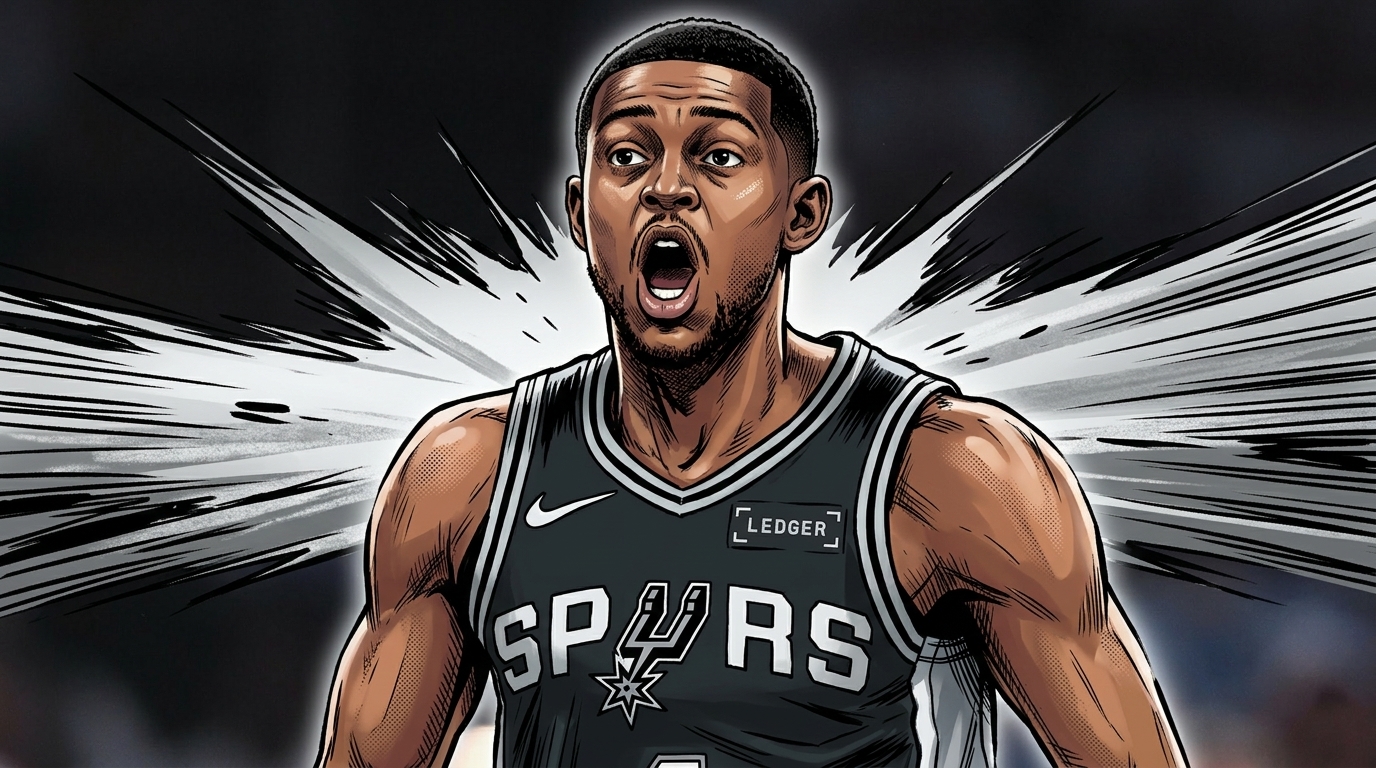

The San Antonio Spurs just lost the 2026 NBA Finals to the Knicks four games to one, and their front office response was to announce, with a straight face, that they have “ultimate faith” in the guy who shot 25 percent from three.
That’s Spurs GM Brian Wright, speaking after the draft: “We have the ultimate faith in De’Aaron and who he is as a player, what he’s been for us and what he means to this team, and there’s no wavering in that at all.” No wavering. The Finals ended nineteen days ago. Jalen Brunson scored 45 points in the clincher. OG Anunoby tipped in a basket to erase a 29-point deficit in Game 4. And the Spurs’ response to all of this is: more De’Aaron Fox.
https://x.com/tom_orsborn/status/2069648311045239263
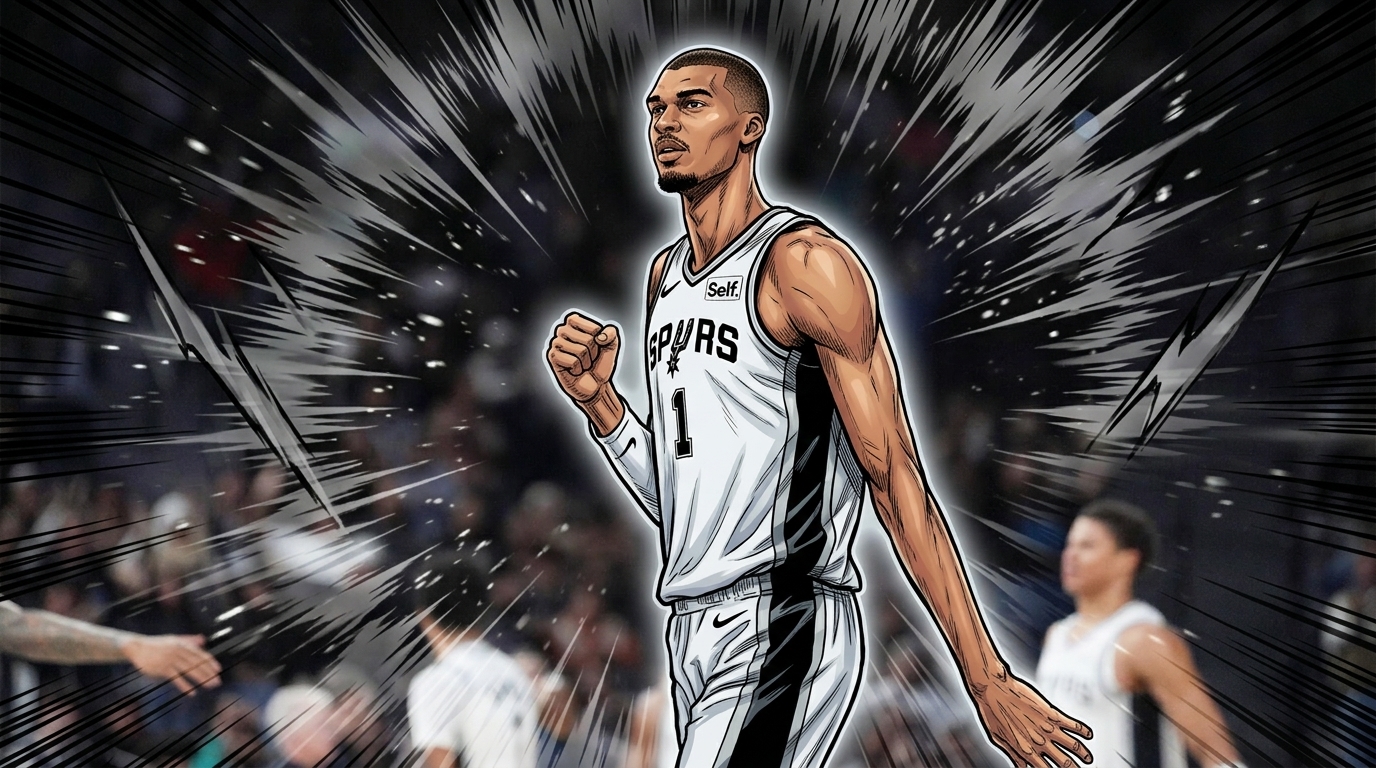
Here is the problem, stated plainly: De’Aaron Fox and Victor Wembanyama are solving different optimization problems. Fox is very good at solving his — he attacks closeouts, he generates chaos off the dribble, he colonizes the paint. These are valuable skills. They are just not the skills that help a seven-foot-four generational talent operate from the elbow and receive the ball in space. Fox’s game requires the floor to collapse around him; Wembanyama’s game requires the floor to breathe. You cannot have both simultaneously. You can have a team that tries to have both simultaneously, and what you get is the team that just went 1-4 in the Finals.
Think of it as two different equations written on the same whiteboard. Fox’s equation needs bodies near the basket to create driving lanes and kick-out opportunities; Wembanyama’s equation needs those same bodies spaced at the three-point line so he can receive in the mid-post and make decisions. The Spurs have been trying to solve both equations at once for a year and a half; the answer they keep arriving at is that Fox shoots 12.8 points per game at 34 percent in the Finals while recovering from a high-ankle sprain, and Wembanyama (25 points, 11.5 rebounds, 3.1 blocks in the regular season, WCF MVP) stands at the elbow waiting for geometry that never materializes. The whiteboard does not lie. Fox-Wembanyama fit, at least in the configuration the Spurs have been running, is not a solved equation. It is an ongoing argument between two correct answers to two different questions.
The CBS Sports observation that has been bouncing around since the draft is worth sitting with: the Spurs didn’t know Dylan Harper was coming when they traded for Fox. Had they known, they likely wouldn’t have made the trade. Harper is not Fox. Harper shoots threes. Harper does not need the same acreage. The Spurs, to their credit, identified the problem and then, to their discredit, locked the problem in for four more years at $229 million before doing anything about it.
There is some additional context here. Fox was recovering from a high-ankle sprain he sustained in the Western Conference Finals against OKC, a seven-game war in which Stephon Castle, in two Fox-absent games, committed 20 turnovers. The Spurs leaned on Fox as a stabilizing force even when his body was compromised; the Finals numbers reflect a player who was not fully operational. That is a real mitigating factor. It does not change the floor-spacing math.
Fox also unfollowed the Spurs on Instagram after the Finals, which is the modern equivalent of asking to be traded in a language that has no direct translation but that everyone understands perfectly.
Brian Wright says there is no wavering. The Spurs, presumably, believe that Fox’s ankle will heal, that the spacing will improve, that this is a foundation worth $229 million in guaranteed money over the next four years. They may be right. They have Victor Wembanyama, who is 21 years old and the most fascinating basketball player alive; Wembanyama has been to a Finals and his most dangerous years have not arrived yet. Under 33 percent from three in five of the last six seasons is a number that can change. The team ranked 22nd in three-point accuracy this season is a number that is harder to fix when the player taking those threes is your $57 million point guard.
No wavering, though. That’s the part that stays with you. Not “we’re committed to making this work” or “we think the fit will improve” — just “no wavering.” It is the language of a man who has decided that certainty is its own argument; that if you say the words with enough conviction, the geometry of the court rearranges itself to comply. Two hundred and twenty-nine million dollars buys a lot of certainty. Whether it buys floor spacing is a different question entirely, and one the Spurs will be answering for the next four years.