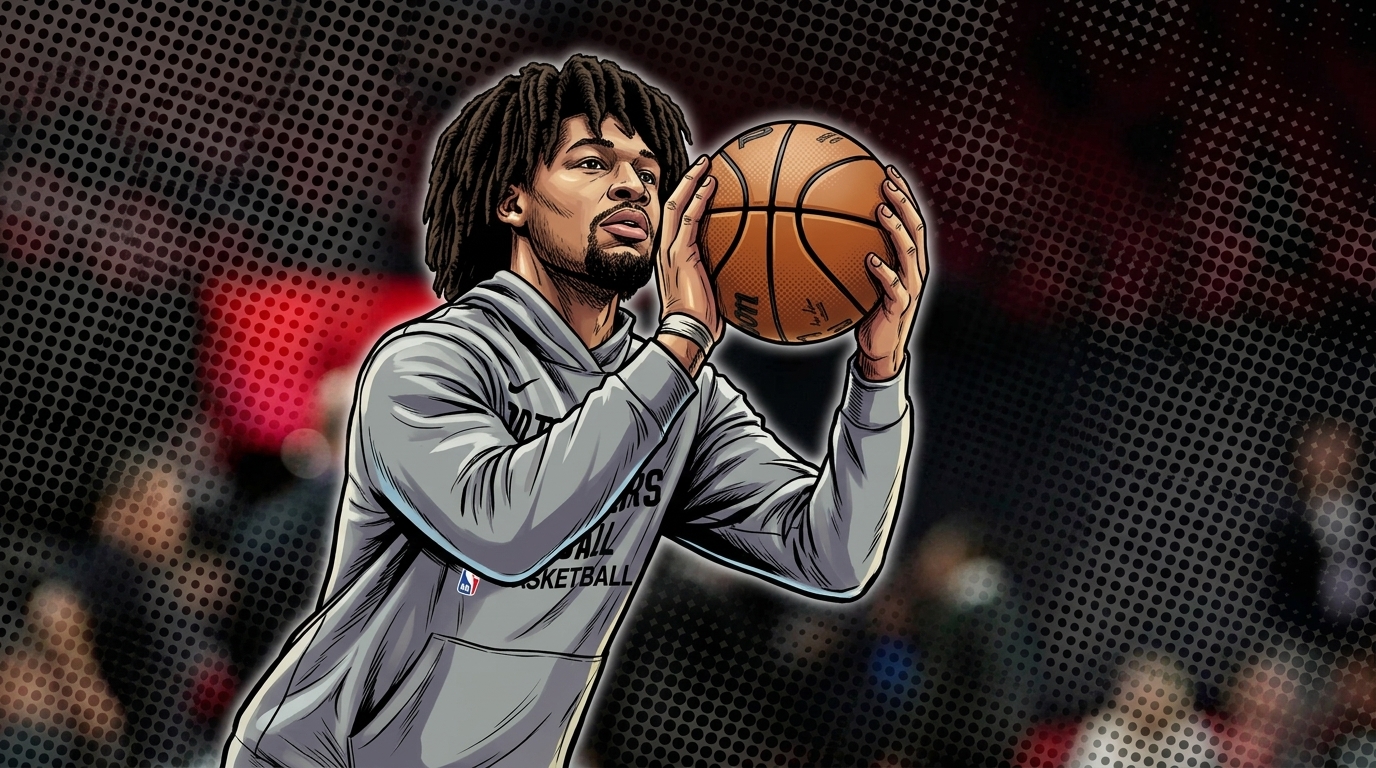

There’s a stat that explains why DeMar DeRozan’s market settled at $3.9 million this week, and it isn’t his age. It’s this: on 1,685 career three-point attempts, DeRozan has made 30.2 percent of them, and he just signed with the team that took fewer threes than anyone else in the league last season.
DeRozan spent the past few weeks talking to the Miami Heat, the Washington Wizards, and the New Orleans Pelicans before agreeing to a one-year, $3.9 million deal with Denver on August 21, part of the same DeRozan pursuit that outlasted the Watson trade fallout. Every other team on that list could have offered him real touches. Denver offered him the best roster and, on paper, the smallest role he’s had in a decade. DeRozan picked the roster. Whether he can live with the role is the actual story, and it’s going to shape how this Nuggets season looks in April.
What DeRozan Actually Signed Up For
Denver had tried this before. Denver’s first, failed run at signing him fell apart months ago, well before Sacramento ever got involved. Then the Kings waived DeRozan in late July as a straightforward cap-clearing move, a rebuilding front office shedding an expensive veteran. GM Scott Perry framed it as a financial call, not a referendum on what DeRozan still has left. Waived players don’t usually spark bidding wars, and DeRozan’s market confirmed it. He talked to the Miami Heat, where Bam Adebayo reportedly recruited him personally before the Heat pivoted and signed Klay Thompson instead. He talked to the Washington Wizards and the New Orleans Pelicans. None of it turned into a contract.
Denver did, and not as a courtesy signing. The front office and coaching staff went after DeRozan specifically to hand Nikola Jokic and Jamal Murray a third read in the halfcourt, another accomplished scorer who could get to his own shot without the offense being run through him every trip. At 37 years old and $3.9 million, DeRozan is one of the lowest-risk bets Denver could make this offseason. He’s also, on the numbers, one of the stranger style matches on the roster.
Can a Midrange Scorer Fit an Offense Built Not to Need One?
DeRozan is a career 30.2 percent three-point shooter on 1,685 attempts, a number that has never once translated into a plus shooting season — his best year, 2021-22, still topped out at 35.2 percent, below league average. Denver, meanwhile, took fewer three-pointers than any team in the league last year and still finished fourth in offensive rating. The Nuggets don’t need a shot creator. They need someone who can play off one.
That’s the tension. DeRozan built a career on midrange footwork and one-on-one scoring: pull-ups, fadeaways, getting to his spot regardless of who’s guarding him. His two-point efficiency has outproduced his three-point value for his entire career, which is the data version of saying he scores by getting closer to the rim, not by spacing the floor around someone else. He’s led the league with 3,045 fourth-quarter points since 2020, which tells you exactly what kind of weapon he’s been: the guy you hand the ball to when the play breaks down, not the guy standing in the corner waiting on a kick-out.
Last season in Sacramento, DeRozan actually shot 32.0 percent from three, part of an 18.4-point, 4.1-assist, 2.9-rebound season across 77 games. That’s a career-best three-point mark, and it’s still barely replacement level for a modern wing. One good shooting season at 36 doesn’t erase a decade of history. I ran the shot profile a few different ways this week and kept landing in the same place: this is an isolation scorer joining the least isolation-friendly offense in the league.
Jokic doesn’t need another shooter standing around him. He needs cutters, screeners, and players who can finish what he starts. He averaged a triple-double for the second straight season in 2025-26, 27.7 points, 12.9 rebounds, and 10.7 assists a night, and Denver’s net rating jumped to plus-6.5 with him on the floor. The whole operation is built around Jokic touching the ball more, not less. DeRozan spent 15 years building a game around touching it more himself.
Shams Charania had the signing first:
https://twitter.com/ShamsCharania/status/2090903820301705398
The one-year term is doing a lot of the work in that report. Nobody in Denver is promising DeRozan a defined role past training camp, and that’s probably the point. This is a prove-it contract in both directions.
What Denver Is Actually Buying at $3.9 Million
None of this makes DeRozan a bad signing on its own. At $3.9 million for one year, he’s close to a free look, and if the shooting even partially holds at last season’s level, Denver just added a 20-point scorer for what amounts to a rounding error against the tax bill. The front office isn’t paying for fit here. It’s paying for a name and a résumé.
But the roster built around that name has a cost beyond $3.9 million. Denver also traded Peyton Watson, its 23-year-old best perimeter defender and a player coming off a career year of 14.6 points, 4.9 rebounds, and 2.1 assists a game, to Cleveland in a five-team sign-and-trade that brought back an unprotected 2031 first-round pick and a 2032 second, no player. Denver ranked 21st in defensive rating last season. Moving the guy tasked with guarding the other team’s best wing doesn’t fix that, whatever those picks turn into in five years.
That’s the real story behind the extension standoff hanging over Jokic’s timeline: Denver is spending draft equity and perimeter defense on the bet that more shot creation around Jokic outweighs what it costs on the other end, in the same summer it’s trying to convince its franchise player the window still works. Signing a 37-year-old who’s never shot better than replacement level from three isn’t a move you make while rebuilding around the margins. It’s a move you make when you think the season comes down to who has the ball with six seconds left.
My guess is DeRozan never becomes a floor-spacer, and Denver never asks him to. He becomes what he was in the fourth quarter for a decade: a release valve when the offense stalls, a matchup hunter against a tired backup big, somewhere closer to 20 minutes a night than 30. That’s a real job on a good team. It just isn’t the job DeRozan spent his career auditioning for, and the Nuggets are betting $3.9 million that the gap between those two things doesn’t show up in April.