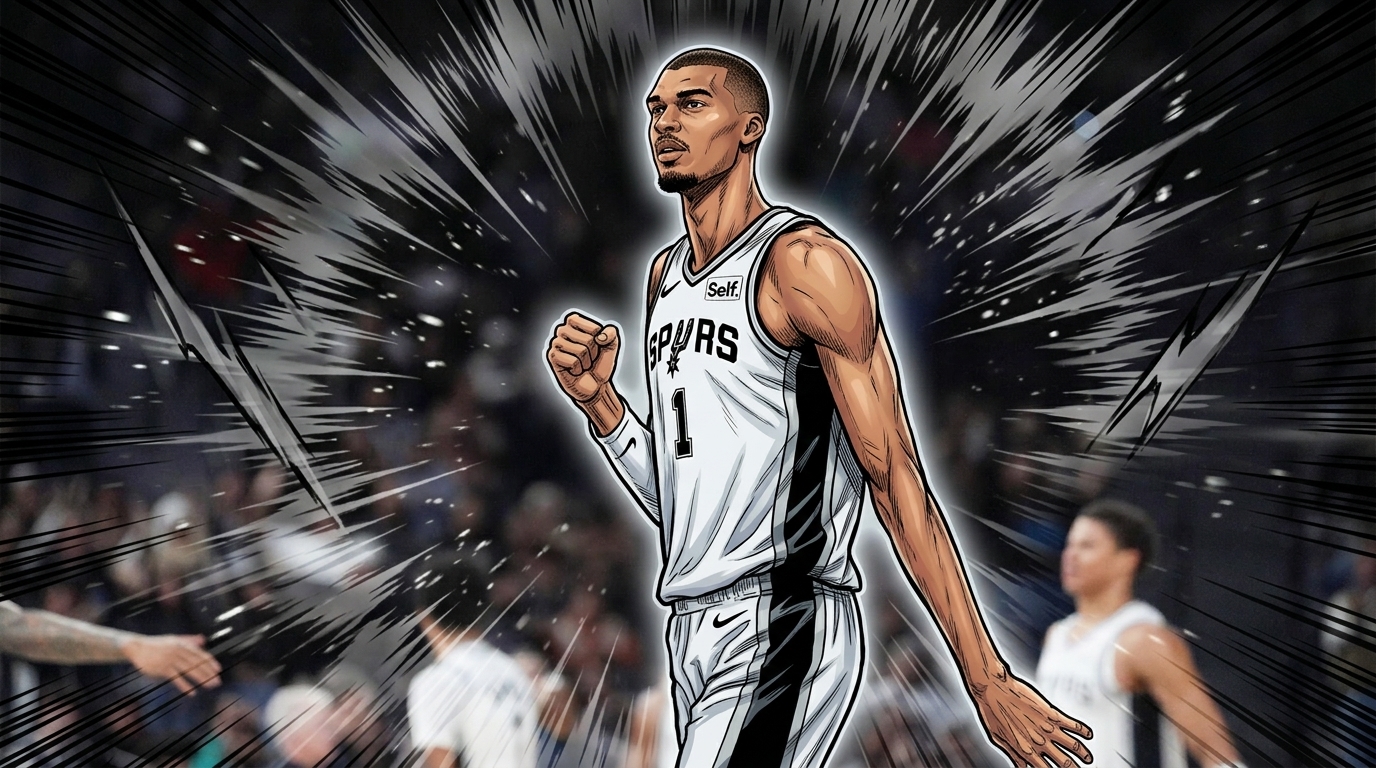
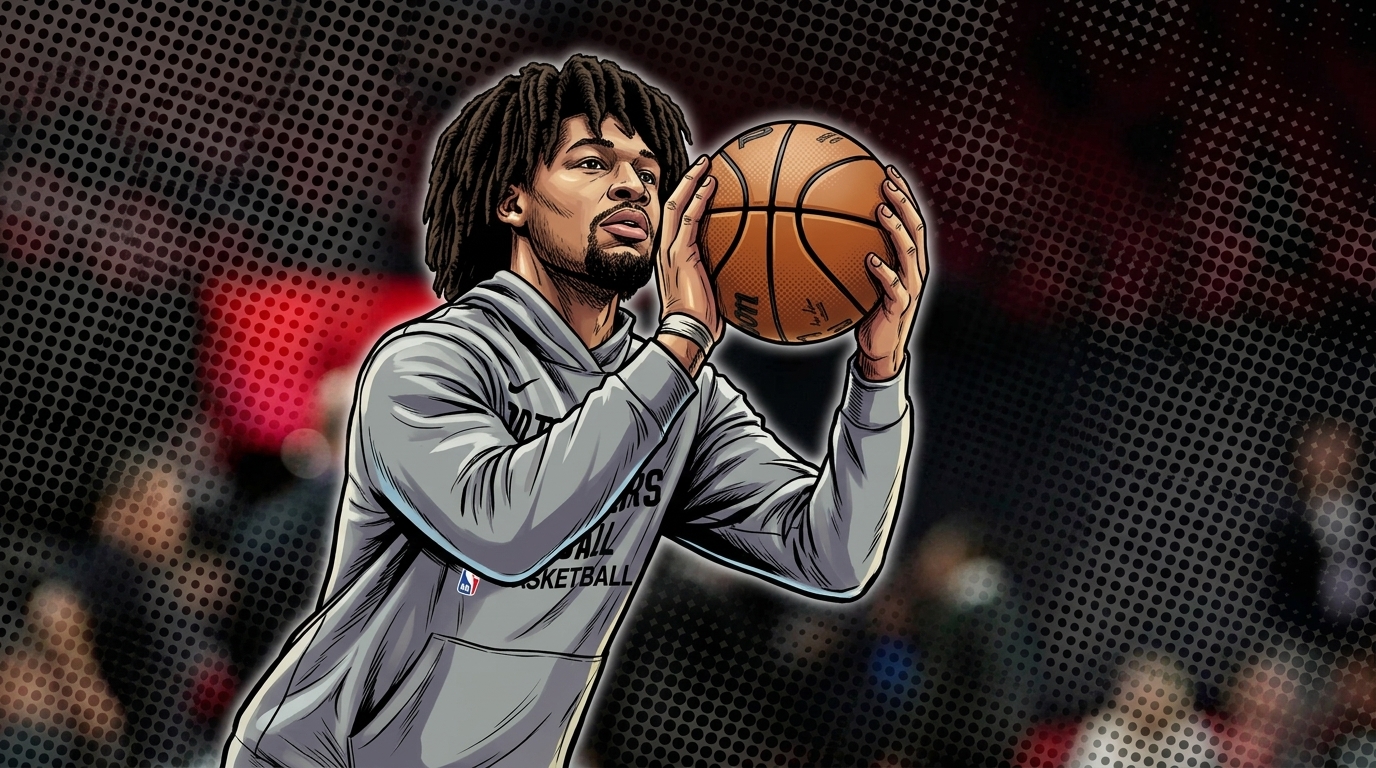
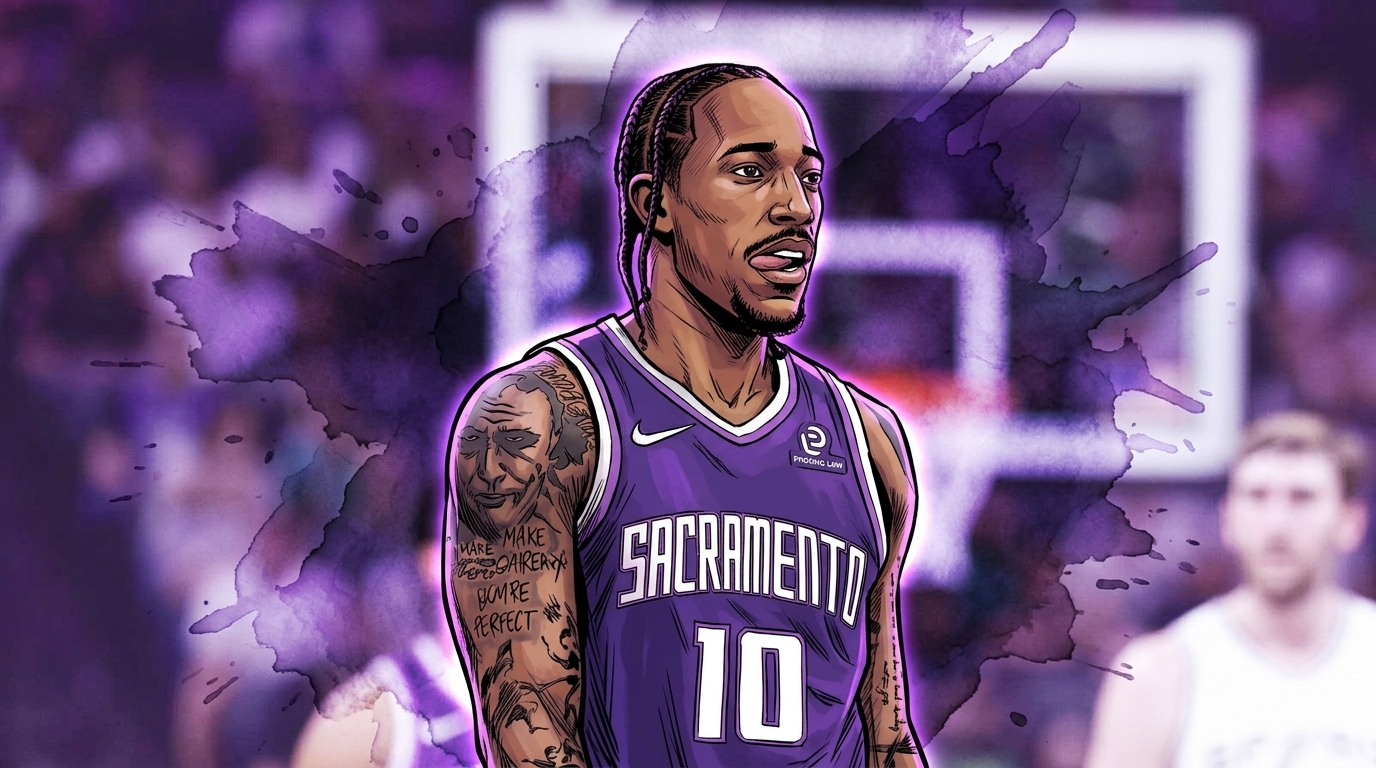
Two players. Two completely different ways that the analytics community got it wrong. One series to sort out which mistake was worse.
The 2026 NBA Finals answers that question — not who wins, but which evaluative error turns out to be more costly as a framework for understanding basketball. Jalen Brunson versus Victor Wembanyama is not just Knicks versus Spurs or East versus West. It is a controlled experiment in the limits of how we measure player intelligence, and Game 1 tips off tonight in San Antonio.
The models had opinions on both of them. Those opinions were wrong. The interesting part is how they were wrong, because it was not the same failure twice.
How the Analytics Community Misread Jalen Brunson
The mainstream analytical case against Brunson rested on three pillars, and each one felt defensible in isolation. First: draft slot. The 33rd overall pick in 2018 doesn’t become a franchise centerpiece — the historical base rate on late-first and early-second-round guards becoming stars is thin. Second: physical profile. He is 6-2 with average athleticism and no elite straight-line speed. NBA defense identifies and neutralizes guards built exactly like that. Third, and most damning: context dependency. Almost every meaningful stat Brunson posted at Dallas came alongside Luka Doncic, a genuinely ball-dominant player who drew so much defensive attention that Brunson’s creation ability was structurally invisible in the box score.
When the Knicks signed him for four years and $104 million in July 2022, the criticism was nearly uniform. ESPN’s Becky Hammon said about the Brunson-led Knicks as recently as 2023 that they still didn’t have “a dude” — this while Brunson was already on the roster and proving the skeptics wrong every night. The models said: overvalued system product who benefited from Luka’s gravity, now being asked to do something the evidence says he can’t.
What the models missed is harder to quantify, which is precisely why they missed it. IQ and footwork compound over reps in ways that no pre-signing metric captures. Brunson’s four years at Villanova, where Jay Wright ran one of the most disciplined offensive systems in college basketball, encoded a decision-making density that only appears when a player is handed the keys. You cannot observe intelligence on ball when someone else always has the ball.
The evidence now is not ambiguous. This regular season: 26.0 PPG, 6.8 APG in 74 games for a 53-win Knicks team. Third consecutive All-NBA Second Team selection. In these playoffs: 26.9 PPG, 6.6 APG through 14 games. Against Cleveland in the Eastern Conference Finals sweep — four games, unanimous MVP, 25.5 points and 7.8 assists per game — he looked like a player who had been waiting his entire career to run a team in a high-leverage series.
The analytical error was not that Brunson’s upside was underestimated. It was that the dominant models had no vocabulary for basketball intelligence that doesn’t show up in box scores until the player is finally the primary option. The 33rd pick label was a prior that the models never sufficiently updated.
The Wembanyama Comp Problem: What No Precedent Actually Means
Wembanyama’s analytical failure ran in the opposite direction. The problem was not that models were too rigid. It was that models are built on historical precedents, and he had none.
Before the 2023 draft, the honest framing from most projection systems was some variation of: “Potential Hakeem-lite,” “skilled Boban,” or — most accurately, but least operationally useful — “there is no comp.” The shooting upside was significantly underestimated. Most models projected him in the 20-22 PPG range by year three. He is at 25.0 PPG, 11.5 RPG for the regular season, and just put up 27.3 PPG, 10.9 RPG, 3.1 APG, and 2.7 blocks per game across seven WCF games against Oklahoma City.
The 2024-25 stat line that reveals why models failed: 3.8 blocks per game and 3.1 made three-pointers per game, simultaneously. No player in NBA history had averaged both in a full season. CARMELO and similarity-score systems are anchored to historical precedent by construction. A player with no historical comp generates no useful similarity score. The most honest thing you can say about such a system is that it correctly identified the problem and then had no answer for it.
More difficult still: his most dominant skill cannot be measured at all. Per ESPN’s reporting ahead of this series, multiple analytics staffers have openly said they cannot account for plays that simply don’t happen because Wembanyama is on the floor. Opponents remove driving to the rim from their decision menu. That deterrent value — possessions that end in a pull-up jumper that would have been a layup, or a kick-out pass that would have been a drive — never appears in blocks or defensive rating. It is real. It affects outcomes. We have no way to put a number on it.
This is a different kind of wrong than the Brunson case. With Brunson, the model existed but used the wrong inputs. With Wembanyama, the model doesn’t exist yet because the player type has never existed. The “unicorn with no comp” label was not a term of admiration. It was an admission that the entire measurement apparatus was being asked to evaluate something it wasn’t built for.
https://twitter.com/NBA/status/2051507042305630652
Who Has the Tactical Advantage in the 2026 NBA Finals?
Neither player has a clear advantage — the series tests two distinct basketball intelligence types. Brunson operates within system constraints and maximizes them at elite levels. Wembanyama has no reliable comp, which means defensive schemes are guesswork. The Finals will reveal which form of intelligence is harder to neutralize.
The central tactical question for the Knicks is whether the Brunson-KAT pick-and-roll can force Wembanyama into unwinnable coverage choices. That combination ran 545 times this season — the most of any duo in the NBA, at 31.9 pick-and-roll actions per 100 possessions. The dilemma for San Antonio is acute: if Wembanyama hedges hard on the ball-handler, Brunson’s IQ is good enough to locate Karl-Anthony Towns as the roller immediately. If Wembanyama drops back into the paint, Brunson’s pull-up midrange game — his most efficient weapon, built on the footwork the models couldn’t see — becomes wide open. He adjusts within possessions, not just between them. That last part is the part that doesn’t show up anywhere until you watch the film.
The central tactical question for the Spurs is simpler and harder: how do you slow down a player with no size match on your roster? The Knicks rank first in playoff defensive rating at 104.3 points per 100 possessions. OG Anunoby is their best wing defender. Wembanyama posts him up or steps back to the arc with equal facility. The Knicks’ best answer is probably to force him into isolation rather than catch-and-shoot spots — contested pulls from 22 feet are better for New York than wide-open threes in the flow of Mitch Johnson’s motion sets.
Towns is the swing variable on both ends. He is shooting 48.9% from three this postseason. Every time Wembanyama has to close out on him beyond the arc, it removes the league’s most disruptive rim-protector from the paint. But Towns cannot guard Wembanyama for extended stretches without picking up fouls; Wemby drew 6.8 fouls per game across these playoffs. The Knicks’ scheme will likely involve hiding Towns defensively while routing offense through him constantly. High risk, high reward.
Mitchell Robinson’s status matters here too. He’s listed questionable for Game 1 with a fractured finger. In the two regular-season meetings the Knicks won, they dominated the glass. The Spurs are a deeper team and a better regular-season squad at 62-20, but New York outrebounded them 54-41 in March. Losing Robinson doesn’t change the tactical blueprint, but it changes the margin for error on the boards against a 7-foot-4 center who can go get it.
Which Type of Basketball Intelligence Wins a Series
Here is where I want to be careful about overreaching, because this is exactly the kind of question where clean framing can produce confident-sounding nonsense.
The Brunson case and the Wembanyama case are not equivalent errors that cancel each other out. Brunson was undervalued because the models used the wrong inputs and the wrong priors. Wembanyama was incorrectly projected because the measurement infrastructure did not — could not — account for a player type that had never existed. One is a calibration failure. The other is a model design failure.
What the 2026 Finals will actually test is something more specific: whether Brunson’s intelligence — which is repeatable, system-native, and maximized at playoff pace — can survive contact with a defensive presence that eliminates the statistical conditions under which that intelligence normally operates. And whether Wembanyama’s combination of skills, which breaks the measurement apparatus entirely, translates into series-winning production against a defense with no precedent for letting anyone have an easy night.
The analytics community was wrong about Brunson for three years and then abruptly right. They were wrong about Wembanyama in a way that may require a new set of tools to ever be right. Neither player cares about either framing. They play tonight in San Antonio, and the 1999 Knicks-Spurs rematch nobody saw coming gets its sequel.
The evidence suggests this is going seven. It also suggests the models have no idea what happens when it does.