
We’ve heard some version of “the SEC just wins” for a decade now, repeated as settled fact by anyone holding a microphone or a preseason ballot. The Associated Press’ 2026 preseason poll, released Monday, delivered the clearest rebuttal that story has gotten in years. Ohio State and Oregon took the top two spots, the first Big Ten 1-2 in the preseason poll in 65 years, while the SEC’s nine ranked teams, the most of any conference, didn’t collect a single first-place vote among them.
That’s not a fluke of ballot math. Sixty-nine media members voted, and Ohio State took 40 of those first-place votes outright, with Oregon collecting 14 more. Add Indiana’s eight, and Big Ten teams accounted for 62 of the 69 total votes cast — voters weren’t just acknowledging three good teams, they were handing the conference a level of institutional trust the SEC has treated as its own property for most of the last decade.
Why Did Ohio State and Oregon Sweep the Top Two Spots?
The full breakdown of first-place votes tells the story better than the top-line ranking does. Ohio State’s 40 votes are the single largest bloc any team received, and Oregon’s 14 gave the Ducks their highest-ever preseason ranking after four previous seasons of opening at No. 3. Notre Dame picked up six first-place votes, Indiana eight, and Miami the final one, rounding out the 69-vote pool. Ohio State enters the year ranked No. 1 for the ninth time in program history, and for the first time since 2015. (Ninth time is a lot. First time since 2015 tells you how long a gap that had actually become.)
None of that happens in the same season by accident. This is the first time the Big Ten has held the preseason No. 1 and No. 2 spots since 1961, when Iowa and Ohio State topped the poll, and only the second time in conference history. Zoom out further and it gets rarer still: no conference of any kind has held both of the preseason poll’s top two spots since 1987, when Oklahoma and Nebraska did it as members of the old Big Eight. Sixty-five years is the specific number for the Big Ten. Thirty-nine years is the number for anybody. (Oregon’s presence in that sentence at all is a function of realignment — the Ducks didn’t join the Big Ten until 2024, which is part of why this exact alignment of stars was even available to happen.)
Ohio State’s return to the top spot for the first time since 2015 says something about a program that keeps restocking NFL-ready talent even in years the results lagged behind the recruiting rankings, the same pipeline that produced CJ Stroud and kept the Buckeyes in the conversation through a rough middle stretch. On3 had the full rankings breakdown as soon as it dropped Monday morning:
https://x.com/On3/status/2089382520932405690
Why Isn’t the SEC Ranked Higher in the 2026 Preseason Poll?
The SEC still has nine teams in the preseason Top 25, more than any other conference, led by Georgia at No. 3. None of them received a single first-place vote. Voters are treating SEC depth as real but SEC supremacy at the very top as unproven this year, a genuine break from a decade of reflexive trust in the conference.
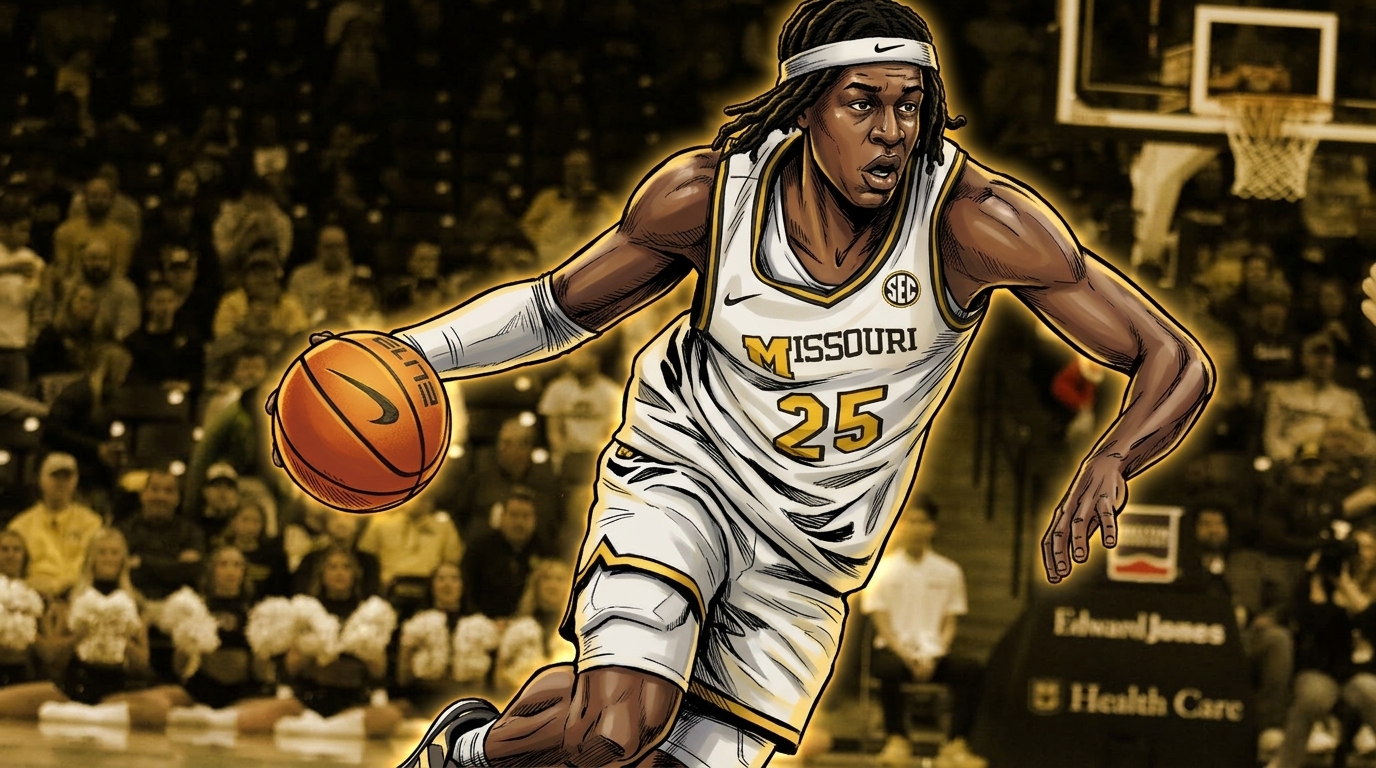
Georgia, Texas, Texas A&M, Ole Miss, Oklahoma, LSU, Alabama, Tennessee and Missouri fill out the SEC’s preseason contingent, spanning No. 3 through No. 25. That’s the conference’s usual approach: flood the poll with ranked teams and let the sheer number carry the reputational weight. It has worked for a decade. This year, the volume showed up and the votes at the top didn’t follow it. Georgia is the highest-ranked SEC team in the country, the two-time defending SEC champion, and it still finished the balloting with zero first-place votes. If the two-time SEC champion can’t pull a single first-place vote in a year the conference sent nine teams into the rankings, that tells you where 69 voters actually landed on the top of the sport, SEC depth acknowledged or not. Georgia rounds out a top five that reads Ohio State, Oregon, Georgia, Notre Dame and Texas. Three different conferences represented there, and still not one first-place vote for anybody outside the Big Ten’s top three.
Should Anyone Trust a Preseason No. 1?
The hedge matters here, because a preseason ranking is a snapshot of media sentiment in August, not a forecast. In the last 20 years, only two teams that opened at preseason No. 1 went on to win the national championship that same season — USC in 2004 and Alabama in 2017. (Two title runs out of twenty seasons of preseason No. 1s is not a great hit rate, whichever team ends up wearing the target.) I think that history is the right caveat for Ohio State fans keeping their preseason enthusiasm proportional, and it’s the same caveat that should stop anyone from overreacting to the SEC’s shutout in the other direction.
But the caveat about predictive power doesn’t erase what the vote itself actually measured, and it was never a forecast to begin with. It was a referendum on which conference 69 media members currently trust at the top of the sport, and for the first time in years, that trust didn’t default to the SEC. The conference didn’t get worse. By the poll’s own math, it’s still the deepest league in the country. What changed is that Ohio State and Oregon did enough last season, whatever the specifics look like program to program, that voters were willing to hand the benefit of the doubt somewhere else for a change. That’s a real, measurable shift in the room, even if it lasts exactly one Saturday into the season.
Watch what happens once these teams actually play each other, or play ranked SEC opponents, because that’s when a preseason poll gets validated or gets embarrassed. Ohio State and Oregon are unbeaten on paper right now, the easiest version of unbeaten there is. The SEC’s nine teams still have to be reckoned with individually, starting with Georgia in September and running through a full slate of cross-conference games that will tell us far more than 69 ballots cast in August ever could. That’s the thread running through our college football coverage all preseason: don’t chase the ranking at the top, watch who’s actually beating whom once it counts. For now, the poll says what it says. The Big Ten has the room’s attention, and the SEC has to win it back one Saturday at a time.