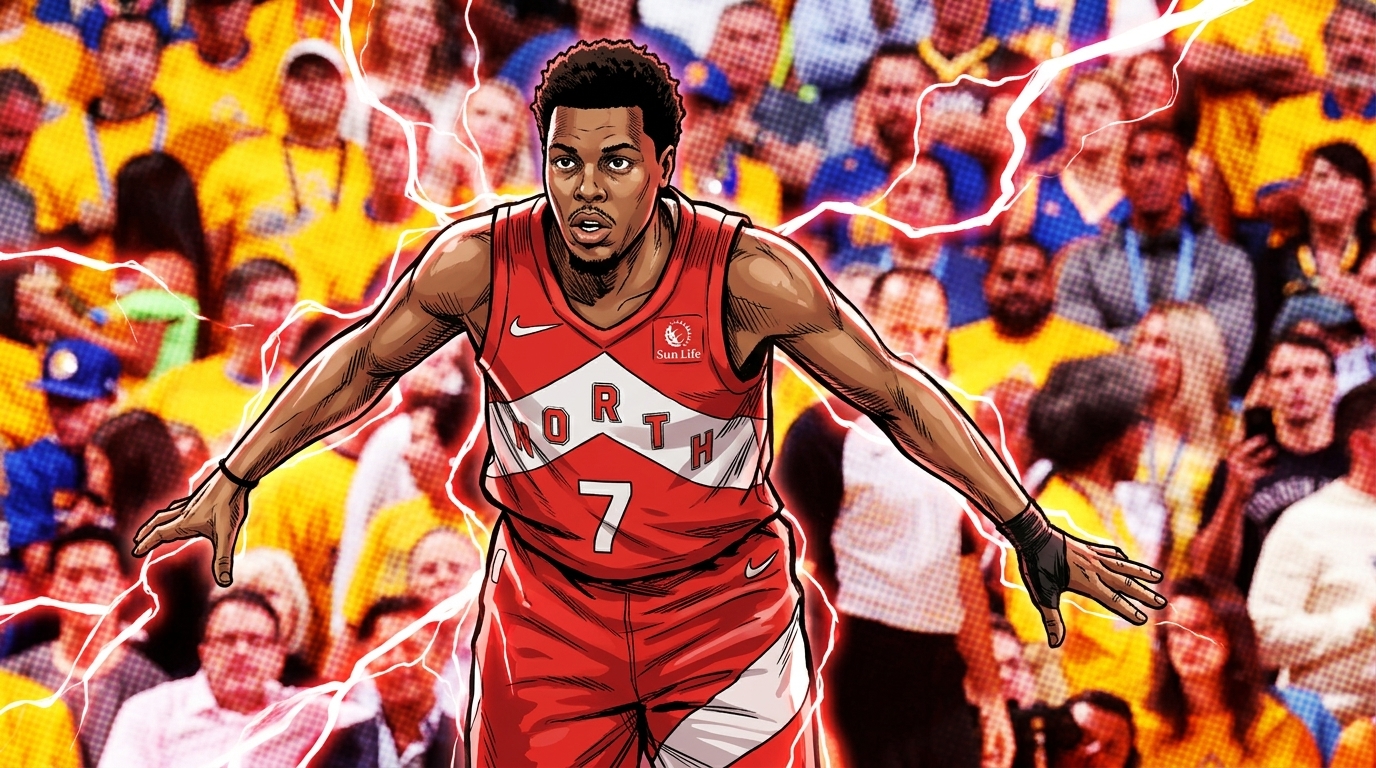

The Memphis Grizzlies traded Ja Morant to Portland on Sunday and called it organizational direction, which is one way to describe what happens when you dismantle everything you built and arrive at a roster that cannot be coherently explained to another human being.
https://x.com/ShamsCharania/status/2071693198171226335
This began thirteen months ago with a first-round sweep. Getting swept in the first round by Oklahoma City apparently convinced the Grizzlies front office that the core they had assembled (Morant, Jaren Jackson Jr., Desmond Bane) was not the problem to solve around but the problem itself. Zach Kleiman moved fast. Bane went to Orlando for four first-round picks and a collection of names. Jackson went to Utah in February for three more picks and a different collection of names. And now Morant, 26 years old with $87 million left on his contract and 20 games played last season, goes to Portland for Jerami Grant, Kris Murray, and a million dollars cash.
The cash is a genuinely nice touch.
What Memphis has constructed is a roster that functions like a building that has been stripped for salvage; the copper wiring is all accounted for and very valuable, but you cannot live in it yet. Twelve first-round picks through 2032. A $28.8 million traded player exception, the largest in NBA history. Zach Edey in the post. Isaiah Stewart also in the post. Cameron Boozer, who they drafted with the third pick this June, plays best in the post. There is no point guard on this roster with any demonstrated ability to run a half-court offense; there is also no obvious reason why three post-centric players would coexist productively, but that is an organizational direction question for another day.
Kleiman, asked about Morant specifically, said: “This is not about Ja in particular.” This is the kind of sentence that sounds reasonable until you notice that Ja Morant — a two-time All-Star who averaged 19.5 points per game before tearing his elbow in January — was in fact the particular thing that just happened. The Grizzlies social media team, to their credit, went a different direction entirely: “12, thank you for every highlight, every memory, every unforgettable moment and for all you’ve given this team, this community and this city.” One of these statements was written by the general manager.
The strongest version of the counterargument goes like this: Memphis now has the most draft capital in the league, the flexibility to absorb or create any deal they want, and a young core in Edey, Cedric Coward, Jaylen Wells, and Walter Clayton Jr. that could develop into something real. Draft capital compounds. Twelve picks is not nothing; it is, in fact, a lot. The 2025-26 season was going to be a loss anyway, and 25-57 at least produced a useful lottery position.
All of that is true. It is also beside the point. The question was never whether Memphis collected assets; they clearly did, efficiently and at volume. The question is what those assets are pointed at. A rebuild has a direction. A teardown has an endpoint. What Memphis executed was something closer to a controlled implosion of a franchise that was four years removed from a 56-win season — except there was no blueprint for what gets built on the lot afterward. You do not trade a 26-year-old All-Star for Jerami Grant and $1 million cash because you know where you are going; you do it because you have decided, firmly and with conviction, to stop being where you were.
The NBA’s 2026 offseason has produced stranger outcomes, but few more clarifying ones. The Grizzlies spent thirteen months turning Morant, Jackson, and Bane into a warehouse of futures and a frontcourt that plays the same position three times. Whatever this is, they appear to be committed to it.