
There is a K-pop phenomenon called “decoding season” where fans spend weeks parsing cryptic Instagram posts, color palettes in official photos, and the precise order of a group’s hand gestures for hidden messages about an upcoming album. I find it fascinating not because the fans are wrong to do it — sometimes the hints are real — but because the decoding itself has become the entertainment. The album almost doesn’t matter. The hunt is the product.
I thought about that a lot last night when sixty journalists were dissecting a photo of LeBron James standing next to a pool.
The image itself told you nothing definitively. Palm trees that could be Miami or Southern California or a resort in literally any warm-weather city. A pool that could belong to anyone. LeBron in a t-shirt, expression neutral. Within eight minutes, three separate verified accounts had mapped the tree species. That’s not journalism. That’s fandom infrastructure wearing a press credential. And it tells you more about us — the audience, the participants, the co-producers — than it tells you about where LeBron is going.
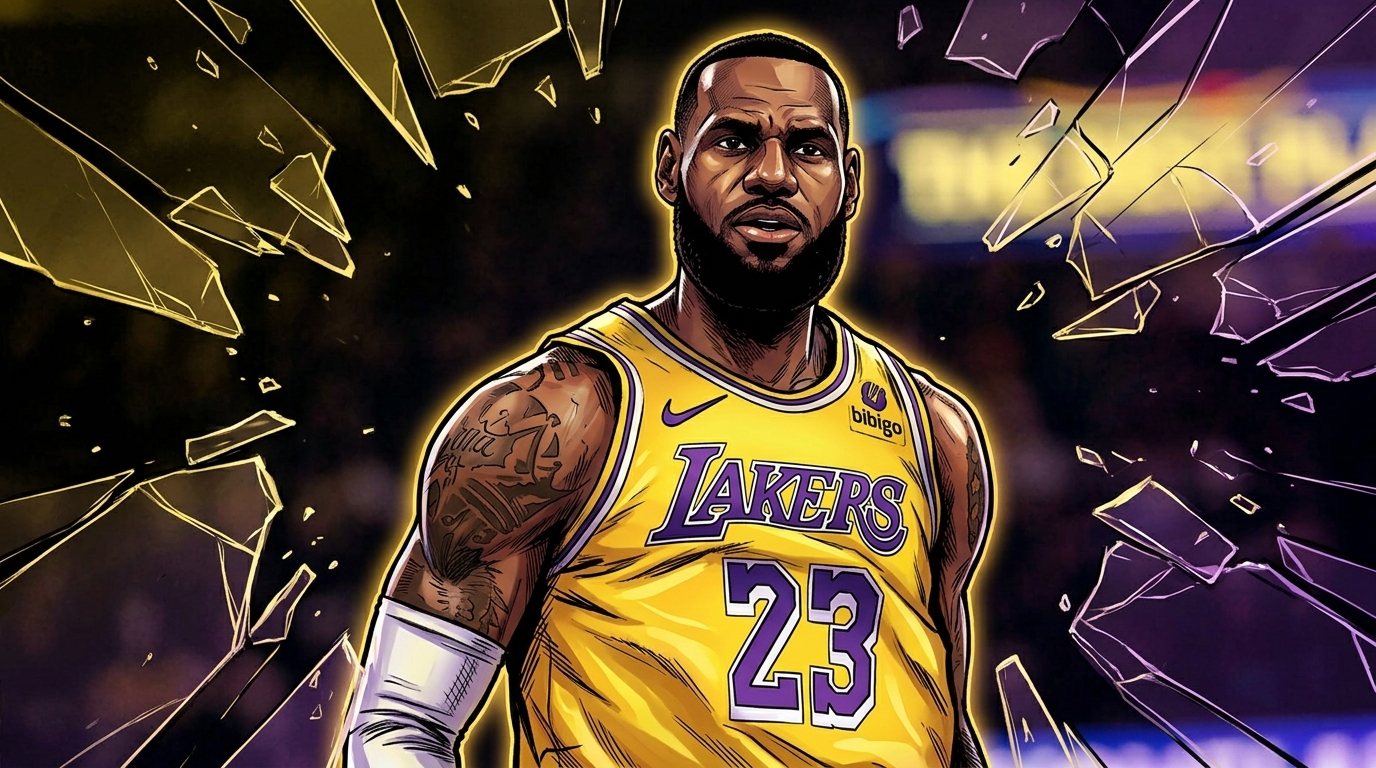
This is what the LeBron James free agency media apparatus has become after 20-plus years: a self-sustaining content genre that runs independent of basketball outcomes.
The mechanics are not subtle. Rich Paul told ESPN’s Shams Charania that LeBron will play elsewhere next season. Not in a press release. Not in a player statement. Through the canonical pipe — Rich Paul calls Shams, Shams publishes, the machine turns on. The announcement came hours before free agency officially opened, timed to land while every NBA reporter was already at their desk, already primed, already waiting. That timing is not incidental. Klutch Sports manages a leak calendar the same way a label manages a rollout.
https://x.com/ShamsCharania/status/2071988062259736871
Then the breadcrumbs. Shams reported that this is “a happiness-led decision.” That phrase alone generated roughly four hundred tweets analyzing what “happiness” means in context, where happiness might be found, and whether Draymond Green’s decision to decline his $27.6 million player option was itself a breadcrumb pointing toward Golden State. It might have been. Draymond knows things Rich Paul knows. Or Draymond made a smart basketball decision and we assigned it narrative retroactively. Both are equally possible. Both generate identical engagement numbers.
This is the strongest counterargument, and I want to sit with it honestly: this is also just a real news story. LeBron James is 41 years old, about to play his 24th NBA season — a record — and he is leaving the Lakers after eight years. He is arguably the most consequential player in NBA history and his movement reshapes franchise trajectories. The Warriors at -500 to land him are a championship contender if that happens. The Cavaliers at +300 carry genuine basketball stakes. If you cover the NBA, you cover this. The pool photo and the tree species analysis are dumb, sure, but the underlying story is legitimate.
That’s true. And it doesn’t contradict what I’m arguing.
The news event and the content genre coexist. The genre just stopped needing the event to run. LeBron could announce tomorrow morning that he’s re-signing with the Lakers in a one-paragraph statement and the discourse machine would generate three days of content about why the announcement was worded that way, what the timing revealed, and whether Rich Paul’s silence since the announcement is itself significant. The machine metabolizes everything, including its own negation. Outrage at the machine is still content for the machine. This essay is content for the machine.
What the apparatus needs from us specifically is our willingness to behave like decoders. To treat every piece of the rollout as a clue. LeBron liked a post from a Golden State-adjacent account in 2024. Did you know that? Someone does. Someone has a spreadsheet. That information is somewhere in a Substack right now, framed as context.
We are not passive consumers here. We write the tweets. We share the takes. We do the actual basketball stakes: the cap math, the roster fit, the futures odds. And we do the pool photo semiotics. We do both with equal energy. And if you want to understand how a single athlete becomes a celebrity media machine consuming itself, LeBron’s free agency is the 20-year case study that explains every version that came after.
The question I keep landing on isn’t whether the LeBron Decision Machine is good or bad for basketball. It’s whether we’d know what to do with a superstar who just quietly called a team, signed a contract, and posted nothing. No cryptic pool photo. No Rich Paul press pipeline. No happiness-led anything. Just: here’s where I’m going.
I don’t think we’d know what to do with that at all. And I’m not sure I would either.