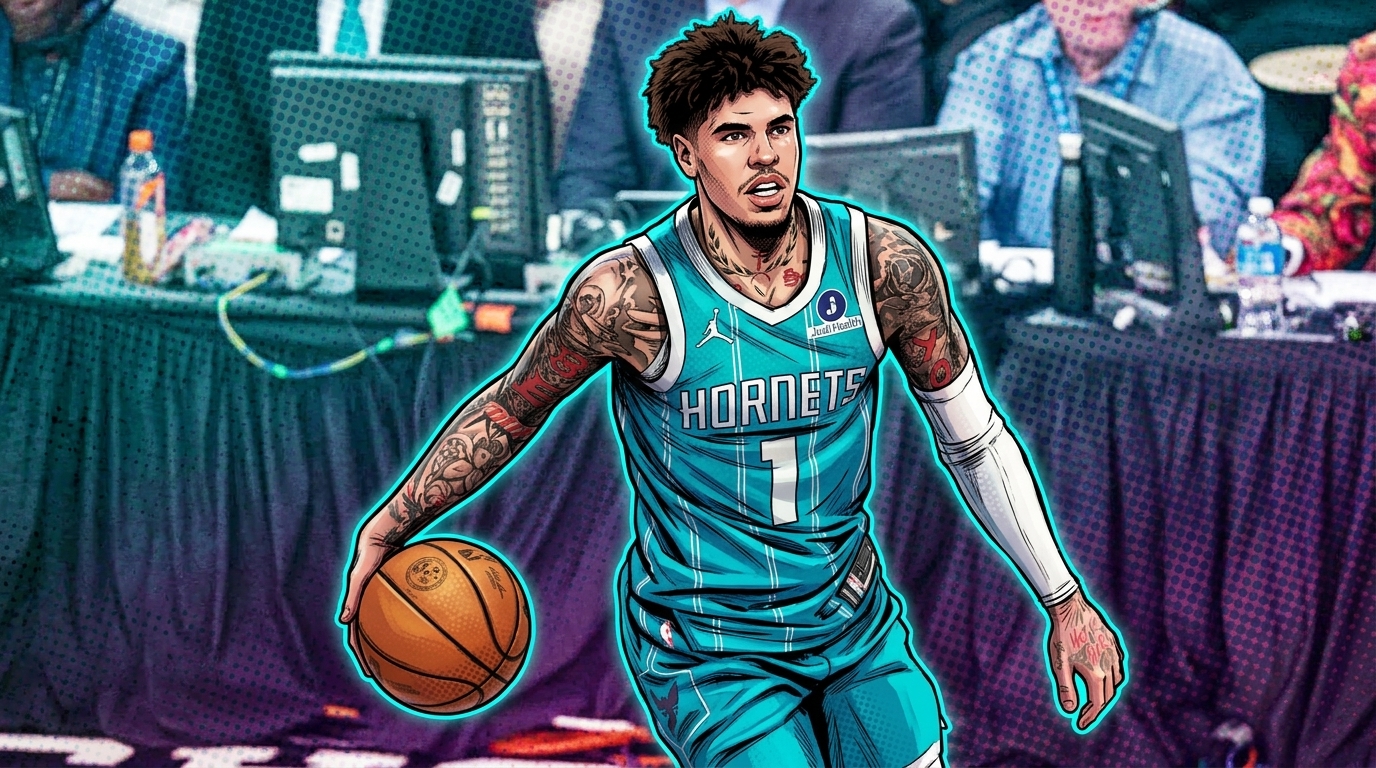

Every letter grade attached to the LaMelo Ball trade this month has counted to two: two teams, one column of picks out, one column of talent in. The number that actually explains what Minnesota paid is four, as in four franchises, four separate motives, and four negotiating rooms that had to align before Ball ever put on a Timberwolves jersey.
A single outlet’s grade can only measure what went out against what came back. It can’t measure what a 24-year-old All-Star point guard is actually worth on the open market, because that market barely exists. Guards this good at this age almost never get traded at all, and the four-team scramble required to close this specific deal is itself proof Minnesota was pricing Ball against more than one buyer’s ledger.
Why Did ESPN Grade the LaMelo Ball Trade So Low?
ESPN’s Zach Kram gave Minnesota a D+, citing Ball’s injury history and the picks the Timberwolves gave up. He counted Ball’s games played over four seasons at 36, 22, 47, and 72, then noted Minnesota no longer fully controls its own first-round pick in six of the next seven drafts. That’s the entire case behind the grade.
That grade is one entry in ESPN’s 2026 NBA trade grades package, graded with the same two-team math applied to every deal of the summer.
Kram’s complaint about the cost is specific: an unprotected first-round pick that won’t convey until 2033, three first-round swaps, and three second-round selections. He also flagged the frontcourt Minnesota is left with, just Rudy Gobert at center and Jaden McDaniels at forward, calling size “a major issue in a league in which size is once again becoming more important.” Those are real concerns. They’re concerns about depth, though, not about whether Ball himself was worth the return.
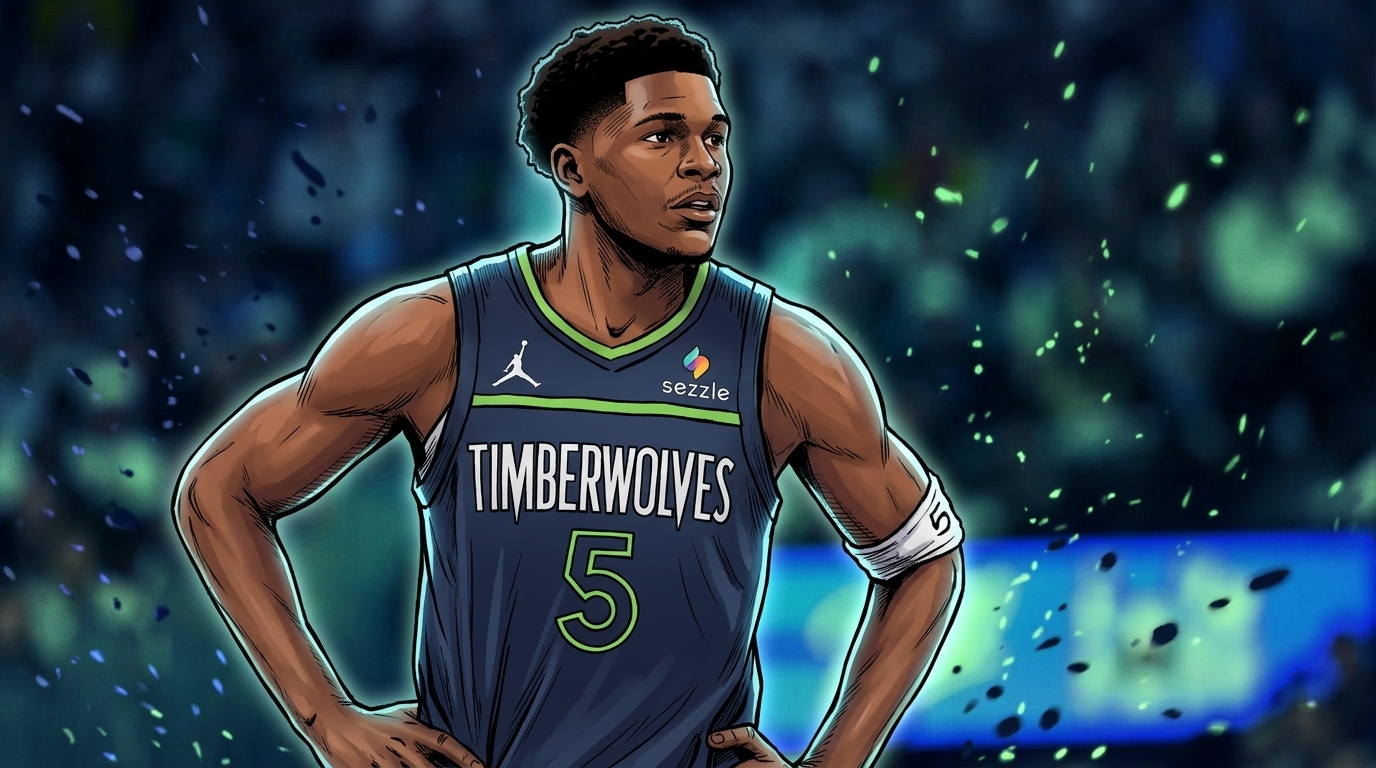
CBS Sports saw the same trade and reached the opposite conclusion on the LaMelo Ball trade grade: a B+ for Minnesota, a B for Charlotte. Its reasoning centered on need. The Timberwolves lacked a proven point guard capable of competing with the West’s elite, and Ball solves that exact problem next to Anthony Edwards. CBS didn’t dodge the risk, either: “if Anthony Edwards is on another team in the next few years, this trade blowing up in Minnesota’s face is probably going to be the reason why.”
What Does a Four-Team Trade Actually Tell Us About Price?
The version most fans absorbed was Wolves-get-Ball, Hornets-get-picks. The real trade needed four teams to close, which alone separates the LaMelo Ball Timberwolves trade from almost every other deal ESPN graded this summer. Minnesota sent Naz Reid, an unprotected 2033 first-round pick, swaps in 2028, 2029, and 2030, second-rounders in 2029, 2032, and 2033, and the draft rights to Joshua Jefferson out the door. Charlotte kept Reid, Mouhamadou Gueye, the rights to Matteo Spagnolo, and most of that draft capital. Brooklyn took Julius Randle and Jefferson’s rights, and the cap math behind moving off Julius Randle had been a problem Minnesota was trying to solve since spring. Chicago, with no direct interest in Ball, walked away with center Nic Claxton, and Chicago’s April signing of Gueye is the reason the deal couldn’t officially close until July 9.
Shams Charania broke the full trade shortly before it became official, and the four-team shape of it was there from the first report.
https://twitter.com/ShamsCharania/status/2070135677778362703
Charlotte also walked away with the largest traded player exception in NBA history, roughly $40.77 million, built off Ball’s outgoing salary. A trade exception works like a shopping voucher: Charlotte can use it later to absorb an incoming salary without sending matching money back out. A rebuilding team doesn’t get handed a $40.77 million voucher by a franchise that just fleeced it.
Call it the Four-Team Receipt. Add up every line, Reid to Charlotte, Randle to Brooklyn, Claxton to Chicago, picks scattered across two rosters, and Ball’s actual price stops looking like six picks for one player. It looks like four teams solving four separate problems, with Minnesota’s line item just one entry on a much longer bill. Any LaMelo Ball trade grade built on two teams can only read the Minnesota line.
How Rare Is a 24-Year-Old All-Star Point Guard on the Open Market?
Picks are fungible. A team can always find another one, protect it, swap it, package it into the next deal. A productive All-Star point guard on a movable contract, still months from his 25th birthday, is not fungible, because almost nobody in that specific box ever gets traded. Teams that draft a star point guard build around him. The ones that don’t rarely let him go before his contract forces the issue.
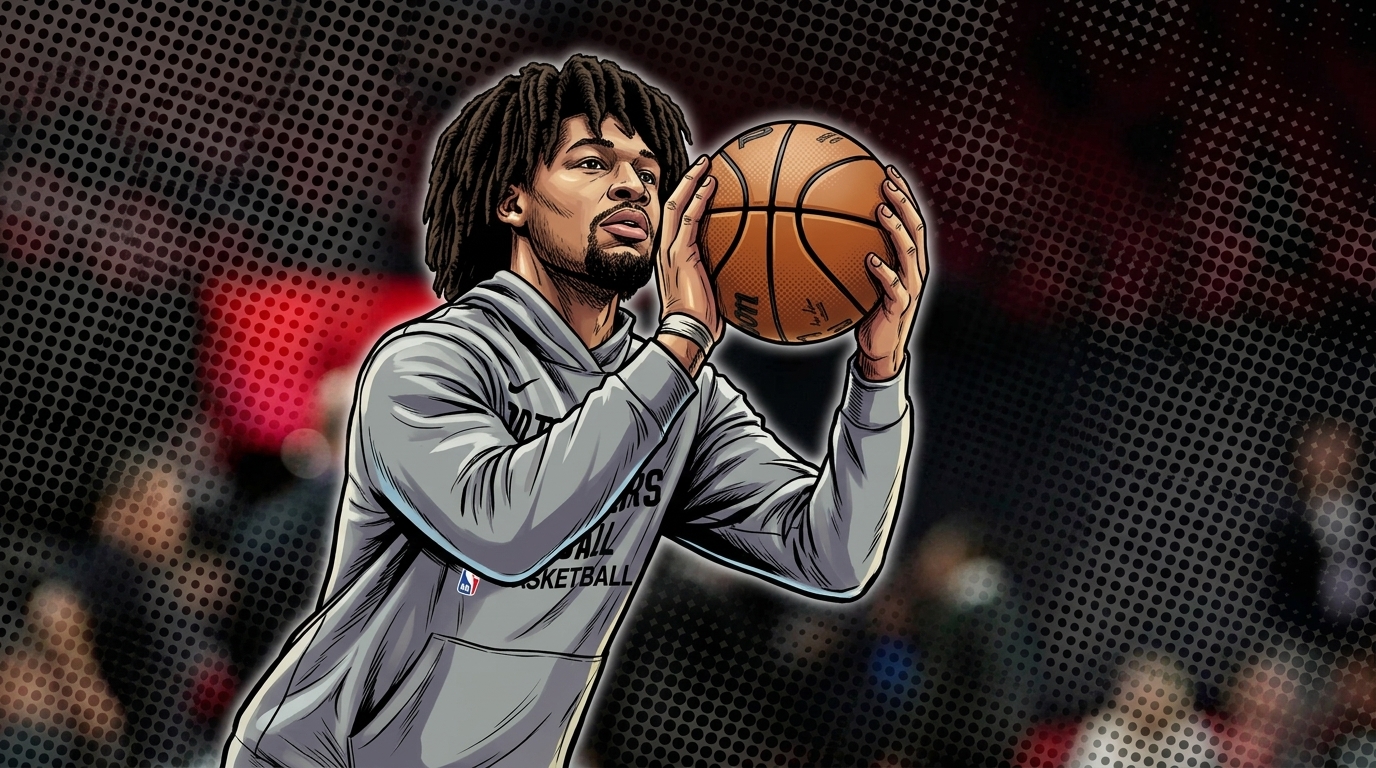
Ball is exactly that box. He posted 20.1 points and 7.1 assists a game on 40.7% shooting last season, per SI.com, numbers that read like a lead ballhandler hitting his stride, not a reclamation project. Durability is the real question mark. He’s played 60 or more games only twice in six seasons, and Kram’s own count, 36, 22, 47, 72, is still the single clearest data point in the whole debate.
Minnesota’s stated reasoning tracks with that profile. Coach Chris Finch said the team learned a hard lesson in the playoffs: “You’ve got to have a big backcourt.” President Tim Connelly framed it as culture as much as talent, describing Ball’s “carefree style” as something that could create “a joyous atmosphere” after a season Connelly himself described as defined by “moodiness.” The basketball logic under both quotes is the same one: Edwards had been asked to handle the ballhandling and the shot creation by himself, and Ball is there to take half that job off his plate.
That pairing isn’t free defensively. Two shot creators in the same backcourt means two defenders who need somewhere to hide, and the defensive tradeoffs that backcourt creates are real enough that Minnesota’s coaching staff will be living with them all season. Offense was the July priority. Defense is next spring’s problem.
Did Minnesota Actually Overpay for LaMelo Ball?
Everything Kram flagged is true. Minnesota gave up an unprotected 2033 first-rounder, three pick swaps, three second-rounders, and frontcourt depth it now doesn’t have, down to Gobert and McDaniels as the only established size on the roster. None of that is invented. What a two-team LaMelo Ball trade grade can’t do is weigh those losses against a market rate for the asset actually acquired, because a healthy, productive, 24-year-old All-Star point guard on a workable contract essentially never reaches the trade block. When one finally does, four teams show up to negotiate, not two, and the price gets set across all four.
The games-played column is the one legitimate reason to hedge on any LaMelo Ball trade grade written this summer. A guard who has cracked 60 appearances twice in six years is a health bet, not a sure thing, and if Ball misses another season, the Reid and Randle names attached to this trade will sting every time Charlotte or Brooklyn wins with either of them. That risk belongs in an honest accounting of the deal. It just isn’t the same risk as overpaying, and ESPN’s D+ never separates the two.
By next spring, the conversation around the LaMelo Ball trade grade will look different, and not because anyone quietly regrades it. Ball will have played half a season next to Edwards in a backcourt built for him, Charlotte’s return will still be sitting in draft rooms years from converting into anything, and the four-team scramble that made this trade possible will read as the real price tag it always was. A D+ measures July. It was never built to measure March.