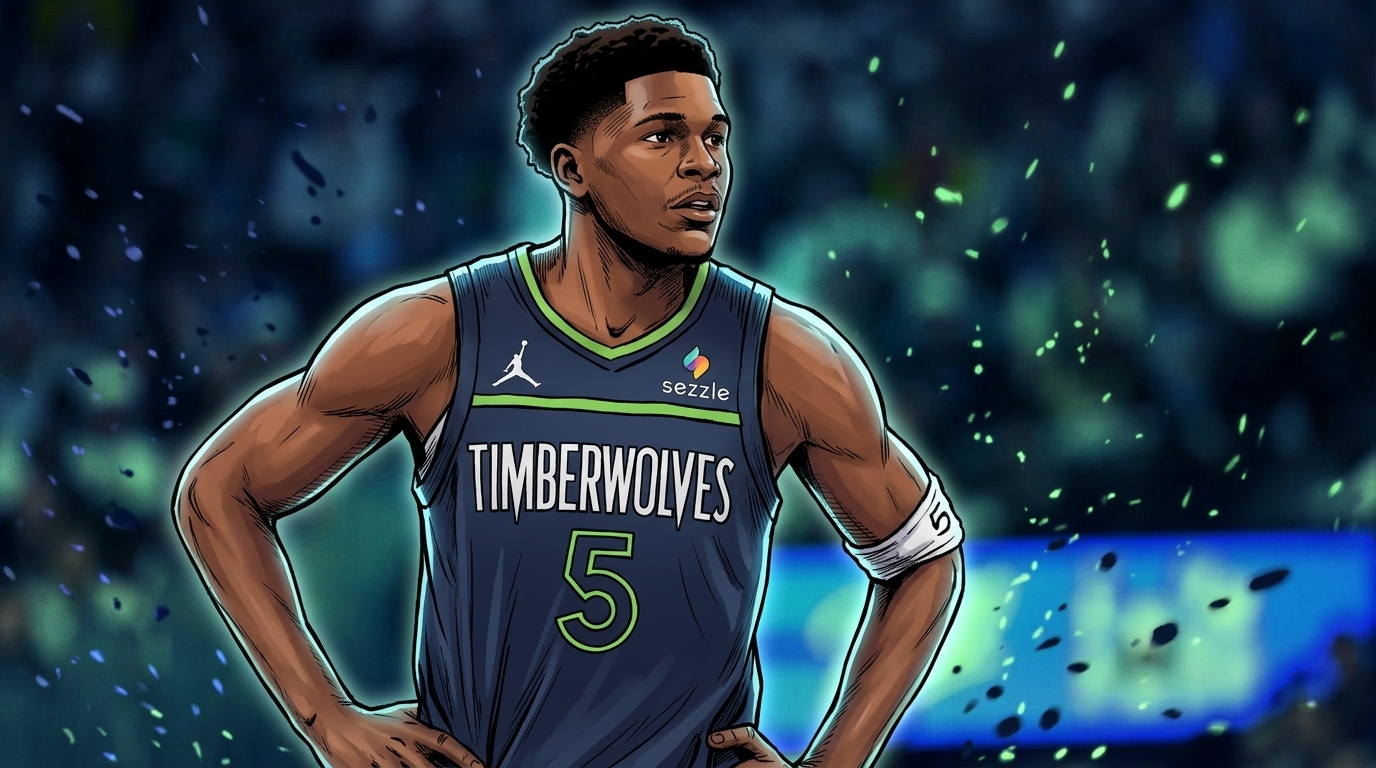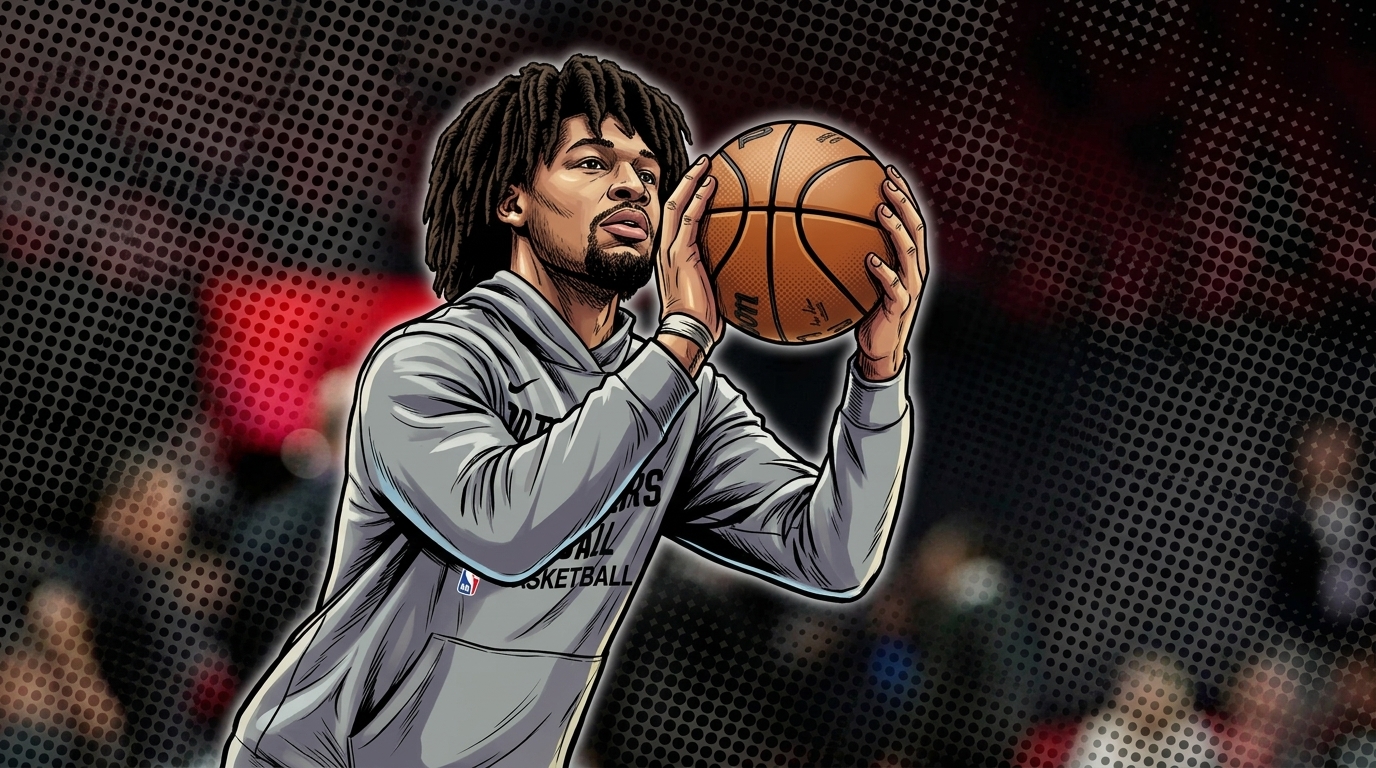

Jonathan Kuminga has four teams circling his 2026 free agency in late July: the Los Angeles Lakers, the Cleveland Cavaliers, the Milwaukee Bucks, and the Atlanta Hawks, who already own his rights and still won’t commit. Not one of them has done the single thing that would end this: opened a checkbook. Kuminga is an unrestricted free agent, which means there’s no offer sheet for Atlanta to match and no matching rights for anyone to invoke; there’s just a market that keeps circling instead of landing.
Kuminga’s path here runs through the Porzingis trade that sent him to Atlanta, the deadline deal that shipped him and Buddy Hield out of Golden State for Kristaps Porzingis. He gave the Hawks sixteen respectable games to close the season, averaging 12.3 points, 5.3 rebounds, and 2.1 assists in 22.1 minutes a night, with a 27-point Atlanta debut against Washington that suggested there was more in the tank than a change-of-scenery cameo. Atlanta watched all sixteen of those games, then declined his $24.3 million team option in June anyway. Atlanta already said no once, in writing, with a number attached, and is now positioned as the broker who has to help someone else say yes. Kuminga is 23, which is the one fact in this whole saga working in his favor; everybody circling him is betting he’ll still be good in two years, which is a low bar dressed up as patience.
Picture four people at a restaurant table, each one gesturing at their wallet the instant the check lands; none of them actually opens it. That’s Kuminga’s July. The Lakers reach first, then pull back when the bill turns out to be real. The Cavaliers nod along, distracted, waiting on a different table across the room. The Bucks lean in late, mostly because they’re already holding a large bill nobody else at their own table wanted. Atlanta, the party that already ate and paid for a different meal entirely, keeps offering to flag down the waiter for everybody else.
The Lakers version of this got the furthest and stalled the fastest. Los Angeles offered something in the range of two years and $20 million, then balked at attaching draft capital to a sign-and-trade — the same instinct the Lakers’ front office has shown all summer: spend on the player, flinch at the cost of acquiring him. Kuminga turned down an even smaller prove-it framework from L.A. that would have let him rebuild value and try free agency again next summer. He’s reportedly seeking north of $15 million a year, with some reporting pushing the number toward $20-25 million; treat that as a range, because nobody involved has agreed to settle it.
Cleveland waited on a bigger fish before turning to Kuminga at all. The Cavaliers held off on a real pursuit while chasing LeBron James through LeBron’s own free agency saga, and only pivoted once LeBron signed with Philadelphia instead of Cleveland. Kuminga reportedly prefers this outcome anyway: his agent has said Kuminga likes the Cavs and likes Kenny Atkinson, the coach who worked with him as Steve Kerr’s top assistant in Golden State, and he’s eyeing the $20-23 million range he’d have made had Atlanta simply kept the option it declined. Max Strus and Dennis Schroder have been floated as trade chips Cleveland could move to clear the room; nothing about “floated” implies anyone has signed off on it.
Milwaukee is the newest name at the table, armed with a $25.5 million trade exception created by shipping Giannis Antetokounmpo to Miami, and reportedly circling in part because Atlanta doesn’t want Jarred Vanderbilt’s contract back in any deal. That’s the entire sign-and-trade market in one sentence: the team that already told Kuminga no is now vetoing the contracts other teams would use to tell him yes.
https://x.com/esidery/status/2078956889820344366
Kuminga’s market is four teams deep and zero deals close, and the reason isn’t complicated once you look at who’s actually on the hook. Atlanta has no incentive to rush a trade it isn’t paying for. The other three have no incentive to rush an offer nobody is forcing them to make. Everyone at this table can sit here indefinitely, because the check, somehow, still hasn’t technically arrived.