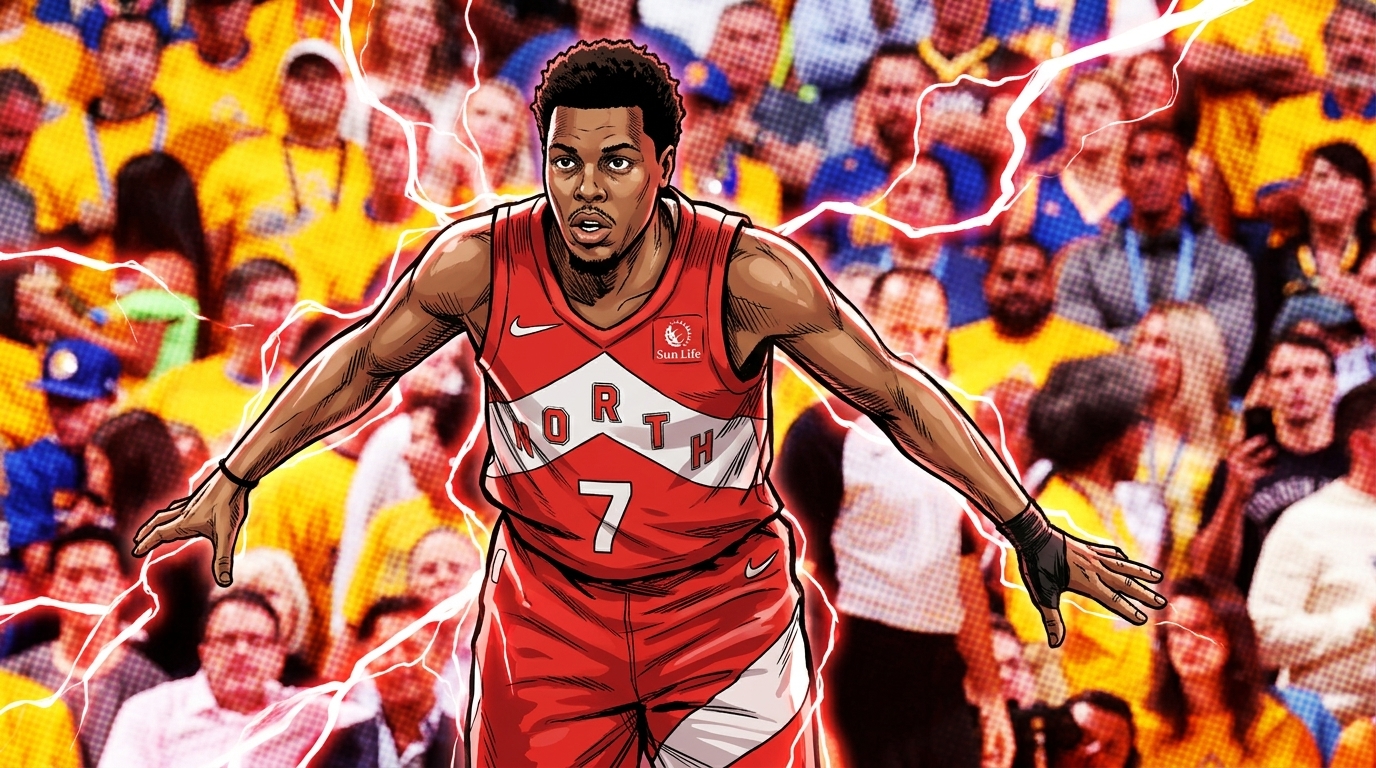
The number is +225. That is the Knicks’ combined point differential across their 10-game playoff winning streak — last three games of the Atlanta series, the Philadelphia sweep, three games into the Eastern Conference Finals against Cleveland — and it is the largest 10-game stretch in NBA history, regular season or playoffs, surpassing the 2017 Warriors’ +171. Nine of those ten wins came by double digits. The average margin of victory is 22.5 points. They are, statistically, the most dominant team over any comparable window in the history of the sport. The Knicks are one win from ending a 27-year Finals drought.
The New York Post’s social media team called it a “Cinderella run.”
This is what we are doing.
https://twitter.com/UnderdogNBA/status/2058285143782306071
This streak is the 10th time in NBA history that a team has won ten or more consecutive games in a single postseason; the historical company includes the 2017 Warriors, the 2001 Lakers, and the 1999 Spurs. The Cinderella framework requires, at minimum, an element of surprise; it requires a team that arrived at the ball without an invitation. The Knicks have been one of the two or three deepest rosters in the Eastern Conference for two consecutive seasons. What they are currently doing to opponents is not surprising anybody who was paying attention. It is surprising only the people who built their professional identities on the Knicks being a punchline, and who now find themselves unable to update the file.
The Ringer ran a headline mid-playoff run, after weeks of dominant performances: “Are the Knicks a Mirage, a Moment, or the Real Thing?” The Knicks were, at that point, winning playoff games by an average of twenty-two points. The honest answer: they are the real thing, and you had the receipts in front of you when you wrote the headline. Paul Pierce — a man whose basketball opinions now function primarily as a stress test for one’s patience — declared that “neither one of these teams have the ingredients to win a chip.” He also compared the Knicks to Instagram models. He did not specify what happens when the Instagram model wins the Eastern Conference Finals by twenty-two points a game. The metaphor has a load-bearing flaw.
Here is what actually happened: the press corps that covered the Knicks’ dysfunction era — the Dolan years, the Isiah years, the institutional collapse that made Knicks jokes a reliable social media currency for a decade — developed a professional vocabulary around that dysfunction. That vocabulary was lucrative; it was relatable; it generated clicks in a way that “well-constructed team executes coherent front-office vision” simply does not. Jalen Brunson’s plus-minus numbers through the playoffs — +186 across twelve games, 27.6 points per game — are the numbers of a franchise cornerstone, not a fairy tale protagonist. But “franchise cornerstone” is a boring story. “Cinderella” is a story editors can sell. The media ecosystem does not update priors; it updates packaging.
Draymond Green, who is sometimes the most lucid person in a room without trying to be, put it plainly: “There’s no one playing better than the New York Knicks. They have been consistently good on both sides of the basketball.” This is not a controversial observation. It is an accurate one. Its accuracy is precisely why it went relatively unnoticed.
What the Cavaliers series has exposed about media ceiling-setting is something I am in a specific position to assess. I watched my Cleveland team get dismantled, game by game, by a squad that national analysts were still auditing for legitimacy. Three games; a collective shrug from the team that was supposedly the underdog. The Knicks did not sneak past the Cavaliers. They disassembled them in the manner of a team that had, at some earlier point, decided to be very good at basketball and then simply continued being very good at basketball. The Cinderella label requires the protagonist to be out of her element; the Knicks have been entirely in their element for ten consecutive games, which is a strange thing to watch if you believed the framing, and a completely unremarkable thing to watch if you were paying attention to the roster construction.
The slipper never fit. The Knicks kept winning anyway — because that is what well-constructed teams do.