
Kelsey Plum was leading the WNBA in scoring at 26.8 points per game on 58.9 percent shooting and 48.8 percent from three — all career highs — when she sprained her ankle in a five-on-five scrimmage at Sparks practice on Tuesday. Teammates had to help her off the court. The reevaluation timeline is one week. Head coach Lynne Roberts told reporters afterward that it “looks like an ankle.” At minimum, she will miss three games.
That is the entire update. It is also the entire problem.
Plum, at 31, was doing the best work of her career on a team most casual fans cannot name a second player on. Against the defending champion Aces, she dropped 38 points and 9 assists in a 101–95 Sparks win — the kind of game the league should have been plastering everywhere. She was averaging 6.3 assists per game, fifth in the WNBA. The Sparks were 3–3, had won two straight, and were building something that looked like a real contender out of a roster that includes Dearica Hamby, Cameron Brink, and offseason additions Nneka Ogwumike and Ariel Atkins.
Then practice happened. Not a collision. Not a playoff game. Practice.
The structural concern with the Sparks without Plum is not just about losing a scorer. It is about losing the only player who makes everything else work. Hamby and Brink are legitimate contributors — Hamby has been solid, and Brink’s recent stretch includes a 7-of-11 shooting game. But Atkins is shooting 29 percent. There is no secondary playmaker on this roster who replaces 6.3 assists per game. Losing Plum does not just make the Sparks worse. Without her, they become a fundamentally different team — one missing its engine, heading into three consecutive road games against Washington, Connecticut, and Las Vegas.
That is the WNBA’s single-star dependency problem compressed into one week. In a 12-player roster league with a 40-game season, the margin for losing your best player is functionally zero. The Sparks were not a deep team that happened to have Plum. From top to bottom, this was a Plum team that happened to have some depth.
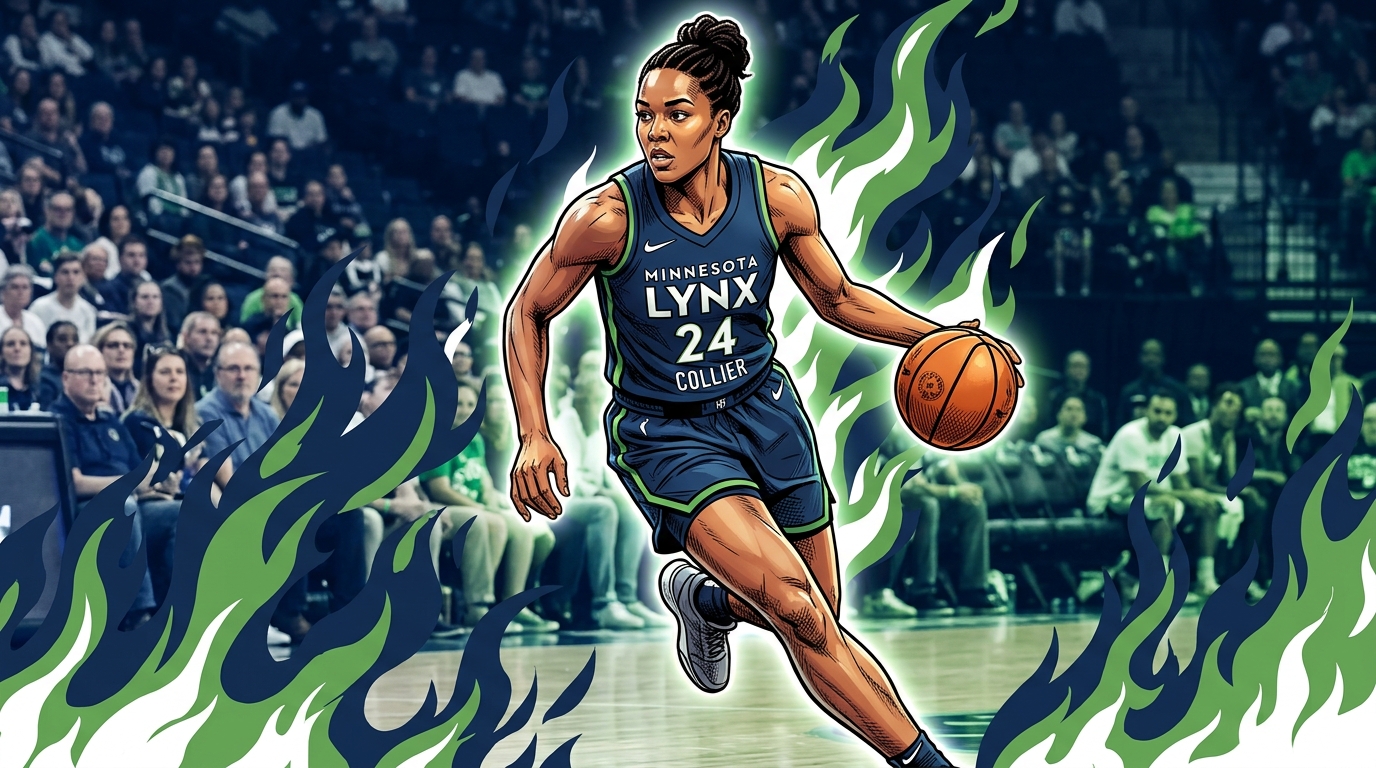
And the league cannot afford this right now. Plum’s ankle sprain lands during the one stretch of the calendar when the WNBA is not competing with the NBA playoffs. This was supposed to be the window — the weeks when casual fans might notice that the best scorer in women’s basketball was shooting 59 percent on a team that just beat Las Vegas on the road. Instead, the league keeps losing its best players to injuries. Napheesa Collier missed the season’s opening weeks with an ankle injury. Sabrina Ionescu went down with a foot injury. Ezi Magbegor — foot. Caitlin Clark missed most of 2025. Now Plum. The WNBA’s visibility has never been higher. Neither has its injury toll.
An ankle sprain is not catastrophic. A one-week reevaluation is not a torn ligament. Plum had missed only four games over her previous four WNBA seasons — she is durable, and she will almost certainly return. But the damage is not just medical. It is temporal. Three road games without their best player, against increasingly difficult opponents, at a moment when the Sparks were proving their rebuild had teeth. Momentum in a 40-game season does not wait for reevaluations.
Plum was the best show in the WNBA through six games, and she was putting it on in near-anonymity on a franchise most fans still associate with Candace Parker’s retirement tour. That was starting to change. Now the Sparks get to find out exactly how much of what they built belongs to one player — and the answer, based on everything we have seen so far, is most of it.