There’s a particular kind of institutional reveal that happens when an organization has to deal with something it didn’t plan for. Not a crisis, not a catastrophe — just a small moment where the system shows you its actual wiring. A rule gets applied in a way that exposes a structural tension nobody wanted to name out loud. The people in charge say the right things. The paperwork goes through. And afterward, everyone is supposed to pretend the whole thing was routine.
The WNBA had one of those moments this past week.
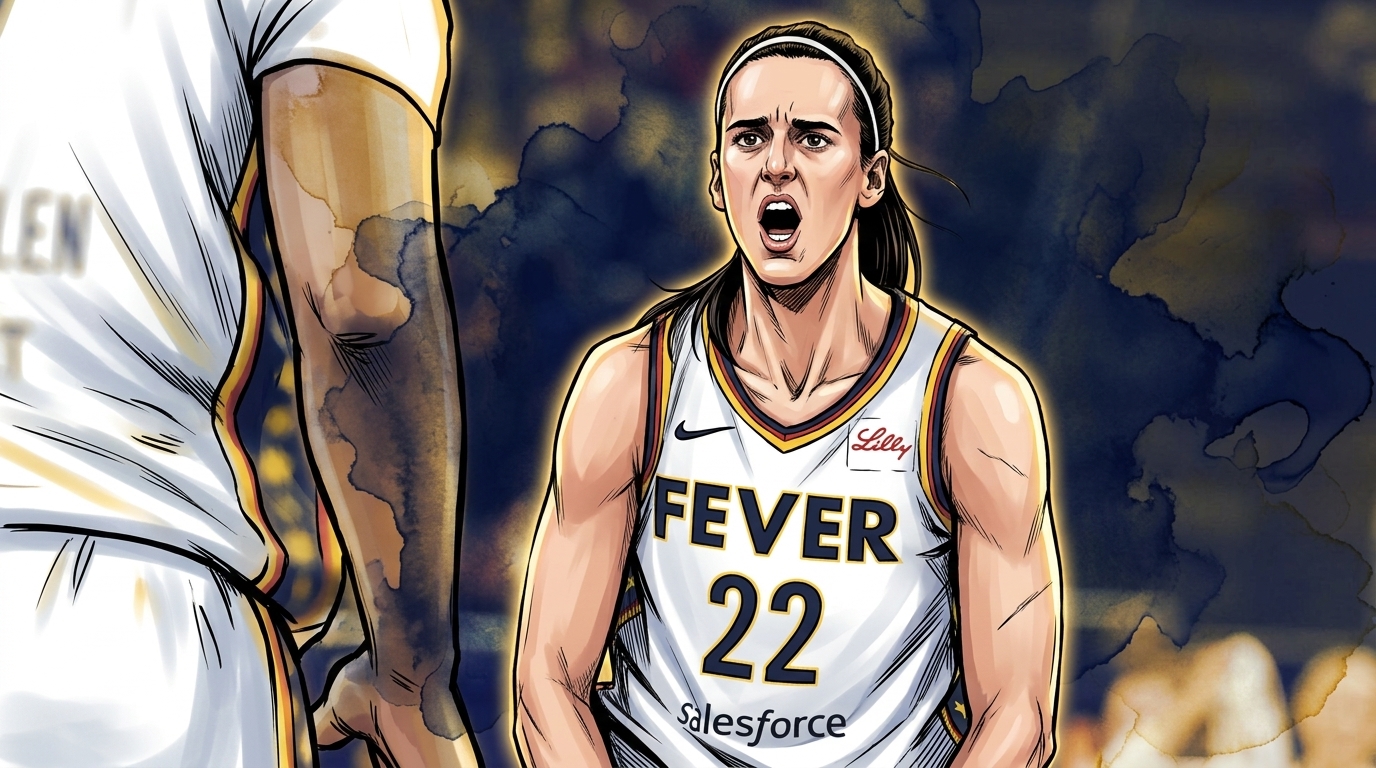
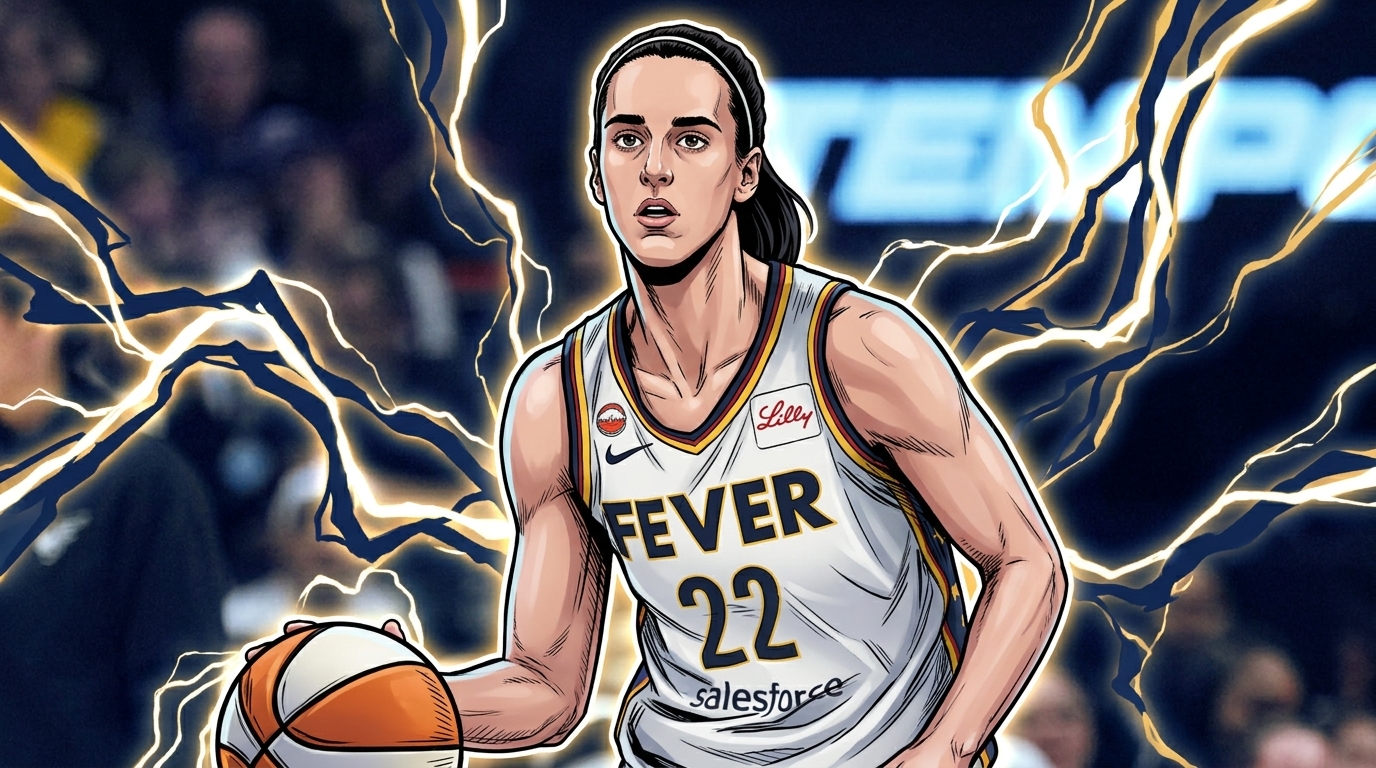
On May 17, Caitlin Clark put up 21 points, 10 assists, and 7 rebounds in 24 minutes against the Seattle Storm — her 12th career game with at least 20 points and 10 assists, a new WNBA all-time record. The league celebrated. The Fever celebrated. Clark was gracious in a way she’s learned to be — “I only played 23 minutes tonight, and I had 10 assists, so I think it shows the potential of what this team can do offensively.” Classic deflection-as-humility, trained into every star who understands that the spotlight burns if you stare directly into it.
https://twitter.com/WNBA/status/2056190586470723729
Four days later, the WNBA issued an official warning to the Indiana Fever for failing to properly disclose Clark’s injury status before she missed a game with back soreness on May 20. The rule is simple: teams must file injury and absence reports by 5 p.m. local time the day before each game. The Fever announced Clark was ruled out approximately 100 minutes before tip-off against the Portland Fire — well past the deadline, well past the window where any opponent, bettor, or TV scheduler could have been appropriately informed. The league’s response was a warning. Not a fine. Not a formal sanction. A warning.
I keep turning this over and I can’t decide if the warning is too soft or exactly what you’d expect.
Courtney Vandersloot, for reference, compiled her 10 career 20-point/10-assist games across 436 appearances. Clark reached 12 in 57. The speed of it is the record. It’s not a slow accumulation of greatness over a long career — it’s compression, a condensation of something that usually takes a decade into three seasons. And somewhere in the middle of this, while the league is building a $2.2 billion media rights deal that starts this season — a figure widely attributed to Clark-driven growth — the Fever couldn’t manage to file a piece of paperwork by five in the afternoon.
That’s not an accident. It’s a symptom.
Coach Stephanie White said after the missed-game incident that Clark had woken up with back stiffness on Wednesday, messaged the training staff immediately, and had “every intention of playing.” White’s explanation for why Clark wasn’t on Tuesday’s injury report, despite missing practice: “Not everybody that doesn’t practice or gets a pro day is on the injury report. That happens all the time. And she wasn’t listed on the injury report earlier because we expected her to play.” Which is, in a technical sense, true. Players practice through discomfort constantly. You don’t flag every sore hamstring. The Fever weren’t hiding anything nefarious — they just misjudged how quickly things would deteriorate, and in doing so, blew a deadline the league requires for a reason.
The reason, of course, is that all 44 of Clark’s regular-season games are nationally televised. Every single one. There is no Caitlin Clark game that is not an event. When she doesn’t play, the calculus for viewership, for media scheduling, for the betting markets that have become enormous secondary infrastructure around professional sports — all of it shifts. The league has built an 11-year, $2.2 billion structure in part on the assumption that Clark will be on the floor. The injury report rule exists precisely to give everyone in that ecosystem enough notice to adjust. The Fever violated it. The league issued a warning and moved on.
Clark said something to The Ringer last week that’s been sitting with me. In a piece about the content machine that surrounds her, she said: “I need to have a little grace with myself. I need people to give me a little bit of grace, too.” It’s the kind of thing you say when the scrutiny has become exhausting, when you’re aware that every absence and every stumble and even the occasional stat correction — record #11 came with the asterisk of retroactively adjusted assists from a prior game — gets processed by an algorithm that runs on engagement rather than accuracy. She’s asking the public to be patient with her. She’s not asking the league to protect her administratively. But maybe she should be.
There’s a version of this story where the warning is appropriate and proportionate — a first-time procedural violation, no malicious intent, Clark returned to the lineup within days, injury wasn’t serious. You could argue the league handled it correctly. White said afterward “she’s healthy, we’re not managing anything,” and the team is 4-2 with their superstar averaging 23.8 points and 9 assists per game. In that light, the warning is just the paperwork you file when a rule gets broken and nobody’s hurt.
But the contrast is what I can’t let go of. Analysts estimate Clark’s economic footprint on the WNBA is approaching $1 billion — a figure that includes the merchandise surge (up 500% in 2024 compared to 2023), the franchise valuation at $340 million, the licensing revenue that benefits every player in the league, the viewership numbers that went up 170% in a single year before leveling into a new normal. She is, in a structural sense, the reason the $2.2 billion deal exists. And the institution that benefits most from her presence couldn’t protect the basic administrative pipeline around her health.
The warning isn’t even really about the warning. It’s about the WNBA’s pattern of failing its stars in small, unglamorous ways — the gap between the rhetoric of a league on the rise and the reality of an organization still figuring out how to actually run at the level it’s marketing to. You can build a $2.2 billion media deal and still not have an adequate system for telling people a player won’t be playing tonight. Those two things coexist.
What I keep coming back to is this: the discourse around Clark for two years has been about whether the WNBA was ready for her star power, whether the league could handle the attention, whether the infrastructure could hold up under the weight. That question was always meant metaphorically — could the league scale, could it manage the media circus, could it translate viewership into sustained growth? The Fever injury report situation makes it literal. The league built a $2.2 billion house and the door hinge broke. The warning is the league’s way of saying: we noticed. The lack of a fine is the league’s way of saying: but not too much.
I’m not certain what the right sanction was. I’m not even certain the warning was wrong. What I’m certain of is that you cannot sell a player as the face of your entire commercial revival and then be surprised when the administrative systems around her need to be as sharp as the marketing is. Clark asked for grace. The league gave the Fever a memo. Somewhere in the distance between those two things is the question the WNBA hasn’t answered yet.