
There’s a particular kind of erasure that gets dressed up as tribute. You take a person, reduce them to their most legible outline, and then spend decades insisting the outline belongs to everyone. The person inside it is incidental. I’ve been thinking about this since Kenya Barris’s documentary dropped in April and Adam Silver finally said out loud what the NBA had spent 57 years refusing to say: that the silhouette on the league’s logo is Jerry West. That the shadow was always a man.
What the discourse that followed revealed, and this is the thing worth sitting with, is that we have learned almost nothing about why silence was required in the first place.
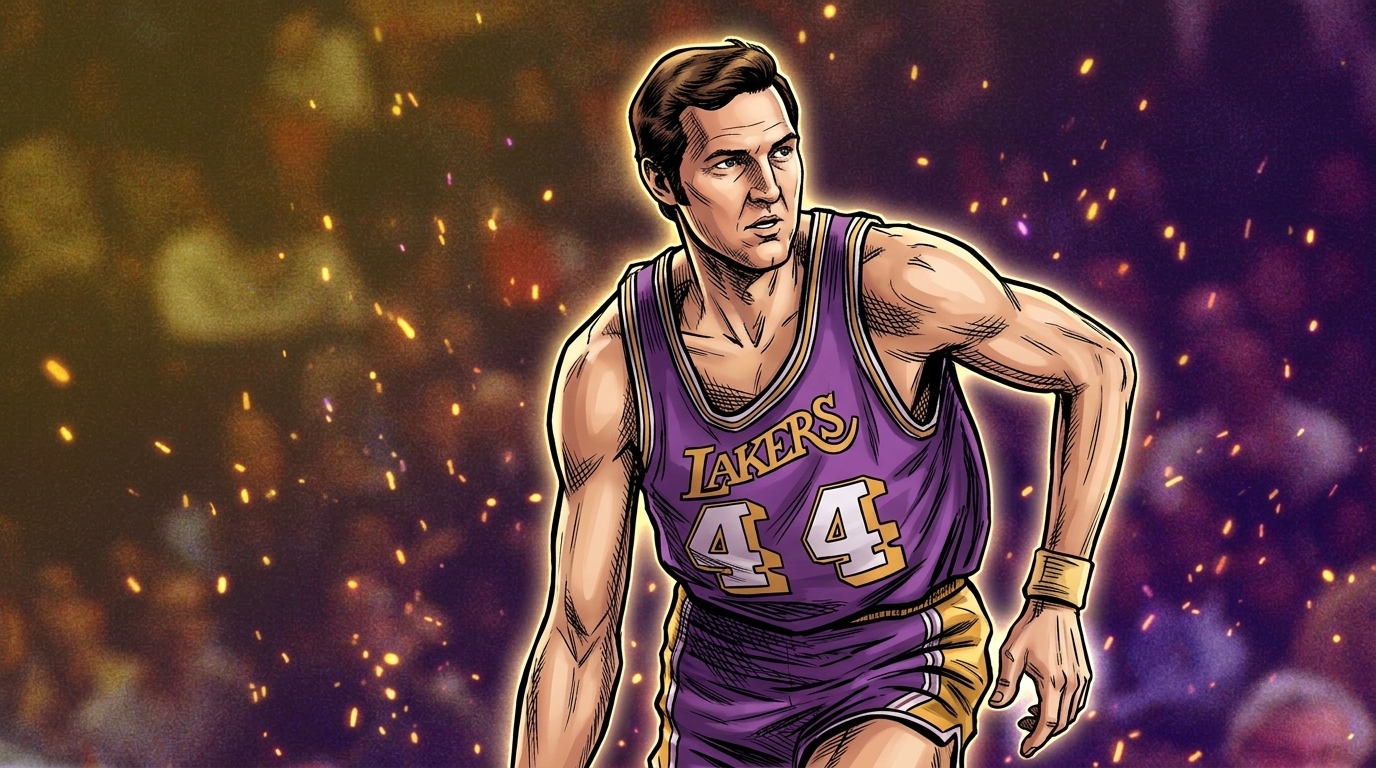
In 1969, brand consultant Alan Siegel used a photograph of Jerry West by Wen Roberts as the basis for the NBA logo. West was in mid-dribble, body suspended in that particular grammar of athletic motion. The league built its entire visual identity on that image. For decades, per the documentary, commissioner David Stern specifically instructed the league not to acknowledge it was West — reportedly because acknowledgment might invite royalty claims. West never received payment for his likeness. The NBA’s silence wasn’t principled ambiguity. It was legal strategy wearing the mask of institutional modesty.
West himself said he found it embarrassing. He said he didn’t like to call attention to himself. That line keeps catching me — the way an athlete trained for decades to subordinate the self to the team, to the league, to the brand, internalizes that subordination so thoroughly that having his body used without consent feels like his problem to be modest about. He said publicly that he wished it had never gotten out that he was the logo, and that if the league wanted to change it, he wished they would.
They did not change it while he was alive.
Jerry West died in Los Angeles on June 12, 2024, at age 86. The documentary honoring him, which officially confirmed what everyone knew, premiered April 16, 2026. Adam Silver said his name. The timing is worth noting: the NBA found its voice about Jerry West’s contribution exactly when Jerry West could no longer ask them anything for it.
https://x.com/Ballislife/status/2044870296012832811
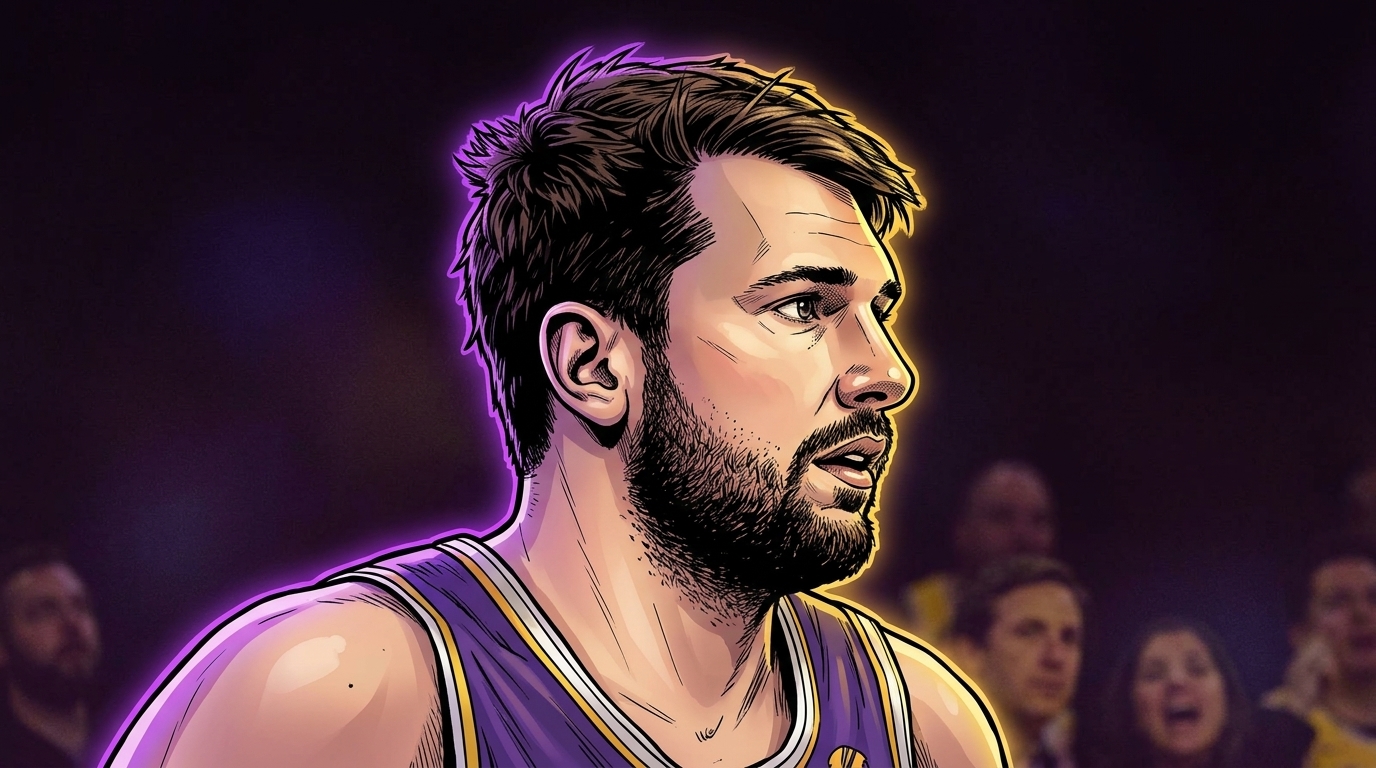
The fan discourse that followed the documentary is where the NBA logo Jerry West change conversation lives now — not in any official announcement, but in the ambient churn of takes and polls and Reddit threads. LeBron James gets mentioned most. Kobe Bryant, posthumously. Michael Jordan, despite his standing resistance to that kind of symbolic conscription. The debate is almost always framed around the same cluster of questions: whose silhouette is most iconic? Whose is most marketable? Whose would look best as a shadow?
These are product questions. They are not human ones.
I have a sociology degree, which means I’m professionally obligated to notice what a conversation reveals about the people having it. And the NBA logo replacement discourse reveals this: we have moved from “whose body did the league use without consent for half a century” directly to “whose body should the league use next.” The grammar of the debate is identical. The only variable is the name inside the outline. Nobody — or almost nobody — is asking whether a human silhouette is the right symbol at all, or what it means that we keep reaching for one person’s physical form as the distillation of an entire institution.
Kareem Abdul-Jabbar wrote when West died that West “embodied the qualities we admire in our best athletes: skills as a player, dedication as a teammate, and integrity as a person.” That’s a beautiful sentence. It’s also, unintentionally, a description of what an emblem is supposed to do — compress a complex person into legible virtues, make them useful as a symbol. Kareem meant it as tribute. The NBA spent 57 years doing the same thing with considerably less warmth and zero acknowledgment.
The uncomfortable question — the one that the Defector-reader part of my brain won’t let go of — is who benefits from the replacement discourse happening the way it’s happening. LeBron James’s current NBA limbo makes him an interesting candidate in the abstract, but the conversation about installing any living player as the logo runs immediately into the same unresolved problem: what do you owe the person inside the silhouette? The answer the NBA gave for 57 years was: nothing, or at least nothing you have to say out loud.
David Stern built something enormous on a man’s body and spent decades instructing the institution not to say the man’s name. That is a very specific kind of professional relationship. It has a name in most labor contexts. In sports, we tend to call it “the business side of the game” and look away.
There’s no confirmed plan to change the logo. The NBA logo Jerry West change remains, for now, a discourse object rather than a policy. Which might be the most revealing part of all. The league finally acknowledged West’s contribution on the occasion of a documentary made after his death, and has not committed to anything in response. The acknowledgment was the product. The documentary was the product. The consent conversation is what happens when the product needs refreshing and the man who was the logo is no longer around to complicate the narrative.
I’m not sure what it means that the clearest reckoning with Jerry West’s silhouette consent — his years of saying he wanted it changed, the league’s decades of deliberate non-acknowledgment — has produced, so far, mostly fan polls about LeBron’s dribbling stance. Maybe it means the machinery of athlete commodification is self-sealing. Maybe it means the documentary did its job, which was to honor a man in a way that cost the institution very little. Maybe both.
What I know is this: West spent his career being made small by an institution that was simultaneously making itself enormous on his outline. He said he found it embarrassing. He died wanting it changed. The league said his name when the cameras were rolling and has made no commitments since. The story here isn’t really about basketball — or rather, it’s about basketball in the way that most things involving sports are really about something else. It’s about who gets to be a symbol and who gets to say no.
There’s more NBA coverage here if you want it. But I keep coming back to the thing that’s hardest to name: the possibility that the documentary was the extent of it. That the acknowledgment was the gesture, and the gesture was enough.