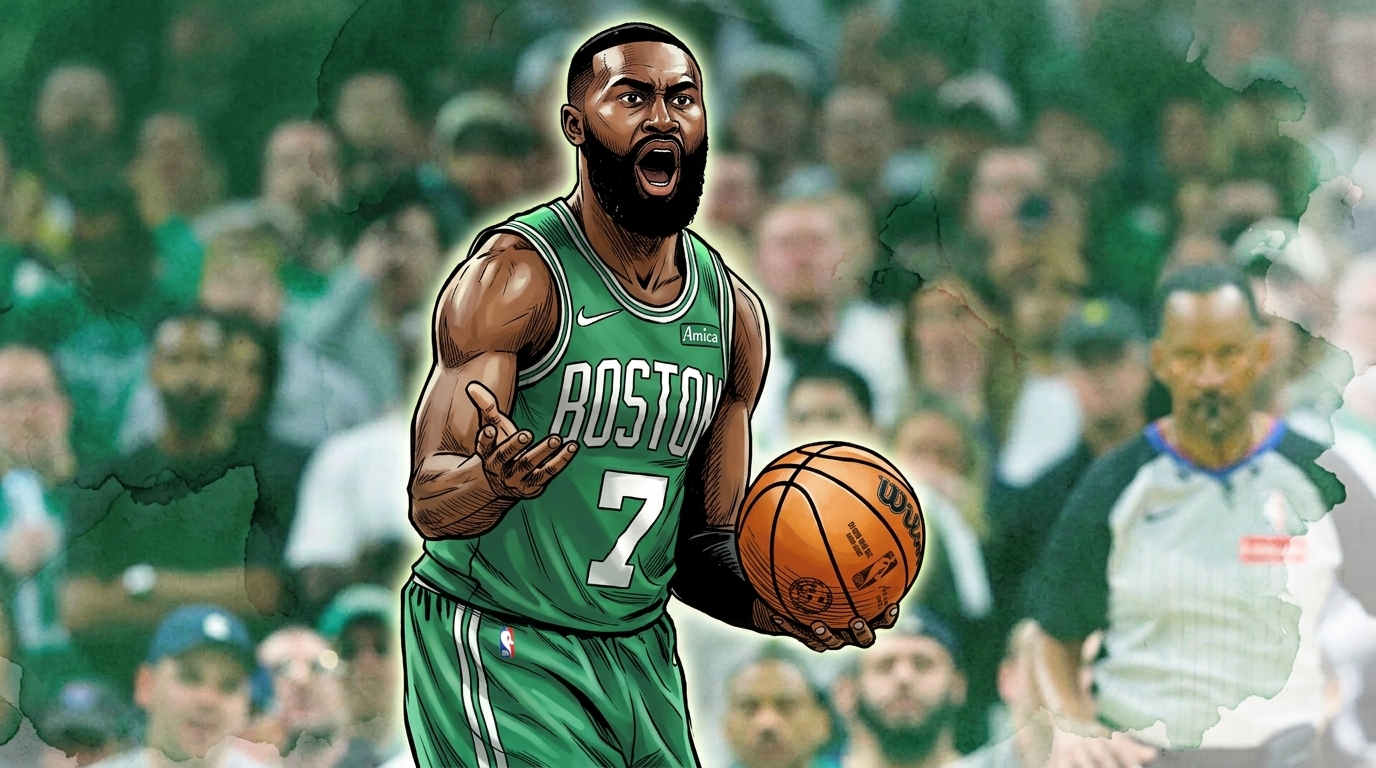

The anonymous analytics guy who called Jaylen Brown the seventh-best player on his own team didn’t torch Brown’s standing in Boston — the Celtics front office did that, by spending two years saying nothing while the internet ran the math for them. I cannot overstate how deliberately the organization chose that silence.
ESPN’s Bobby Marks went on SiriusXM NBA Radio and relayed what some unnamed “analytics guy” apparently believes: that Brown is effectively a luxury, a fourth option dressed up as a co-star. Marks clarified he was just passing along someone else’s opinion and that he personally considers Brown a top-10 player, citing a 191-80 record over the last four years. Fine. But the damage wasn’t done by Marks. The damage was done by the organization that received Brown’s 2024 Finals MVP performance and then spent the next two years watching analytics Twitter quietly relitigate whether he deserved to share top billing — and never once stepped in.
https://twitter.com/FCHWPO/status/2070959968988156399
Brown’s response was blunt and completely correct. “Analytics nowadays used to discredit and control narratives,” he wrote. Then: “we playing AI hoops.” You can agree or disagree with his skepticism of the models, but the underlying complaint isn’t about math. It’s about the specific way analytics gets weaponized against players who don’t fit comfortable categories — guys who are devastating on both ends but don’t generate the pretty rate-stat lines that translate cleanly into a PowerPoint deck.
https://twitter.com/FCHWPO/status/2070963953539133747
Brown asked Marks to state his source. Marks hasn’t. The anonymous “analytics guy” is still anonymous. And Brad Stevens — the Celtics’ president of basketball operations — eventually produced the following thunderclap of institutional support: “Jaylen Brown is a big part of us.” Stevens said this after the controversy had already metastasized online, which tells you everything about the organizational reflex here. Not a proactive defense. Not a public statement when the whisper first surfaced. A reactive non-answer delivered after his player had to defend himself on social media.
That is not how you treat your Finals MVP. That is how you treat a contract you’re trying to move.
The actual story underneath this NBA offseason noise: the Celtics tried to trade Brown for Giannis Antetokounmpo this summer. Giannis went to Miami instead. Boston is now fielding offers from the Portland Trail Blazers — owner Tom Dundon, eager to accelerate — with a reported asking price of four first-round picks, plus Scoot Henderson and Shaedon Sharpe and Toumani Camara. The Celtics are not rebuilding. They are converting a 28.7-points-per-game player, a Finals MVP who delivered them a championship two years ago, into draft capital, because they have apparently concluded the same thing the anonymous guy concluded: that Brown is a problem to solve rather than an asset to protect.
I watched Philadelphia eliminate these Celtics in Game 7 of the first round in May. I am a 76ers fan, and I am not a disinterested observer. But even accounting for that, I cannot look at what Boston is doing to Jaylen Brown and call it anything other than institutional cowardice. They let the narrative that he was the weaker link circulate unchallenged for two years. They tried to upgrade past him when Giannis became available. And now they’re shopping him to Portland while his own president of basketball operations offers belated affirmations that could have fit on a sympathy card. That’s a hell of a way to treat the guy who got you a ring.
The strongest counterargument is that this is just how NBA business works — players get traded, front offices upgrade when they can, and Brown’s own public frustration might be accelerating a departure that was always coming. Stevens isn’t wrong that the team won a lot of games. Maybe the Celtics genuinely believe Portland’s haul makes them better long-term.
Maybe. But there’s a difference between a franchise managing a transition and a franchise allowing a damaging narrative to fester around its own player’s value — without a single public word in his defense — and then shopping him for picks. Boston didn’t just decide to trade Brown. They spent two years letting the discourse do the argument for them, and when their Finals MVP finally got fed up enough to post about it, Brad Stevens offered eight words and called it a show of support.
The trade that’s been building all summer isn’t Brown demanding out. It’s the Celtics completing an argument they started without him. The Jaylen Brown Portland trade closes something the organization set in motion the moment they decided an anonymous analytics opinion was more useful than publicly defending their own guy.
He finally got loud enough to make them respond.
They still didn’t.