
The clearest measure of where a player’s legacy actually sits isn’t the MVP trophies or the All-Star selections. It’s how fast the news cycle processes them when something genuinely bad happens.
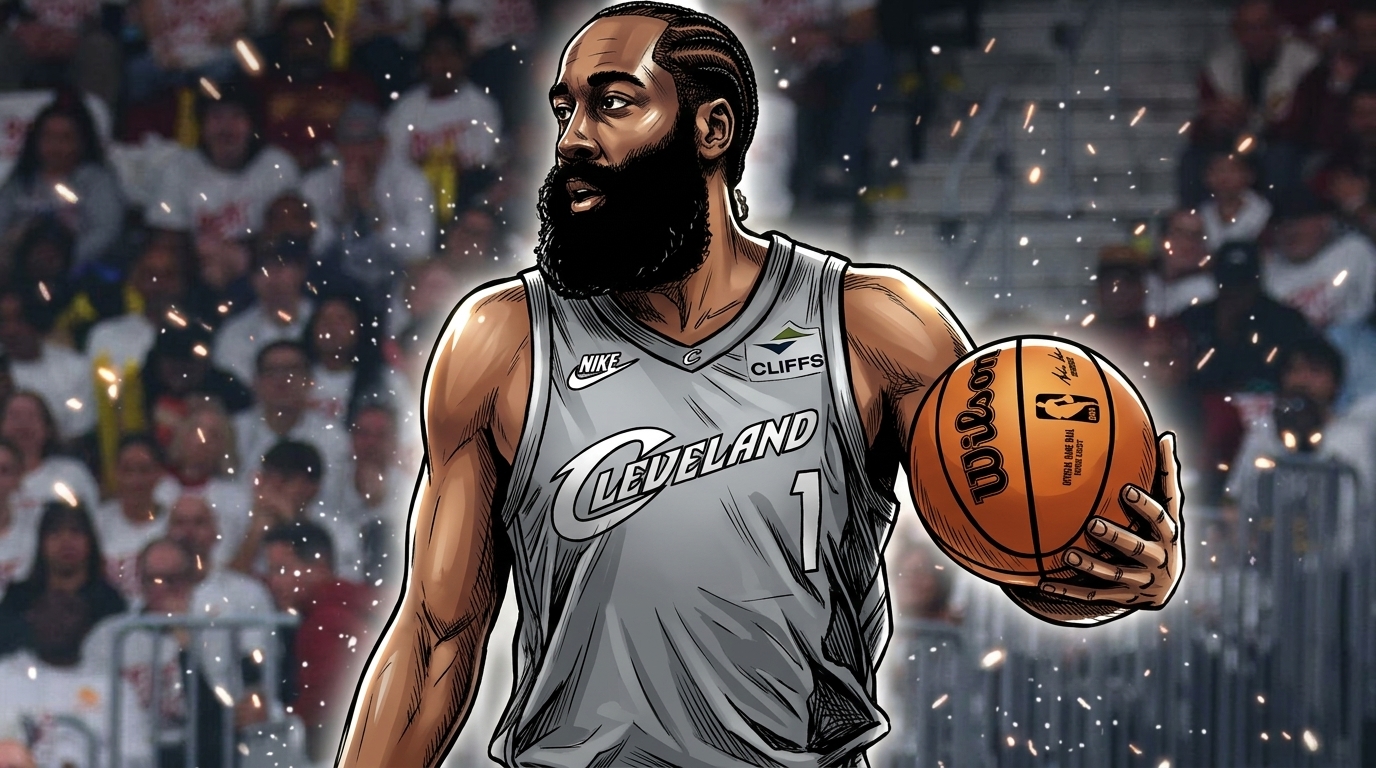
James Harden was arrested in Houston at 3:41 AM on June 13 — pulled over in Houston, a handgun sitting unholstered in the cup holder, visible in plain view. He was booked at 4:57 AM on a Class A misdemeanor: Unlawful Carrying of a Weapon in a Motor Vehicle, Texas Penal Code § 46.02. Bond was set at $100. The mugshot dropped the next morning, and by the time most NBA writers had filed a reaction take, the sports media apparatus had already sorted this into the “Harden being Harden” drawer and moved on.
That speed is the story.
https://x.com/TheDunkCentral/status/2065830781440684411
Texas’s Constitutional Carry law, passed in 2021, lets residents carry without a permit. What it doesn’t allow is vehicle carry without concealment or a holster — which means the cup holder placement is the violation regardless of licensing status. This is not a technicality someone stumbled into. It’s a specific, avoidable mistake made by a 36-year-old man at nearly 4 AM with high-profile Houston defense attorney Rusty Hardin already on speed dial, which tells you something about how this part of James Harden’s life has long been organized.
His arraignment was rescheduled to August 3. The Cavaliers issued a statement of elegant emptiness.
https://x.com/ESPNCleveland/status/2065861087312932905
Multiple reports confirm the arrest isn’t expected to affect his contract extension timeline: a $42M player option he’s widely expected to decline in favor of something closer to two years and $60M, with the June 29 deadline still intact. Brian Windhorst had already declared Harden a Cavalier next year before any of this happened. The basketball world absorbed this news, registered it, and returned to the extension conversation essentially unchanged.
Harden has never been arrested before. His off-court mythology (the Houston clubs, the 15 shots before a 60-point game, the strip club allegedly retiring a jersey) has always been exactly that: mythology. Stuff that got repeated and amplified until it became its own genre. The Clippers run was genuinely quiet. The Cleveland move was competent. The image rehabilitation was real: 23.6 points and 8.0 assists across the regular season, a team that went deep before the crime scene in Cleveland’s ECF collapse. And then came the first actual arrest, and the sports world’s response was essentially a shoulder shrug dressed up in process language.
I’ve covered enough of these moments to know what “normalized” actually looks like, and it looks like this. It looks like the statement being forgotten before most people read it. It looks like the opt-out deadline problem being the dominant frame within 48 hours, not the misdemeanor charge with a maximum penalty of a year in county jail and a $4,000 fine. The normalization isn’t a conspiracy or a scandal. It’s something more banal. The league and its media ecosystem have quietly reclassified what Harden is, from “former MVP face of the franchise” to “productive veteran we’ve agreed to tolerate at market rate,” and that reclassification changes what registers as news about him.
The thing is, if this had been a player still operating under that first framing (Shai Gilgeous-Alexander, or Tyrese Haliburton), we’d be parsing this for two weeks. Career implications, leadership questions, the symbolism of the 3 AM hour. With Harden, the conversation jumped almost immediately to what it means for the Cavaliers’ roster next season, as though the arrest were a footnote to the roster construction conversation rather than a story in its own right.
There’s a version of this where the collective pivot feels like grace: he’s innocent until proven otherwise, the charge may not ultimately stick, let’s not pile on. That version exists. But grace and exhaustion look identical from the outside, and I think what we’re actually watching is exhaustion.
The gap between “he’s still a good player” and “he’s a liability we’ve agreed to tolerate” has quietly closed, and a 3 AM weapons arrest used to be the kind of event that forced that reckoning into the open. Now it just confirms what everyone had already decided.
A $100 bond and a June 29 opt-out deadline, and the second one is getting more column inches.