
On my podcast (200 listeners, we mostly argue about The Traitors and K-pop fandom dynamics) we have a recurring bit about how stans respond when their favorite does something that doesn’t read as being FOR them. A K-pop group releases a spare acoustic EP when the fans wanted a club banger. I have watched that same mechanism play out, in real time, over a baby name. The discourse that follows is never really about the music, or the name — it’s about the audience needing the artist to confirm something about the audience’s own taste.
On June 19th, Hailee Steinfeld published “A Letter to My Daughter” on her Beau Society Substack newsletter. Black-and-white photo: Harper’s hand wrapped around Steinfeld’s finger. And a name, Harper Haize Allen, that immediately split the internet into two camps, each convinced the name had landed wrong, both unable to explain exactly why.
https://www.instagram.com/p/DZyBbSFmdbS/
The sports-fan camp found the name too soft, too literary, not quite of this world. The entertainment-fan camp found it trying too hard, too obscure, not quite legible. Both responses are worth examining, because neither is actually about the name.
Here’s what the name actually is. Harper is English, means “harp player,” and has been one of the most popular gender-neutral names in the country for the better part of a decade, literary in a very specific way (Harper Lee, Harper’s Bazaar) and carrying a kind of quiet cultural authority that doesn’t announce itself. Haize, which some outlets misread as “haze,” is a Basque word for wind. Not a stylized spelling. Not a celebrity contrivance. An actual word from an actual language, likely connected to Steinfeld’s own musical aesthetic — she writes and performs music, and wind as a creative metaphor is not exactly subtle, but it’s not trying to be. When asked about the name, Josh Allen deferred the explanation to Steinfeld entirely. Which is its own kind of data point.
https://twitter.com/TrainwreckSprts/status/2068078127658434886
What I keep returning to is the Substack choice. Josh Allen has one of the largest social media followings of any athlete in the country. The name announcement could have lived on his Instagram and reached ten million people in an afternoon. Instead it arrived through Steinfeld’s own newsletter, in her own prose, addressed directly to her daughter. “I no longer measure time in months or years, but in ounces, naps missed and naps miraculously taken.” That’s not a PR decision. That’s a declaration about who owns this story.
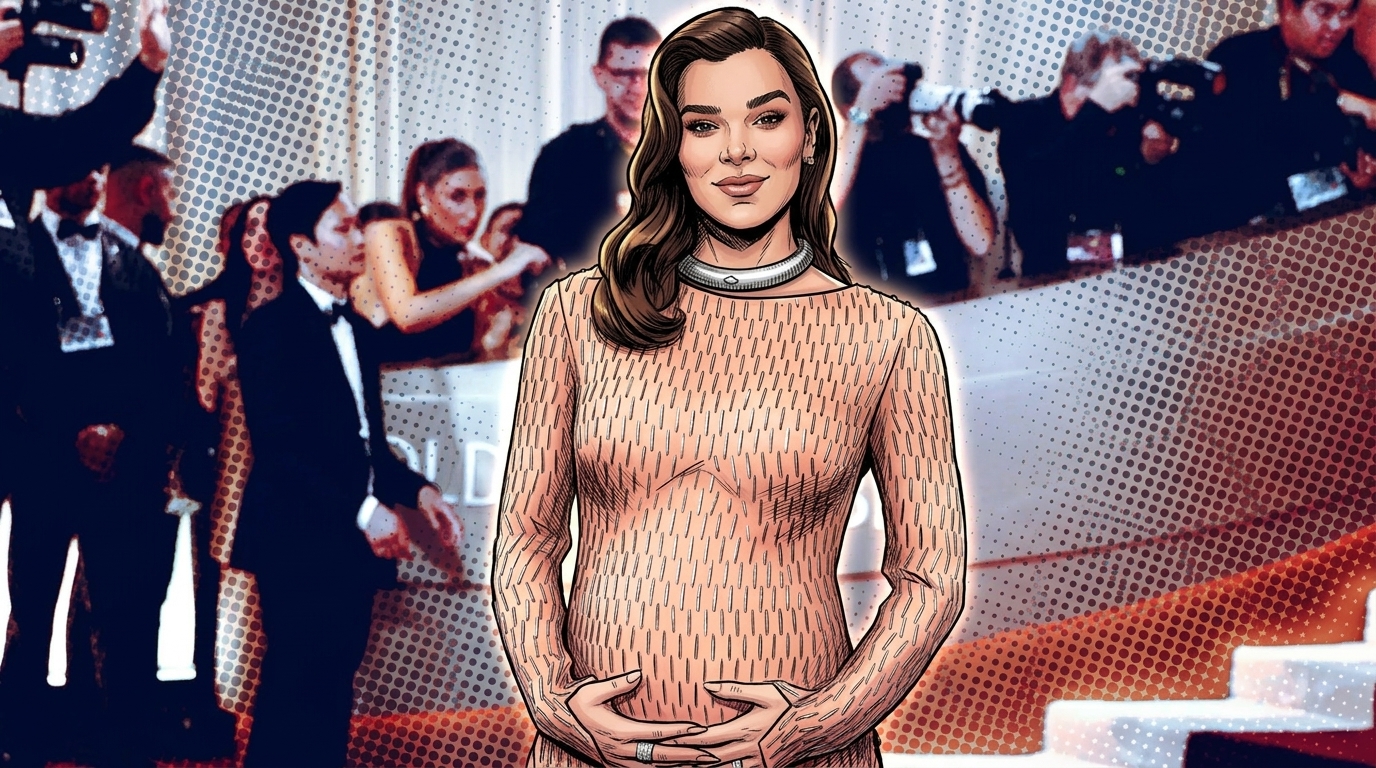
Steinfeld spent the better part of the last year threading a very specific needle. She is an Oscar nominee. She played Kate Bishop in the MCU. She starred in Ryan Coogler’s Sinners (16 Academy Award nominations, more than any other film at the 98th ceremony) and was heavily pregnant by the time the show aired. She wasn’t there. Her absence was acknowledged from the stage. She has been, at every turn, a person who also happens to be in a relationship with a famous quarterback, and not the reverse. The athlete’s partner as a category she’s been navigating around, not toward. You can see that pattern at work in profiles of other women in that orbit, how they manage the tightrope between their own public identity and their partner’s gravitational pull. Some couples in the sports-entertainment crossover manage to maintain genuine dual weight, where both halves carry independent cultural meaning — and those are the ones the discourse never quite knows how to hold.
Harper Haize Allen is a name that lives in that negotiation. Harper is soft and literary enough to belong to a world Steinfeld has inhabited since she was fourteen years old. Haize is specific and strange enough to require explanation, and the explanation is hers to give. Together the name doesn’t perform for the Bills Mafia or for the MCU fan accounts. It performs for two people who seem to have decided, quietly, that they didn’t need it to.
https://www.instagram.com/p/DW-HH0zCJzC/
The internet’s response (displeasure is too strong; call it mild disorientation) tells you what both audiences expected. Sports fans wanted a flag to plant. Entertainment fans wanted a signal to decode. What they got was a Basque word for wind and a black-and-white photo of a newborn’s hand. I don’t think the couple is being obscurantist. I think they just named their kid and the rest of us are the ones who needed it to mean something for us specifically. That’s always been more about the audience than the name.