
We have been spending a lot of time this summer watching Caitlin Clark break records and Angel Reese generate headlines that have nothing to do with basketball. Meanwhile, the Golden State Valkyries have quietly put together the finest stretch of basketball in the WNBA this season. Eight straight wins. A defensive rating of 92.5 during the streak. The best bench in the league. (This is the part where someone remembers the Valkyries exist.)
Are the Golden State Valkyries the best team in the WNBA right now?
Yes. Not the No. 1 seed — Minnesota holds a slight edge in the standings at 18-6 — but by nearly every performance metric that matters, the Valkyries are the hottest, most complete team in the league. They sit atop ESPN’s power rankings at 18-7. Their net rating during the streak is +11.6. They are holding opponents to 68.0 points per game over eight games. They held the Washington Mystics to 49 points — a season low for any WNBA team — including 16 points in the second half, the first time that had happened since 2021. They reached 40 franchise wins in 68 games, faster than any expansion team in WNBA history, per Ballislife.
There is a case to be made that Golden State is playing the best basketball in the league right now. I believe that case is basically airtight.
How the Valkyries Built a Defense in Year Two
The foundation is not glamorous. It is rotations, it is help-side coverage, it is a rim protector who tells the guards she will clean up their mistakes.
Kiah Stokes is averaging 5.1 rebounds and 2.6 blocks during the streak. “I’ve been telling our guards, if you get beat, I’m probably gonna be there,” Stokes said. That sentence describes the entire defensive system. The Valkyries are surrendering 41.9 percent shooting and 76.2 points per game on the season — both league lows. Their defensive rating during the streak is 92.5. To put that in context, a 92.5 defensive rating in the modern WNBA is not a number; it is a statement.
The offense is built on pace and distribution rather than a single creator. Veronica Burton averages 5.1 assists per game and carries a +10.1 net rating during the streak — a team-best +18.9 overall during the run. “We’ve done it in so many different fashions,” Burton said, as reported by the SF Standard. “When we’re shooting the ball really well. We’ve won games where we can’t make a three.” That flexibility is not an accident; it is the point.
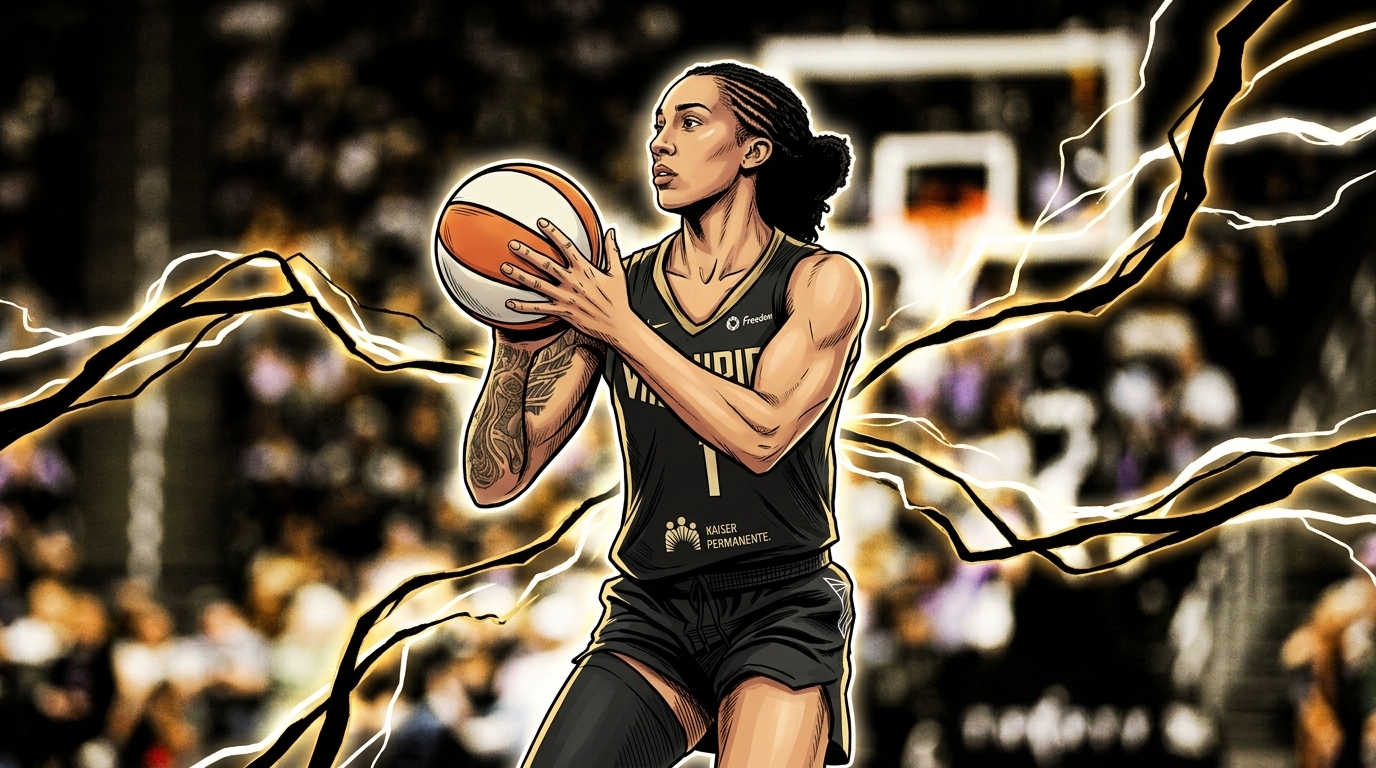
Gabby Williams leads the scoring at 15.0 points, 3.5 rebounds, and 2.1 assists per game, with 1.6 steals thrown in for good measure. She put up 16 points and three steals against the Indiana Fever on July 15 for Golden State’s eighth consecutive win. Coach Natalie Nakase — WNBA Coach of the Year — described Williams simply: “Gabby just makes the right reads, whether it’s pick-and-roll or hand-offs, or just in the open court.” That is one of those coaching quotes that sounds bland until you watch a few possessions and realize she is describing something genuinely rare.
Then there is Janelle Salaün coming off the bench. (The Sixth Woman of the Year race is not officially over, but it probably is.) Salaün is averaging 13.0 points in 22.8 minutes, shooting 44.4 percent from the field and 43.9 percent from three during the streak. She posted a career-high 26 points against Toronto. The bench as a whole is averaging 34.4 points per game — most effective in the WNBA — and reserves led the scoring in seven games this season. Tiffany Hayes carries the team’s highest net rating at +19.1.
Coach Nakase brought the Warriors’ “strength in numbers” philosophy across the Bay — no stars, no hierarchy, ten-deep rotations, collective accountability. It is working faster than anyone expected.
Why the Media Conversation Has Missed the Biggest Story
Here is the honest answer: the media machine around Caitlin Clark is not going anywhere, and it should not. Clark is a generational talent who is genuinely good for the league. Clark’s 14-assist record game was a legitimate news event. The Angel Reese All-Star voting controversy generated real conversation about real issues. These things matter.
But they have consumed so much oxygen that the Valkyries’ historically good stretch — eight straight wins, the fastest expansion team to 40 wins in league history — has functioned as background noise. The national media largely covered Golden State the way you cover a team that is performing above expectations: a few appreciative paragraphs, a ranking bump, and then back to the celebrity-adjacent storylines.
The Valkyries are not playing above expectations anymore. They are the expectation. They are what the WNBA product looks like when it is working at its ceiling: defensively elite, bench-deep, coached with a system instead of a superstar. That is a story worth 2,000 words in every outlet that covers basketball. It has not gotten that treatment. (This is not a complaint so much as an observation, which, in this business, is the polite form of a complaint.)
https://x.com/a_g_haubner/status/2073487725840281816
The tweet above captures the actual question hanging over the Valkyries going forward: what happens in the playoffs, against the top tier? The regular season argument is settled. The postseason argument has not started yet.
What the Valkyries’ Streak Means Going Forward
I think the Valkyries have assembled something genuinely difficult to defend against in a playoff series, and here is why: they win different ways. Veronica Burton said it directly. They can shoot their way out of a game or defend their way through one. Their bench does not fall off a cliff when the starters rest. Their coach plays ten players and none of them seem surprised when it is their night.
The comparison to the Warriors dynasty is going to get written eventually — the expansion franchise, the Bay Area ownership (Joe Lacob, the same ownership group), the “strength in numbers” motto borrowed wholesale from the men’s side. It is a little too clean to be entirely accurate. (The 2015 Warriors had Stephen Curry. The Valkyries do not have a Stephen Curry.) But as a structural blueprint — system over stars, depth over dependence — the parallel holds.
What the Valkyries have built in year two is proof that WNBA expansion can work at full speed. They made the playoffs in year one. They are contenders in year two. They have the league’s best defense, a frontrunner for Sixth Woman of the Year, a Coach of the Year, and an eight-game win streak that is still going.
We have been watching the Clark and Reese show. The actual story is in the Bay. For more WNBA coverage, we will keep watching both.