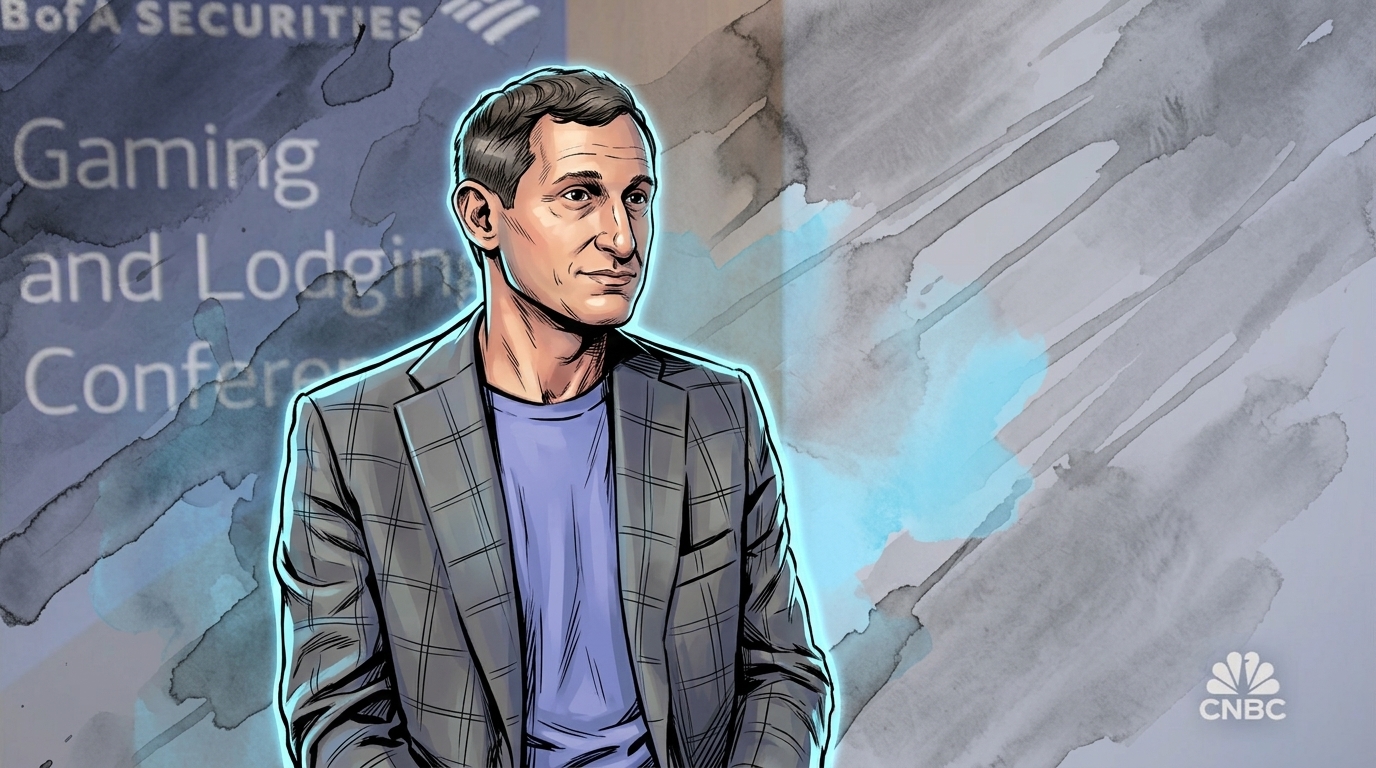

A sports trader’s whole professional purpose is sitting inside a sportsbook’s risk models, watching for the kind of point-shaving scheme that just got a former DraftKings employee arrested in Las Vegas. I cannot get past how perfectly that job description reads like a confession. Nevada regulators say Samuel Silverman worked the side of the business built to catch prop-betting fraud, then allegedly bankrolled a scheme that ran straight through a Fresno State basketball game and paid him a cut on the way out. He was supposed to be the safeguard, not the scheme.
Silverman was arrested May 5 and charged with a fraudulent act in a gaming establishment and conspiracy to cheat at gambling, both Class C felonies. He’s pleaded not guilty through his attorney, Michael D. Pariente. His preliminary hearing is set for August 4.
The first word most people got about this was a two-line news blurb reposted into the feed:
https://twitter.com/InGameHQ/status/2074494191938273636
Nothing in that post hints at the part that actually matters: the guy in it used to be paid to stop exactly this.
Samuel Silverman used insider knowledge from his Fresno State job, not from the DraftKings trading desk he’s better known for now. He spent the 2022-23 season as a team manager for Fresno State men’s basketball, which is reportedly where his relationship with the players started. That’s the kind of access no risk model on earth can flag in advance, and it’s exactly the access the industry never talks about when it’s busy telling regulators how sophisticated its fraud detection has gotten.
This isn’t the program’s first rodeo. The wider Fresno State betting saga predates Silverman’s arrest by months, and the NCAA already permanently revoked eligibility for the players tied to the underlying conduct back in September 2025.
The mechanics, according to regulators, were almost boring. On Jan. 7, 2025, Fresno State played at Colorado State, and Mykell Robinson, a Fresno State forward with ties to Silverman from that team manager stint, allegedly tanked his own box score. He played 21 minutes and finished with three points, two rebounds, and zero assists, numbers that read less like a bad night and more like a plan. Matthew Martin, another former DraftKings trader and Silverman’s roommate, placed three parlays totaling $2,200 at a BetMGM sportsbook, each one stacking the under on Robinson’s points, rebounds, assists, and threes. Those parlays paid out roughly $15,950.
Silverman himself allegedly never placed a bet. Regulators say his role was financing the wagers and distributing the payout, and that he pocketed $3,000 of it for his trouble. The bets went through BetMGM, but the irony belongs to DraftKings, and DraftKings knows it. A company spokesperson told casino.org that Silverman “did not have any responsibilities setting college basketball odds” and that the wagers “were not placed on its platform.”
Both of those things can be true, and neither one is the point. Nobody accused DraftKings of running Robinson’s unders through its own book. The point is that a man who spent his career on the inside of a sportsbook’s fraud-detection apparatus is now charged with helping build a fraud that apparatus exists to catch, on a different app, sure, but with the exact same working knowledge of how these systems watch and what they miss. Splitting hairs about which app processed the wagers is a bullshit deflection dressed up as a fact check.
Nobody’s naming the person who lost money betting the other side of Robinson’s unders, and there’s a good reason for that: as far as I can tell, no report anywhere puts a name or a number on that bettor.
But that person exists.
Every dollar in Martin’s roughly $15,950 payout came from the other side of a market: from bettors who looked at Robinson’s props on a random Tuesday night in the Mountain West and assumed they were betting on basketball, not on a former team manager’s private information. That’s who actually got robbed here, and it’s the exact group DraftKings’ entire trading operation supposedly exists to protect.
The Nevada Gaming Control Board announced the case June 11, after building it on subpoenaed financial records, cellphone data, payment accounts, and cooperation from the sportsbooks themselves. My brother’s spent five years working inside city government in Trenton, and one thing he’s taught me is that internal audits run by the people who built the system rarely catch the failure until an outside agency forces the paperwork. Sportsbooks love to talk about proprietary integrity monitoring like it’s a moat protecting the whole operation. Nevada regulators had to go get the receipts themselves.
Silverman is due in court August 4, still presumed innocent, still unemployed by anyone in the sports betting business. DraftKings will keep selling the idea that its trading floor stands between bettors and getting fleeced on a same-game parlay, and for the rest of our gambling coverage, that pitch is going to sound a little different for a while.
The safeguard wasn’t fake. It just had a second job.