
Jon Heyman filed two dispatches about Tarik Skubal last week. In the first, he reported that the Los Angeles Dodgers are “believed not in” on the two-time Cy Young winner, and that “baseball breathes a hopeful Cy of relief over that.” In the second — the same reporter, same publication, days apart — he wrote that “a number of rival clubs suspect the Dodgers are underselling their interest in Skubal.” His conclusion: “As per usual, don’t bet against LA.”
Both of those statements were filed by Jon Heyman. Sit with that for a second.
Either the Dodgers genuinely aren’t interested and rival executives are wrong, or the Dodgers have executed a specific kind of deadline maneuver so consistently that their disinterest has become the tell. The evidence suggests it’s the latter. And with 19 days until the August 3 deadline, the production is running on schedule.
The Three-Act Play
The structure is recognizable by now. Act One: the Dodgers signal publicly that they are satisfied with their roster as currently constructed. Act Two: rival executives, speaking to reporters who promise anonymity, describe a very different private conversation. Act Three: Andrew Friedman makes a phone call that ends the bidding.
This isn’t cynicism — it’s pattern recognition. Friedman has said on record that he “dislikes paying inflated prices that emerge during frenzied deadline bidding.” The way you avoid those prices is by not appearing to want the thing. When every team at the table knows you’re desperate, the ask goes up. When they think you’re sitting out, you negotiate with more leverage.
LA’s public cover story this year is technically accurate: Blake Snell and Tyler Glasnow are both on the injured list, and the team is waiting on their returns. What goes unmentioned is that Snell isn’t expected back until mid-August — after the deadline. Glasnow is lagging behind him, expected in late August. Neither arm returns before August 3. The “we’re waiting on our guys” framing is not false. It is, however, doing a specific kind of work.
Will the Dodgers Really Trade for Skubal?
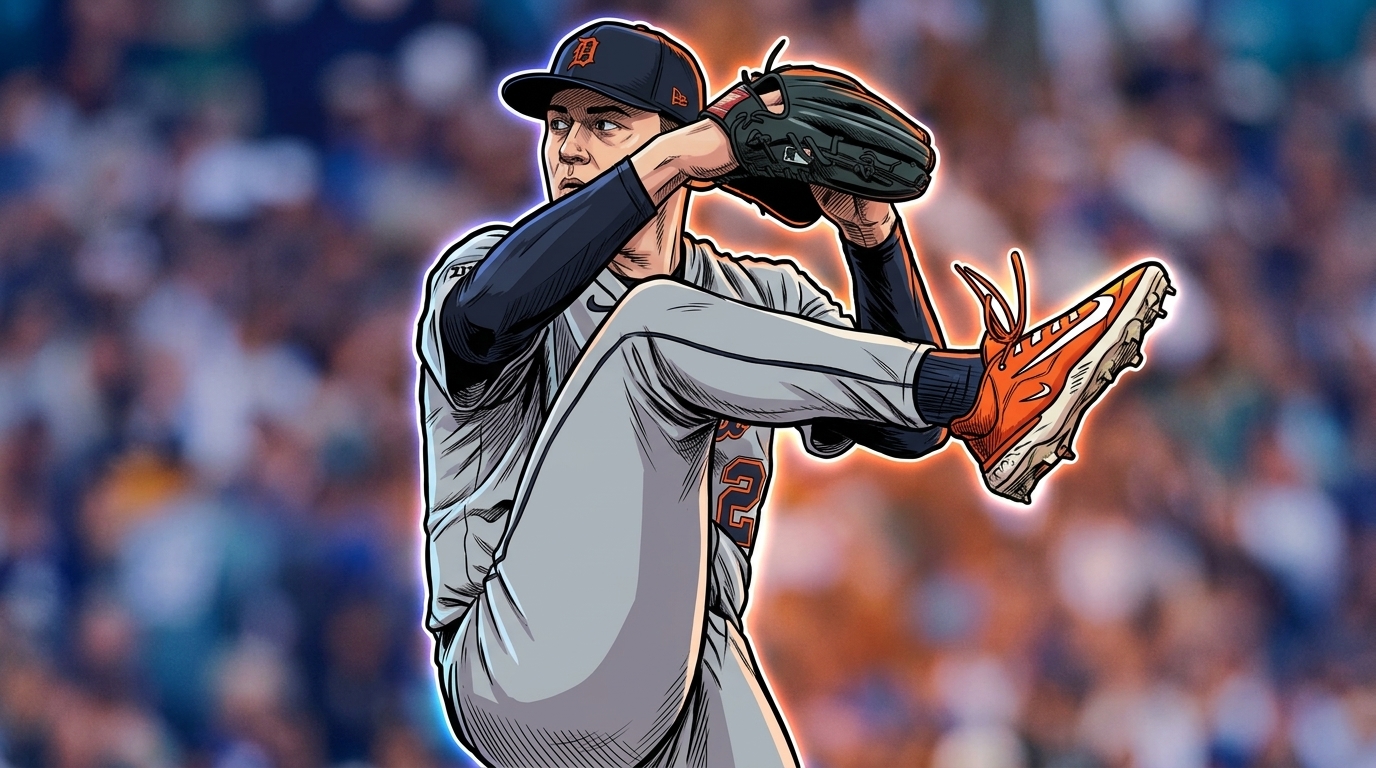
The honest answer is that there’s a genuine case against it. Skubal has told friends he badly wants to remain with the Detroit Tigers. He believes Detroit has a legitimate shot at the World Series — and that assessment isn’t obviously wrong. Since their May low point, the Tigers have gone 22-14, putting them back into striking distance in both the AL Central and Wild Card races. A pitcher who just returned from bone chip surgery, hit 99.9 mph on his first start back, and has a 3.09 ERA and 0.95 WHIP over 13 starts this season has standing to believe in his team.
He also has no no-trade clause, which means his preferences don’t guarantee anything. ESPN currently projects an 85% trade probability.
The counterargument on the Dodgers’ side is similarly real: they own baseball’s best record, an 11.5-game NL West lead into the All-Star break, and a 3.55 ERA that ranks among the best in the NL despite — this is worth reading twice — eleven arms on the injured list. Their current healthy starters are Shohei Ohtani, Yoshinobu Yamamoto, and Emmett Sheehan. That rotation is genuinely functional. Maybe they don’t need Skubal.
Jeff Passan, however, reframed the question in a way that cuts through the noise. The issue isn’t whether the Dodgers need Skubal. It’s whether adding him alongside Ohtani, Yamamoto, and Snell “would make them damn near unassailable.” Passan’s framing: the Dodgers don’t make deals with negative expected value in their model, but if the price for another banner amounts to a rounding error for a franchise generating over a billion dollars in revenue annually, the calculus changes. The question isn’t need. It’s cost-per-win versus budget flexibility.
They’ve Done This Before
The 2024 trade deadline is the most instructive data point, and it involves the same franchise on the other side of the table.
The Dodgers acquired Jack Flaherty from the Detroit Tigers in a last-minute deal. The Yankees had been interested but dropped out after concerns arose over Flaherty’s medical records. LA swept in. The deal happened quickly, at a moment when the public read of the situation suggested the Dodgers weren’t the frontrunner.
That is the template. You’ll note it includes: same seller (Detroit), late-deadline timing, a moment when rivals thought LA was out or cooling, and then a phone call that closed it.
For what the Tigers’ side of the standoff looks like — and why Detroit might still hold Skubal — that’s a different and more complicated calculation. For what Detroit should demand in return if they do trade him, the package would need to be historically substantial. The Cubs, Rays, Brewers, Padres, and Phillies are all involved. The bidding, if it happens, will be loud.
What “Historically Greedy” Looks Like
Here is the analytical frame that makes the Dodgers’ behavior readable: they are not trying to win a bidding war by being the most enthusiastic bidder. They are trying to win by being the last bidder still standing when everyone else has inflated the price and exhausted their leverage.
Friedman’s public restraint is not performance art for its own sake. It’s competitive strategy. When a team announces it wants a player, every other team in the room has perfect information. When a team announces it doesn’t want a player, it gets to observe everyone else’s hand.
The rival executives who told Heyman the Dodgers are “underselling their interest” are revealing something important: they’ve seen this movie. They know what Friedman’s Act One looks like. And they’re warning each other that the team currently saying “we’re fine” is probably going to be the team making the call on August 2nd.
https://x.com/UnderdogMLB/status/2076300872984801404
I ran this pattern three different ways and arrived at the same place. The Dodgers are generating more than a billion dollars in revenue annually, carry a starting rotation with more arms on the IL than most teams have on their roster, and just watched two of their expected starters officially miss the deadline. Skubal is a two-time Cy Young winner with a sub-1.00 WHIP who returned from surgery hitting triple digits. The evidence of need is real. The evidence of intent is circumstantial, but it’s the same circumstantial evidence that preceded Flaherty.
Don’t bet against LA. Heyman’s words. His own warning, buried in the same piece where he reported they’re out.
That’s the tell.