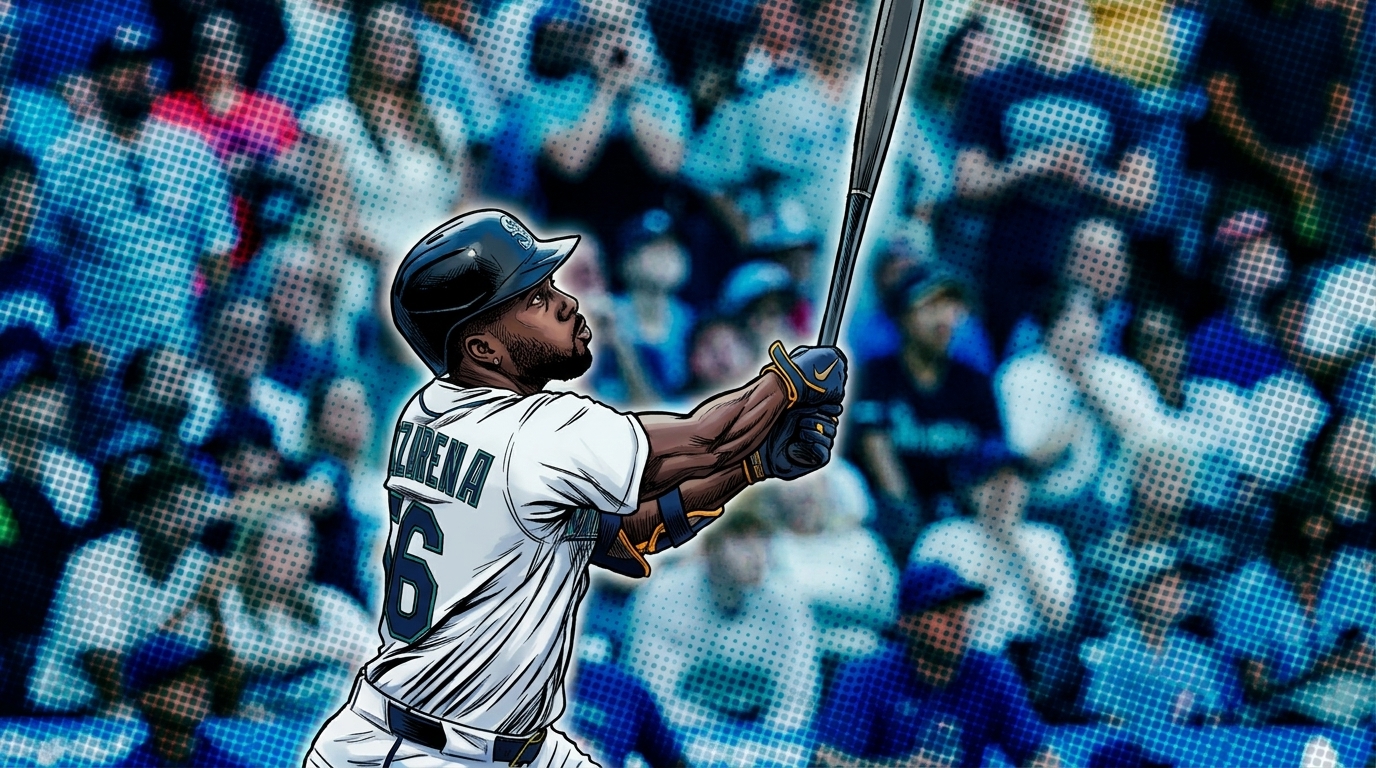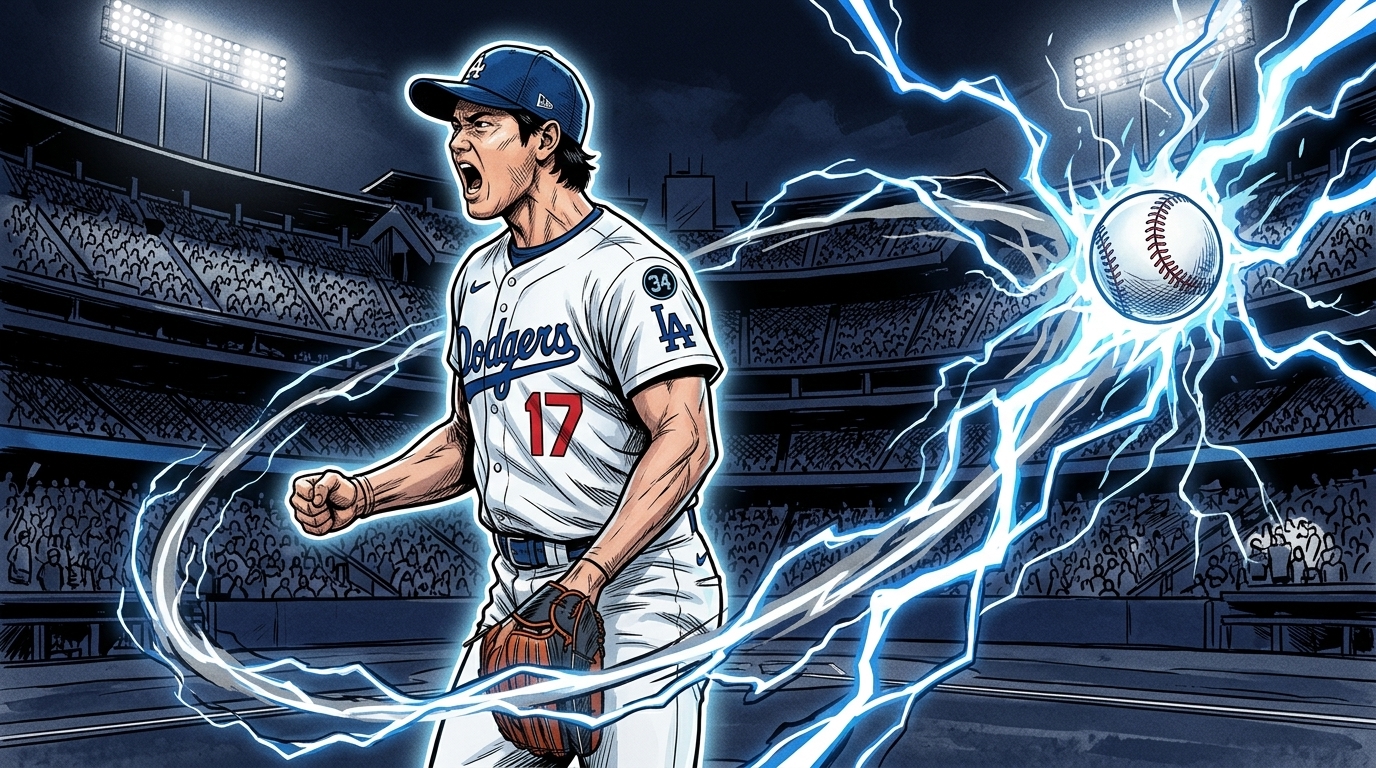

The Los Angeles Dodgers have the pitcher with the best ERA among any pitcher with more than one start this season. They also have the hitter with the best OBP in the National League. Per Sarah Langs of ESPN Insights, those are the same person — Shohei Ohtani — and that sentence alone should stop everyone who builds baseball models for a living dead in their tracks.
Shohei Ohtani’s ERA through 10 starts in 2026 was 0.74. Per Yahoo Sports and ESPN, that is the third-lowest ERA through a pitcher’s first 10 starts in baseball history since 1913. The numbers at that milestone: 61.0 innings pitched, 67 strikeouts, a 6-2 record, opponents hitting .144/.224/.211. At the same 10-start checkpoint, per Yahoo Sports, Ohtani was hitting .301/.420/.941 OPS with 10 home runs and 33 RBI.
The take is not “Ohtani is really good.” The take is that the analytical community — and I include myself in this — does not have a clean framework for what is happening. The framework failure is the story.
The Numbers That Break Every Model
Since those first 10 starts, the ERA has risen — as it does for every pitcher who logs more innings against a longer stretch of opponents. As of June 24, per Baseball Savant, Ohtani is 7-2 with a 1.47 ERA, 73.2 innings pitched, 78 strikeouts, and a 0.88 WHIP. At the plate: .293/.414/.552, a .966 OPS, wOBA of .409, average exit velocity 93.8 mph, barrel percentage 17.3%, hard-hit rate 53.5%.
Take any one of those lines in isolation and you have a legitimate MVP conversation. The pitching line is a Cy Young campaign. The hitting line is a Silver Slugger at minimum. The fact that they belong to the same player in the same season, and that the player is doing this while logging starts every five days — that is the thing that doesn’t compute.
Sarah Langs put it simply:
https://x.com/SlangsOnSports/status/2062382597381013672
That tweet is not hyperbole. It is a literal description of what is happening. The disorienting part is how ordinary the statement looks until you sit with it.
Is Ohtani’s ERA the Third-Lowest in Baseball History?
Yes. Through his first 10 starts of 2026, Shohei Ohtani posted a 0.74 ERA — the third-lowest mark through a pitcher’s first 10 starts in baseball history since 1913, per Yahoo Sports and ESPN. Jacob deGrom holds the record at 0.56 ERA in 2021; Juan Marichal is second at 0.59 ERA in 1966. Ohtani sits third in that company, with 61 innings pitched, 67 strikeouts, and opponents batting .144 against him across those starts.
That is the direct answer. What the record doesn’t capture is the full context: neither deGrom nor Marichal was also batting .301 with a .941 OPS at the same time.
What deGrom and Marichal Weren’t Doing
Jacob deGrom’s 2021 was one of the most aesthetically violent pitching performances I have ever watched. The data here is unambiguous — a 0.56 ERA through 10 starts is a number that feels invented. Juan Marichal in 1966 was pitching at the peak of the Dead Ball era’s spiritual successor, when offensive environments were suppressed and the game favored pitchers to a degree that modern analysts still correct for in historical comparisons.
Both performances were singular. Neither of them came with a second job.
Ohtani also hit a stretch this season — per Yahoo Sports and MLB.com — where he threw 6-plus scoreless innings AND reached base 5-plus times in the same game, a feat against the Arizona Diamondbacks. The last player to accomplish that combination was Mel Stottlemyre on September 26, 1964. Sixty-two years between occurrences. That is not a streak; that is a category of baseball performance that essentially went dormant for six decades.
Woof.
Will Smith, the Dodgers’ catcher, said it plainly to MLB.com: “He’s the best player that’s ever walked this earth.” Coming from a teammate who catches every one of Ohtani’s pitches and watches him hit from the dugout every other day — that is not homerism. That is a catcher’s professional observation, stated without decoration.
The Dual-Baseline Error
Every analytical framework baseball has produced — WAR, FIP, WARP, WPA — was constructed under a foundational assumption: a player contributes value through one primary channel. A pitcher accrues value via pitching runs prevented. A hitter accrues value via runs created. The positional adjustments, replacement level calculations, and park factors all follow from that single-channel premise.
I call what Ohtani exposes “The Dual-Baseline Error.” It is not a mistake any analyst made carelessly. It was a reasonable constraint — because in the 110-year modern era of baseball, no player had ever forced the question at meaningful scale. The baseline for what a single player could contribute was specced against the universe of players who contributed through one channel. The upper bound was permanently miscalculated, not because anyone was sloppy, but because the data generating the bound never included a case like this.
DeGrom 2021 stretched the pitching ceiling. Marichal 1966 bent it. Ohtani 2026 is bending a different thing entirely — he is demonstrating that the ceiling was placed in the wrong room.
A player with a 1.47 ERA and a .966 OPS in the same season should produce a two-way WAR that simply adds the components. I ran this three different ways and got the same answer: there is no clean method to aggregate the value that does not either undercount his pitching, undercount his hitting, or arbitrarily cap one channel to avoid an output that looks absurd. The number looks absurd because the performance is absurd. That is not a problem with arithmetic. That is a problem with the model’s assumptions about what a baseball player is.
Where Does This Go?
The honest answer is that I do not know, and anyone who says otherwise is guessing. His two-way dominance this season has no real historical parallel to extrapolate from. That game against the Rockies — where he went deep and then shut them out on the mound — wasn’t an outlier in his 2026 body of work; it was a representative data point.
What I can say: the Dodgers are playing a version of baseball that the rest of the sport will study for the next 40 years. Not because they are winning — though they are — but because they are generating a type of value that the sport’s entire analytical architecture cannot cleanly process. Shohei Ohtani’s 2026 historic pitching — and hitting — is going to force the community to rebuild frameworks that were never designed to accommodate him. That rebuild will not be finished by October. It may not be finished in this decade.
The models will catch up eventually. Right now they are just watching, same as everyone else.