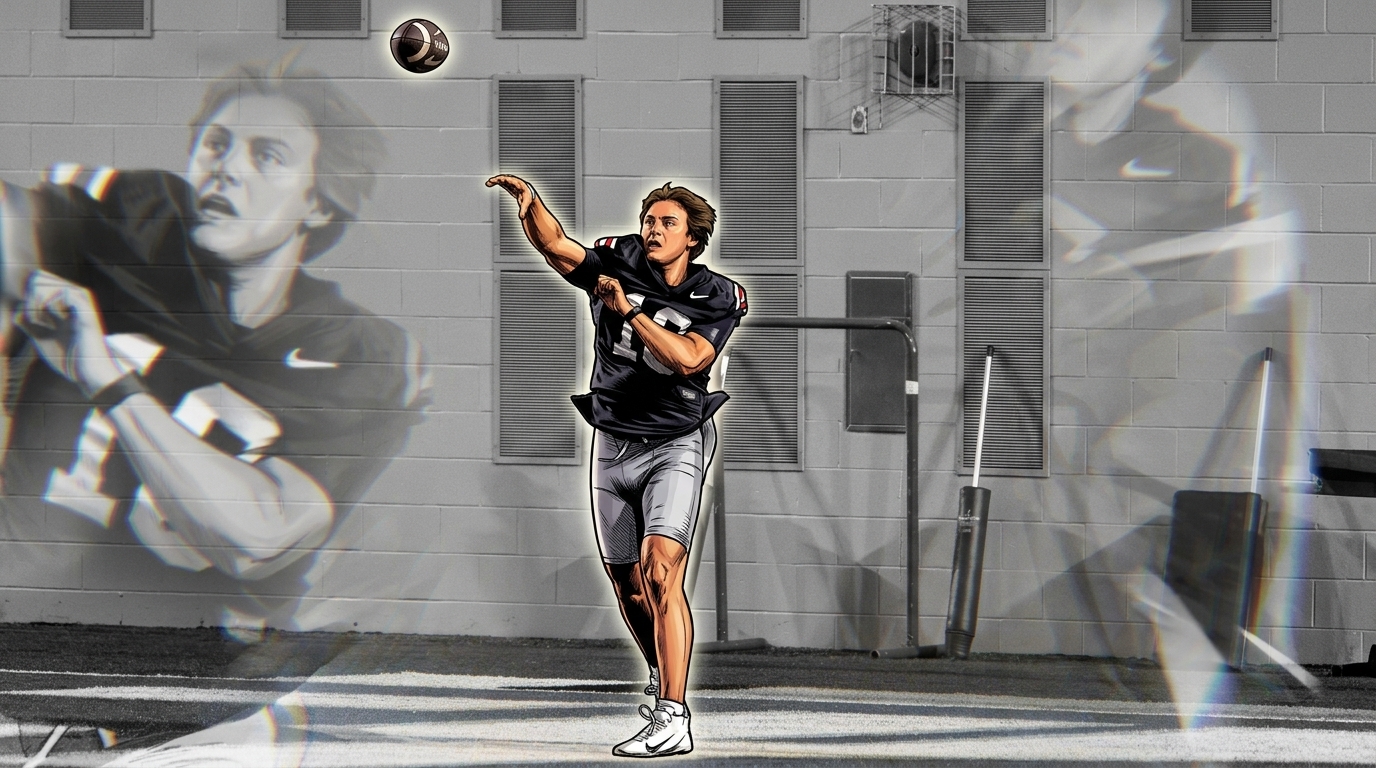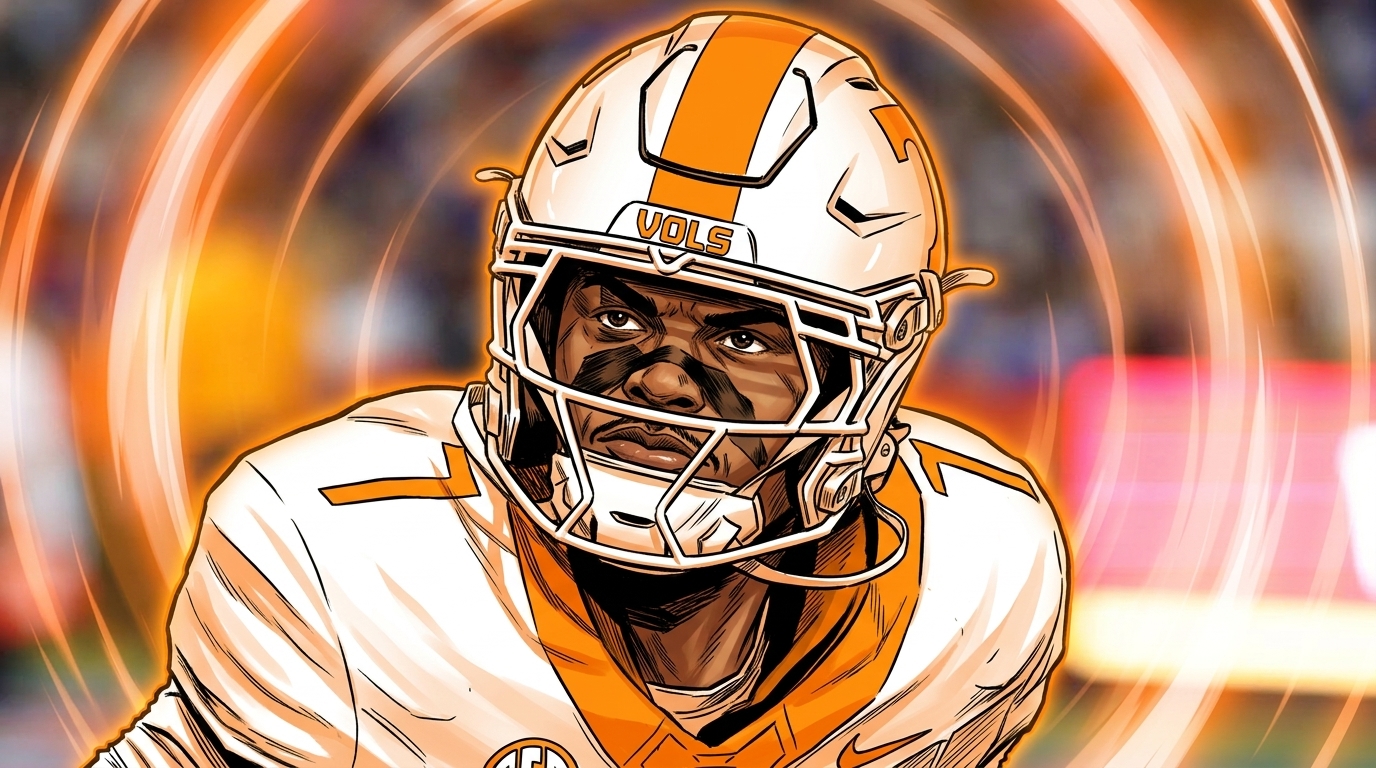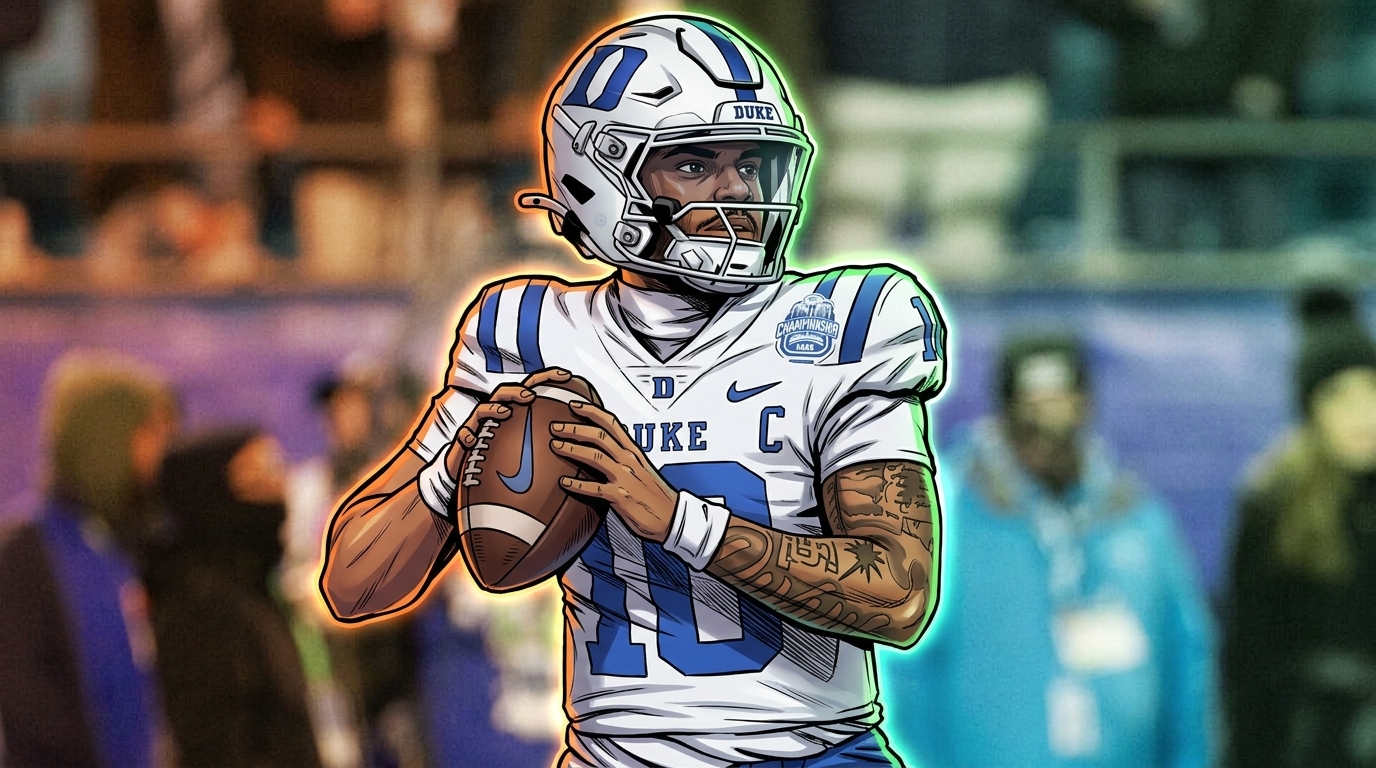

I’ve stopped expecting anything resembling self-awareness from the institutions that run college football, but I’ll admit Darian Mensah posing with a Rolex Datejust made me feel something. Not outrage. More like the specific exhaustion that comes from watching a system get exactly what it deserves and then pretend to be surprised about it.
On July 7, Mensah announced an NIL partnership with Derby Watch Supply, promoting a luxury watch. On3 called it “one of the first ever luxury watch NIL partnerships” for a college athlete. There’s Mensah, Miami’s new starting quarterback, holding a Rolex like he earned it — which, as it turns out, he did.
The NCAA spent a hundred years building a machine that extracted labor from young athletes and routed the profits upward. Duke football alone generates revenue in the tens of millions annually. Mensah threw for 3,973 yards and 34 touchdowns in 2025, led Duke to its first ACC Championship since 1962, won the game’s MVP award going 19-of-25 for 195 yards and two scores in overtime — and collected whatever Duke’s NIL collective decided he was worth under an arrangement Duke controlled entirely. The Rolex isn’t a scandal. The Rolex is what accountability looks like when it finally arrives on someone else’s wrist.
https://twitter.com/DarianMensah/status/2012281535240511847
What happened between December and July is worth walking through slowly, because the legal case that exposed NIL’s enforceability crisis deserves more than a bullet-point summary. Mensah announced on December 19, 2025 that he’d return to Duke. Then, on January 16 — the final day of the portal window — he reversed course and entered the transfer portal. Duke filed suit in Durham County Superior Court four days later, citing his NIL contract: a multiyear deal believed to be worth up to $4 million for the upcoming year, with an explicit clause prohibiting him from competing at another institution.
Duke’s position, stripped of legal language, was this: we paid you, so we own where you play. That’s the argument. A university — a nonprofit educational institution — filing an injunction to prevent a 21-year-old from enrolling somewhere else, because they’d signed a contract that said his labor belonged to them.
The judge assigned to hear the case recused himself. He was a Duke basketball season-ticket holder.
The settlement came January 27-28: Mensah paid an undisclosed buyout — terms were never released — Duke dropped the lawsuit, and he signed with Miami for a deal widely reported around $10 million. Young Money APAA, his agency, put out a statement expressing Mensah’s “sincere gratitude to Duke University for engaging in good-faith discussions.” That’s the language you use when you’ve just paid a significant sum to get away from someone and you’d still like to not be sued again.
The legal analysts at Loeb & Loeb called the case “groundbreaking,” which is a polite way of saying that nobody actually knows whether NIL contracts can enforce non-compete clauses on college athletes, because the question was never fully adjudicated. The TRO was denied. The case settled before reaching a full ruling. What Duke established is that schools can use NIL contracts as transfer restrictions — the new architecture of the same old labor control. They just can’t always make it stick in court.
Mensah told the Pro Football Network, “Miami is getting a winner.” He told On3, “I want to make the NFL. I want to be a first-round draft pick. And all signs point towards Miami.” This is the thing about how NIL money actually flows in college football that the hand-wringers never want to sit with: the players know exactly what they’re doing. Mensah understood his market value, found an institution willing to pay it, paid the exit fee to get there, and is now doing photoshoots with luxury watches. He ran the same calculation that every university athletic department runs every single day. He just did it for himself.
The indignation directed at Mensah’s Rolex is the tell. Nobody said a word when Duke structured a multiyear NIL deal with a non-compete clause that would have kept a 21-year-old quarterback in Durham against his will. CBS Sports noted that the settlement exposed fundamental flaws in how NIL contracts are written and enforced — meaning schools have been drafting these agreements to maximize their control with full knowledge that enforceability is unclear. That’s not a good-faith labor arrangement. That’s a stall.
The NCAA built an ecosystem where programs extracted a century of unpaid labor from athletes and called it education. Then the courts started pushing back — on transfer restrictions, on athlete compensation, on the basic premise that a scholarship constitutes fair exchange for a Division I revenue athlete’s career. NIL arrived as a half-measure compromise, and schools immediately began using it to replicate the control they’d just been told they couldn’t exercise through eligibility rules.
Mensah beat them. Partially. He still had to pay an undisclosed buyout to exercise a right that should have been unconditional. But he got out, he landed somewhere better, and now he’s holding a Rolex in a photoshoot, and the whole arrangement is visible for anyone who wants to look at it honestly.
The NCAA didn’t want you to see that photo. They wanted the machine to keep running quietly, with the value flowing in one direction. Mensah just put a billboard on the side of it.