
Call it The Amateur Athletics Stress Test. The methodology is simple: take the three defining features of “amateur” athletics (no pay, no contracts, no legal disputes between institutions and athletes over compensation) and check whether any of them still apply to major college football. Run the test. Note the results. Accept what the evidence says.
The results, in 2026, are not ambiguous.
The Amateur Athletics Stress Test
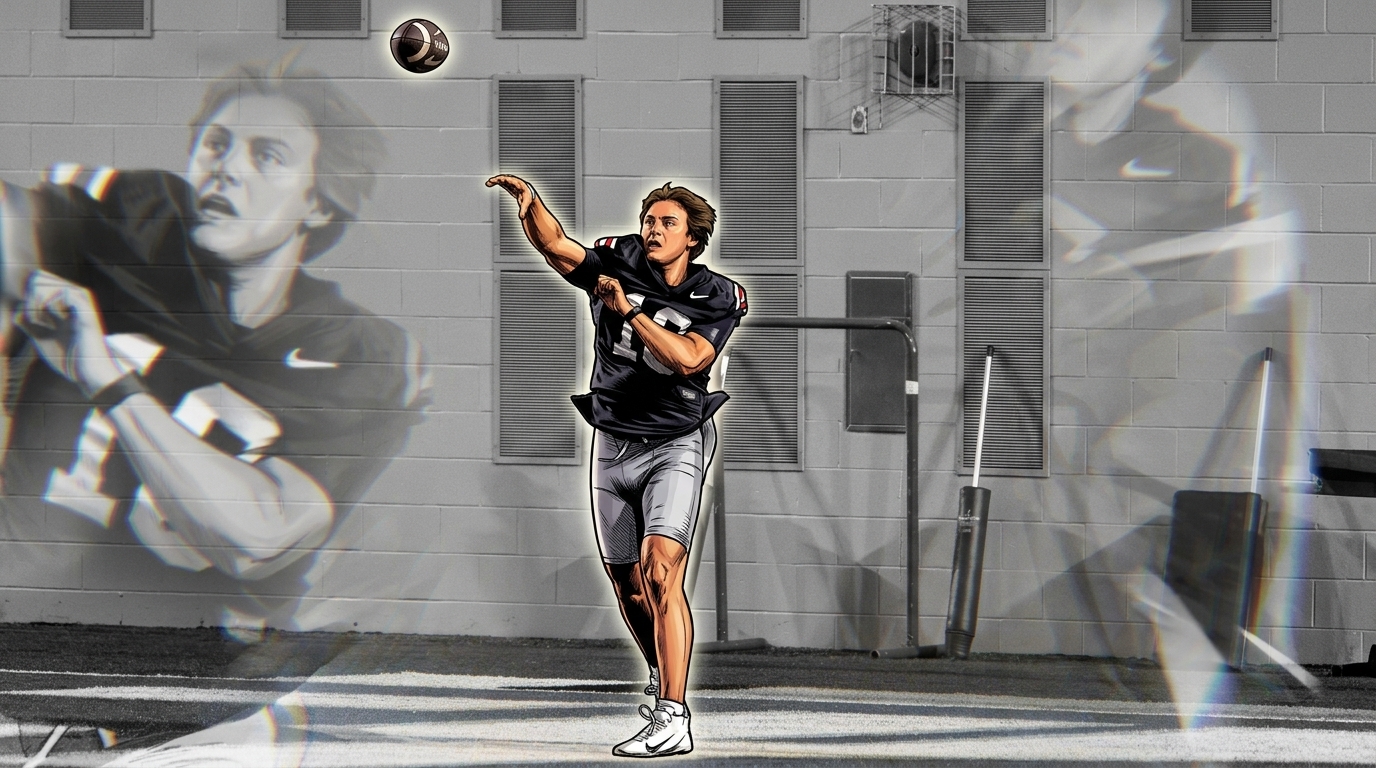
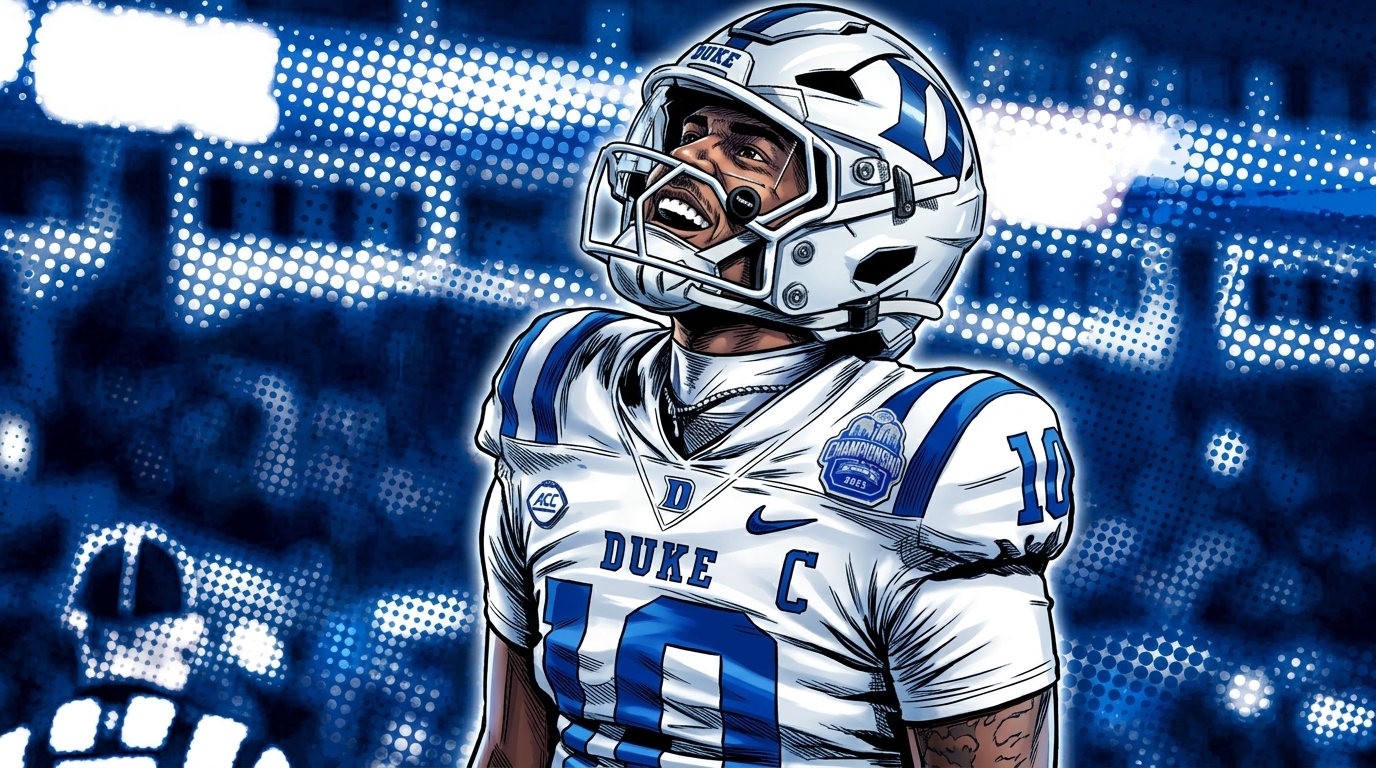
Darian Mensah led the ACC in passing yards (3,973) and touchdowns (34) for Duke in 2025, quarterbacking the Blue Devils to the ACC Championship. On January 16, 2026, the final day of the transfer portal window, he reversed a prior commitment to return to Duke and entered the portal.
https://x.com/DarianMensah/status/2012281535240511847
Four days later, Duke sued Mensah in Durham County Superior Court. The school was the plaintiff. The 20-year-old college student was the defendant. The subject of the suit: enforcement of a multiyear NIL contract, believed to be worth up to $4 million for the 2026 season alone, per ESPN and CBS Sports. Duke wanted to hold him to it. Duke wanted to prevent him from leaving.
A university sued a student-athlete over an employment contract to compel performance. The Amateur Athletics Stress Test has three inputs, and the system just failed all three simultaneously.
By January 27, the two sides reached a settlement, terms undisclosed. Mensah committed to the Miami Hurricanes. According to reporting from ESPN, CNN, Sports Illustrated, CBS Sports, and Yahoo Sports, the Darian Mensah Miami NIL deal is worth approximately $10 million total.
The NCAA still formally classifies this as amateur athletics.
How Much Is Darian Mensah Getting Paid at Miami?
Darian Mensah is reportedly receiving a total NIL package of approximately $10 million from the Miami Hurricanes after transferring from Duke, where he was under a reported $4 million per year contract. The legal settlement with Duke, which sued to enforce that contract, was for an undisclosed amount.
That $4 million annual figure at Duke is more than four times the NFL rookie minimum salary of approximately $885,000 per year under the current NFLPA collective bargaining agreement. The $10 million total Miami package exceeds the average four-year contract for an NFL fourth-round draft pick, which Spotrac data places around $4.4 million over four years.
Woof.
Mensah is 20 years old. He has never taken an NFL snap. He is under contract, a real contract of the kind courts enforce, to play college football, and his compensation package is larger than what most NFL players earn across their first four professional seasons. He told media after committing: “Miami is getting a winner with me, I’ve got a big chip on my shoulder,” per Pro Football Network. The chip is apparently worth eight figures.
This is not a knock on Mensah. He led his conference in passing and won a championship. The market is paying what the market will pay. The question is what to call a market where that’s true, and “amateur” is no longer a defensible answer.
The QB Market Is Just the NFL Draft With Extra Steps
The Darian Mensah situation doesn’t exist in isolation. The 2026 QB transfer portal market is functioning as an explicitly professionalized labor market with bidding wars, agent representation, and guaranteed contracts. The only distinguishing feature from NFL free agency is that the players aren’t yet draft-eligible.
DJ Lagway left Florida for Baylor on a deal reportedly valued around $2 million, per multiple outlets. That figure is still more than twice the NFL rookie minimum. Sam Leavitt transferred from Arizona State to LSU as one of the last top QBs off the board. Dylan Raiola departed Nebraska for Oregon, where he’ll compete behind a returning starter, effectively taking a backup role under an NIL deal, a calculus that mirrors veteran QBs weighing backup contracts in the NFL.
The logic is identical to NFL free agency: schools bid, agents negotiate, players weigh starter opportunities against total compensation, contracts get signed, courts enforce them when disputes arise. The College Football Playoff generates the same national broadcast windows the NFL uses to build revenue. The athletes generating that revenue are now compensated at rates that reflect it, at least at the top of the market.
The House v. NCAA settlement, approved in 2025, formalized this by allowing schools to share revenue directly with athletes. That ruling didn’t create the professionalized transfer market; it ratified what was already operating. The Darian Mensah Miami NIL deal at roughly $10 million is the clearest single data point for how far above the old fiction the market has moved.
The evidence suggests the QB transfer portal and NFL free agency are not analogous systems. They are the same system, separated by an eligibility rule.
For related context on institutional attempts to cap this market, see the College Sports Commission’s attempt to block $7.5 million in Nebraska NIL deals and how that attempt ended.
What the Word ‘Amateur’ Is Actually Worth
Words describe the things they name, or they stop meaning anything. The NCAA’s use of “amateur” to describe a system where a university sues a student-athlete to enforce a $4 million contract is not a harmless rounding error. It is an institutional claim the evidence has fully and publicly invalidated.
The Amateur Athletics Stress Test doesn’t require complex methodology at this point. It requires noting that the defining characteristic of amateur athletics — participation without compensation — ceased to describe college football’s top tier somewhere between the first NIL deal and the first lawsuit over one. Duke v. Mensah is just the moment that required a court filing.
What Mensah’s situation describes, cleanly, is a professional labor market with one unusual feature: the athletes in it are ineligible to enter the adjacent professional league until they meet an age and draft eligibility threshold. Everything else, the contracts, the agents, the bidding wars, the litigation, the reported college football NIL contract figures in the tens of millions, is professional sports infrastructure operating at professional sports scale.
Mensah will arrive in Coral Gables as the most expensive QB in the 2026 transfer portal class by a significant margin. Miami was the College Football Playoff runner-up in 2025. The program is building toward a national championship with the same financial logic as an NFL front office: identify the best available player at the most critical position, outbid the competition, absorb the legal and financial risk.
That’s not amateurism. That’s roster construction. The institutions running this market understand the difference, even when their governing body insists otherwise.
The data here is unambiguous: college football at the top level is professional athletics. Mensah’s reported $10 million deal and the lawsuit that preceded it are not anomalies. They’re the system working exactly as it was designed to work, now that the design is finally visible. You can read more in our college football coverage.