
The pitch was always the same: come here, and we’ll have the next great quarterback ready before you need him. Alabama didn’t recruit; it produced certainty. Clemson didn’t develop; it assembled inevitability. Florida, for a brief stretch, convinced everyone it had figured out how to manufacture signal-callers at industrial scale. Three programs, one sales deck, infinite confidence. All three of them are entering fall camp in 2026 without a named starter at quarterback; the confidence, apparently, was not included in the package.
This is what the arms race looks like when it doesn’t work, and it’s a hell of a thing to watch.
The NIL era was supposed to solve roster construction the way money always solves things — by buying certainty away from whoever had it before you. That was the theory. Alabama and Clemson and Florida spent accordingly, overhauled their programs to compete in the transfer portal, threw resources at the problem with the conviction that resources were the problem. What they discovered, too late and at considerable expense, is that everyone else did the same thing. The portal gave you access to the market; it did not give you an edge over the market. When every program with $150 million in NIL commitments is bidding for the same quarterbacks, the quarterbacks go where they want, and what’s left is — well, what’s left is Aaron Philo.
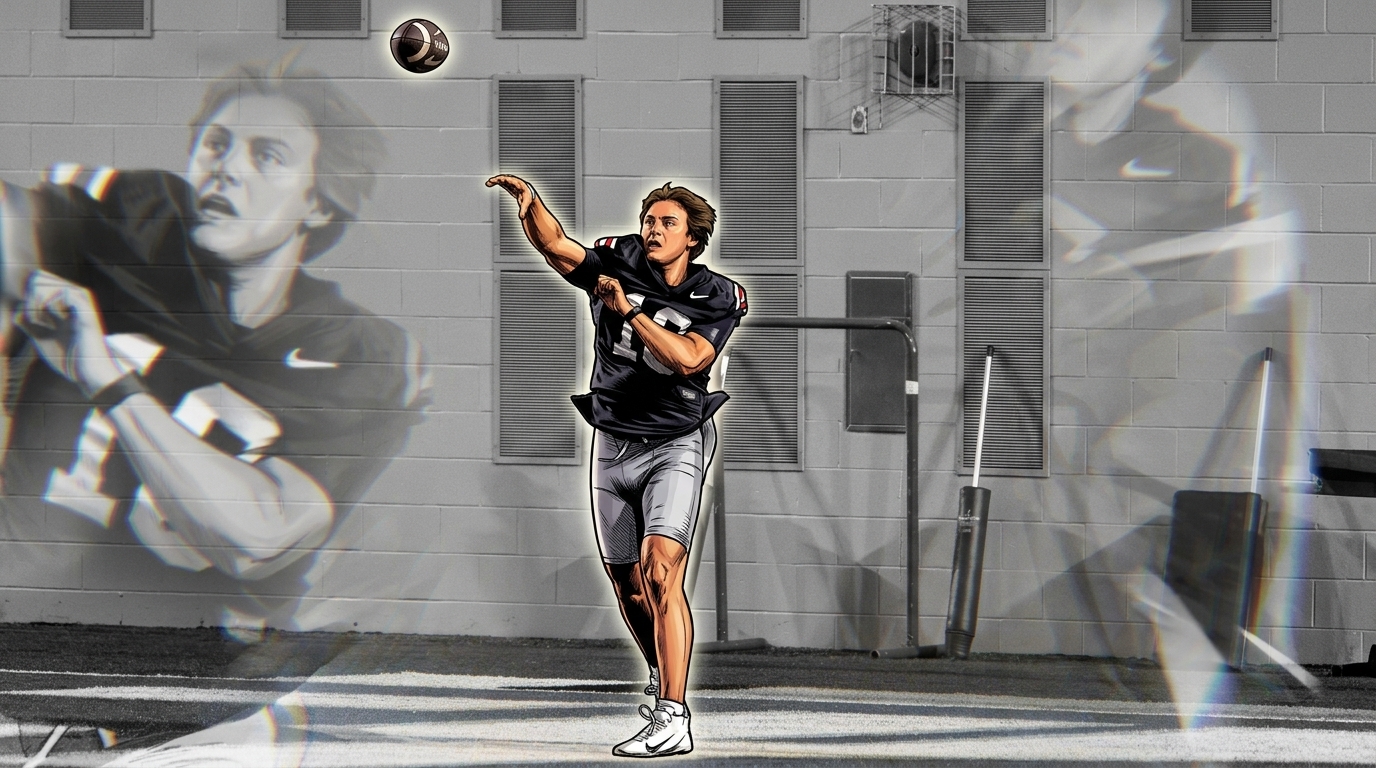
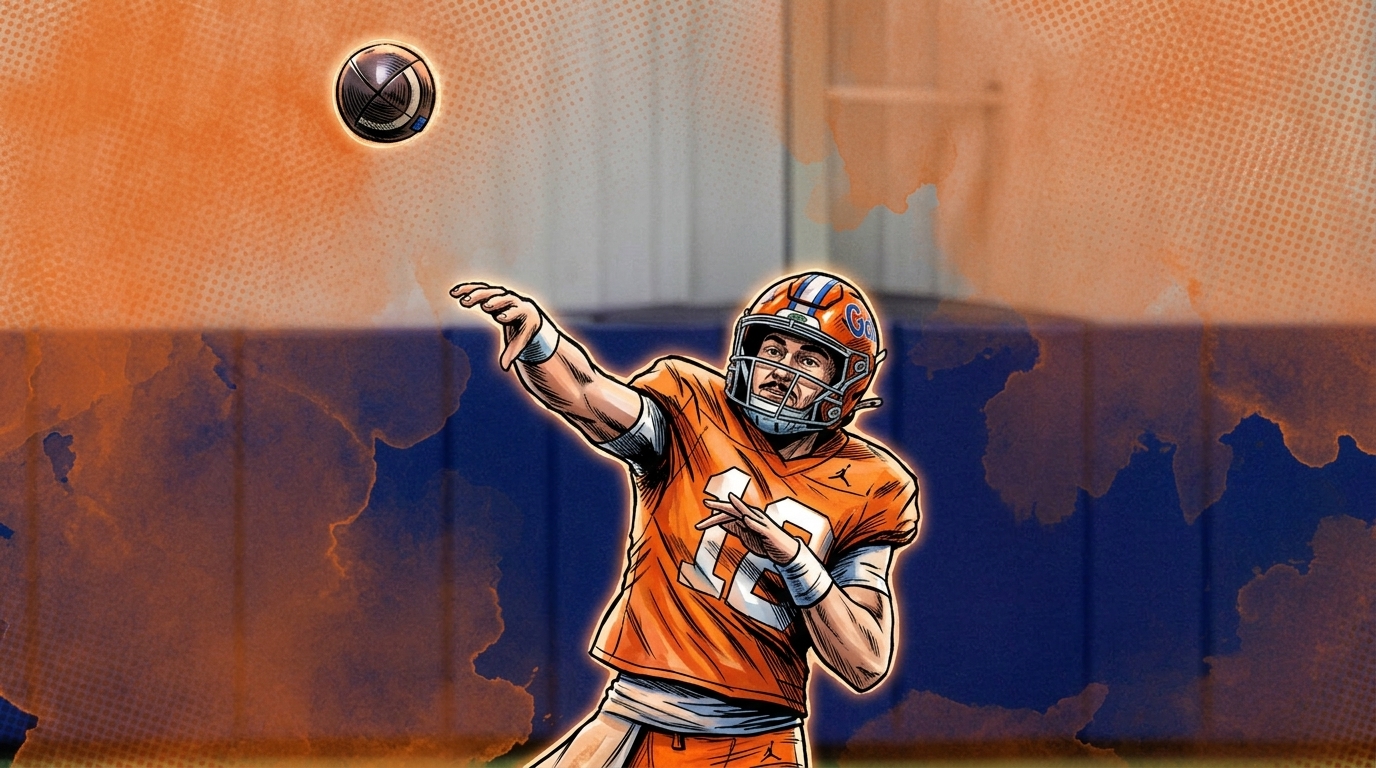
Philo is Florida’s leading candidate to start under center for a program that once watched Tim Tebow win a Heisman in its building. His career statistics: 59 completions from 102 pass attempts, 938 yards, two touchdowns, three interceptions, across eight games at Georgia Tech, including one career start against Gardner-Webb in a 59-12 win. He followed offensive coordinator Buster Faulkner from Georgia Tech to Gainesville, which is a polite way of saying that the strongest argument for his starting job is scheme familiarity — that he already knows the plays his coordinator is calling. Florida’s own official site described the finish line of its quarterback race as “far away” back in March. The spring game produced no separation. Fall camp starts August 5. The SEC schedule does not care about any of this.
At Clemson, Christopher Vizzina has spent three years as Cade Klubnik’s backup and owns a single career start — 317 yards and three touchdowns against SMU, in a loss. New offensive coordinator Chad Morris has said Vizzina “starts camp as the guy.” Dabo Swinney has separately indicated that true freshman Tait Reynolds — who gave up a baseball career at Clemson to throw footballs, was limited in spring due to injury, and is “full go” for fall — could absolutely challenge him. “Absolutely,” Swinney said of Reynolds’ chances, per Jon Blau of The Athletic. “Vizzina has done nothing to back up. But Tait’s been moving forward.”
https://twitter.com/Jon_Blau/status/2037979406220578937
Alabama’s situation is marginally less alarming on its face — Kalen DeBoer called this his approximately tenth quarterback competition as a head coach, implying routine procedure — but the particulars are still worth noting. Austin Mack is a redshirt junior who has spent four years inside DeBoer’s system without seizing the job. Keelon Russell is a 5-star sophomore dual-threat who arrived with significant fanfare. Neither has separated from the other. “The competition is strong right now and it’s going to be that way through the fall,” DeBoer said, which is the kind of quote a coach gives when he genuinely does not know the answer and would prefer you not dwell on it. A starter is not expected until late August.
You could argue — and some will — that open competitions aren’t inherently bad. Plenty of teams have resolved their QB questions in camp and gone on to great seasons; the drama of uncertainty sometimes produces a better result than a predetermined answer. That’s fair. The distinction here is that these three programs did not arrive at open competitions through patient development of multiple prospects. They arrived through a combination of attrition and market failure: transfers departing, the portal failing to deliver the prize, and the backup who’s been standing around for years suddenly inheriting a job nobody else wanted badly enough to take.
Alabama’s recruiting machine still functions. The rankings still look right. The facilities are still gleaming. But the old model — grow your own quarterback, let him marinate, hand him the keys when the time comes — got quietly dismantled in the NIL era, traded in for the promise of buying certainty off the shelf. The shelf, it turns out, was also available to everyone else. NIL spending didn’t create a gap between the haves and the have-nots so much as it collapsed the advantage of the programs that had previously been able to claim they always had a plan.
Three programs. Three open competitions. One shared explanation dressed in shoulder pads.