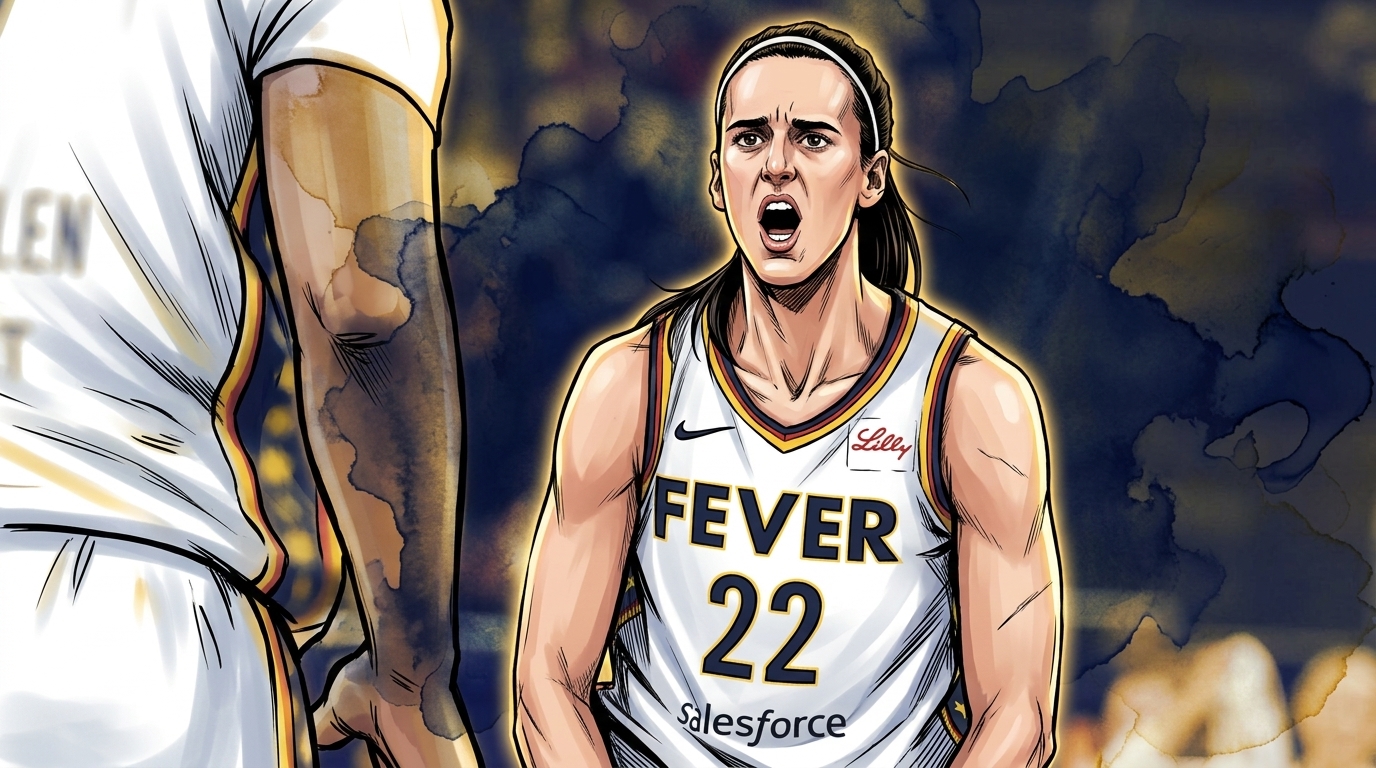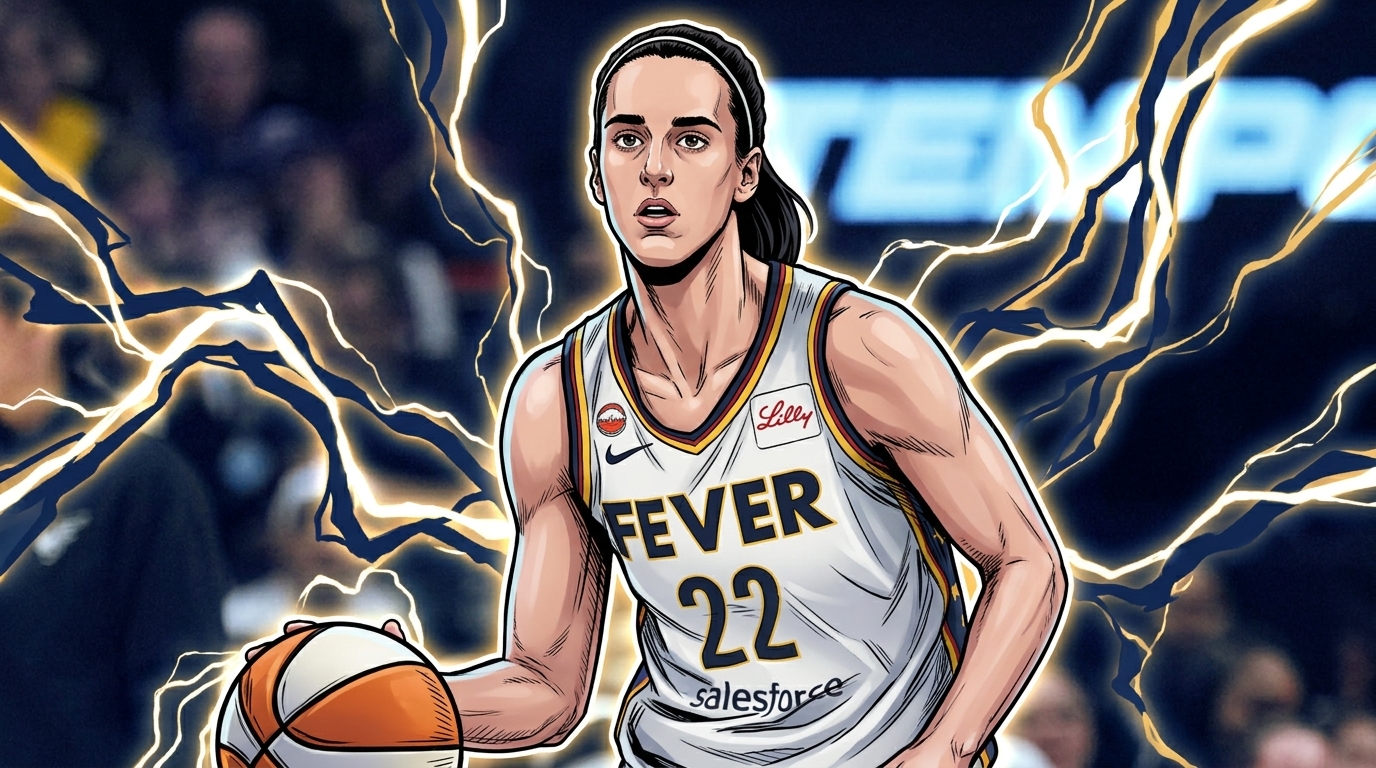

We’ve been tracking two separate technical-foul counters all season, and this week they landed on the same number. Caitlin Clark and Angel Reese are both sitting at seven technical fouls apiece, one away from the kind of automatic suspension that costs a game and a paycheck, and the ambiguity died when the WNBA rejected the Indiana Fever’s appeal of Clark’s seventh technical. The call stands. The clock is real.
We’ve covered this rivalry’s slow burn twice already: both players at five techs back in June, then Clark alone drawing her seventh technical foul in July, before the Fever had even filed the appeal. (This is the third time this site has covered this exact math, first at five apiece, then Clark alone at seven, now this. We might just need a permanent tracker.) What’s new this week is the finality, not another whistle. The league reviewed the call and upheld it. Both stars are now genuinely, officially one flare-up from sitting a game without pay.
How many technical fouls before a WNBA suspension?
A WNBA player is automatically suspended for one game without pay after picking up an eighth technical foul in a regular season, along with a $1,500 fine. The league raised the threshold from seven to eight in 2025, when it expanded to a 44-game schedule. Every two additional technicals after that trigger another one-game suspension.
The league doesn’t get to weigh context on the eighth whistle the way a referee might on the fifth; the number is just a counter, not a judgment call. (Nobody has ever set a WNBA fine at a number designed to actually change behavior, and $1,500 does not appear to be the exception.) That’s exactly why the appeal ruling mattered beyond the usual foul-review footnote: it confirmed Clark has no more room to work with.
What actually got Clark her seventh technical?
Clark’s seventh came in a 123-88 blowout of the Connecticut Sun, not a tense fourth quarter. Guard Saniya Rivers got into it with her defensively, and Clark responded by pointing at the scoreboard. Officials handed out double technicals, Rivers called it disrespect afterward, and the exchange is what the Fever’s appeal failed to undo.
Here’s the exchange that started it:
https://twitter.com/UnderdogWNBA/status/2080107398891712720
Clark had already put up 27 points and 11 assists on 8-of-13 shooting by that point, with Indiana up by 35 — this wasn’t a technical born of a close game or a blown call that mattered. She addressed the risk directly afterward: “I’m never going to back down from anybody,” adding that she’s trying “to continue to control your emotions the best you can.” That’s not the language of someone planning to play it safer at seven.
Why does Angel Reese’s history with this rule matter?
Reese has already lived this exact ending. She was suspended a game in 2025, while still with the Chicago Sky, after reaching eight technicals, and she was the only player suspended for technicals that entire season. Her seventh this year came July 9 against the Seattle Storm, her first season since the April trade that sent her to the Atlanta Dream.
Reese’s history matters more than Clark’s, honestly, because it isn’t hypothetical. She’s already shown what her ceiling looks like under this exact pressure, and the answer was that she hit eight anyway. She argued a drive call she believed should’ve been a foul against the Storm — the exact kind of in-the-moment flare-up that got her suspended once already. The Clark-Reese rivalry has run hotter than a normal matchup for two years now, and neither player has given any real indication that a suspension threat changes how she plays through contact. The league has been here before, too: it suspended Natasha Cloud with the Mercury and Teaira McCowan with the Wings in 2024, both under the old seven-technical threshold the WNBA has since decided was too low.
There’s a reason the league didn’t just let the appeal quietly disappear. Clark and Reese are the two most-watched players in the WNBA, and games between the Fever and the Dream carry weight specifically because of what’s still simmering between them. A suspension for either is small on paper, one game, one missed paycheck, but it would be the first time either franchise’s biggest draw sat out because the league decided she couldn’t be trusted to get through forty minutes without another flag. That’s a different kind of story than a routine disciplinary footnote, and it’s why both rosters would rather this stayed hypothetical.
I think Reese trips the wire first. Not because she’s more reckless than Clark, but because she’s already proven the threshold doesn’t change her decision-making: the automatic suspension didn’t stop her from reaching eight in 2025, and nothing about her play this season suggests a different approach now. Clark’s fouls have leaned situational, a scoreboard tap in a 35-point win, a defensive gripe here and there, not the pattern of physical, boundary-pushing contact that’s defined Reese’s game against Clark specifically. Neither front office wants to hear that. Both rosters are built around these two players, and a one-game absence for either is a real hit to the standings, not a symbolic one.
Watch how the Fever and the Dream get called over the next few weeks. If either bench starts pulling its star in the final minute of a decided game, the exact situation that got Clark to seven, that’s the tell the front office has gotten the message even if the player hasn’t. Until then, we’re watching two separate countdowns tick toward the same number.