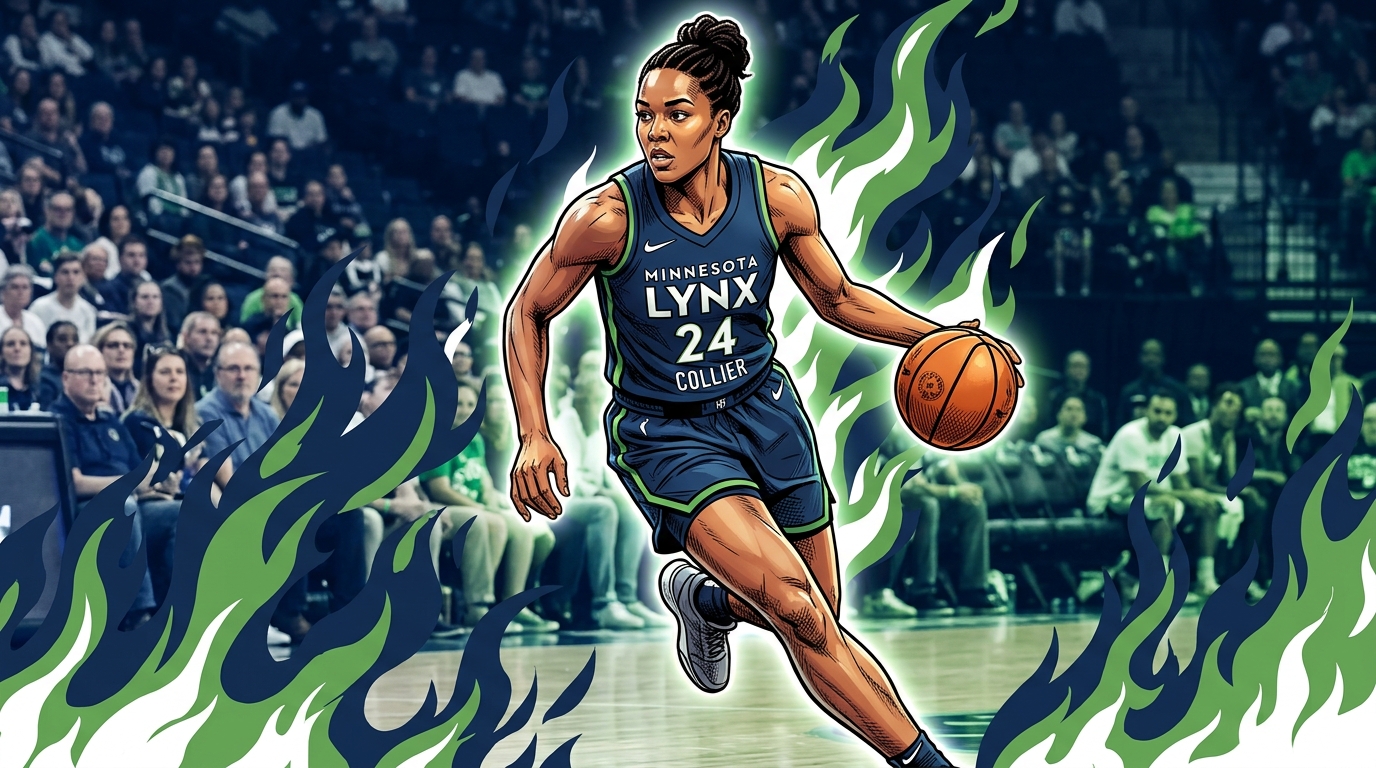

WNBA players ranked Caitlin Clark 11th among guards in All-Star voting, and Candace Parker went on a podcast and said what needed to be said: that’s crazy.
Clark is averaging 21.2 points and 8.2 assists per game this season — third in the league in scoring, second in assists, third in three-pointers made. If you handed a neutral observer those numbers with no name attached, they’d call it a top-five player in the sport, maybe top three. The player vote called it 11th.
Parker, a two-time WNBA champion whose opinion on this carries actual weight, didn’t hedge on “Post Moves” Tuesday. “I wholeheartedly believe there need to be some rules with the WNBA player voting. This is getting out of hand.” She called it player “insecurities” and told the voters to see a therapist. When Parker goes that direct, it’s worth paying attention.
https://x.com/jackmaloneycbs/status/2072735140720066988
The voting math makes the player result look worse, not better. Only 85 of 180 WNBA players submitted ballots. Fans ranked Clark second overall — over a million votes. Media ranked her third. The player vote alone dragged her to 11th. She still made the All-Star starter list for the third straight season, because the combined formula is weighted to limit exactly this outcome. The formula saved the showcase from itself.
Here is the strongest version of the other side: players see things from the floor that numbers don’t capture, competitive dynamics are real, and maybe there’s a case for Clark ranking behind ten other guards on some criteria that aren’t visible on a box score. Sure. Hold that thought.
Now: 21 points, 8 assists, and you voted her 11th. Whatever internal reasoning produces that outcome isn’t about basketball.
The deeper problem isn’t whether the vote was personal — it’s that it doesn’t matter if it was. The WNBA has spent three years building its biggest broadcast deals, its biggest merchandise numbers, and its biggest cultural moment on the back of the league’s commercial trajectory that Clark’s arrival accelerated. The All-Star Game is a marketing event. Voting your most marketable player to 11th isn’t a statement about basketball — it’s a statement about the league’s relationship with its own product.
Parker’s suggestion that the voting mechanism needs rules isn’t radical. It’s the obvious fix. When 95 of 180 players don’t bother to vote and the 85 who do produce a result that diverges this sharply from every other metric, something in the process isn’t working.
The WNBA can grow on Clark’s stardom or it can let players vote her out of the showcase. It cannot do both.