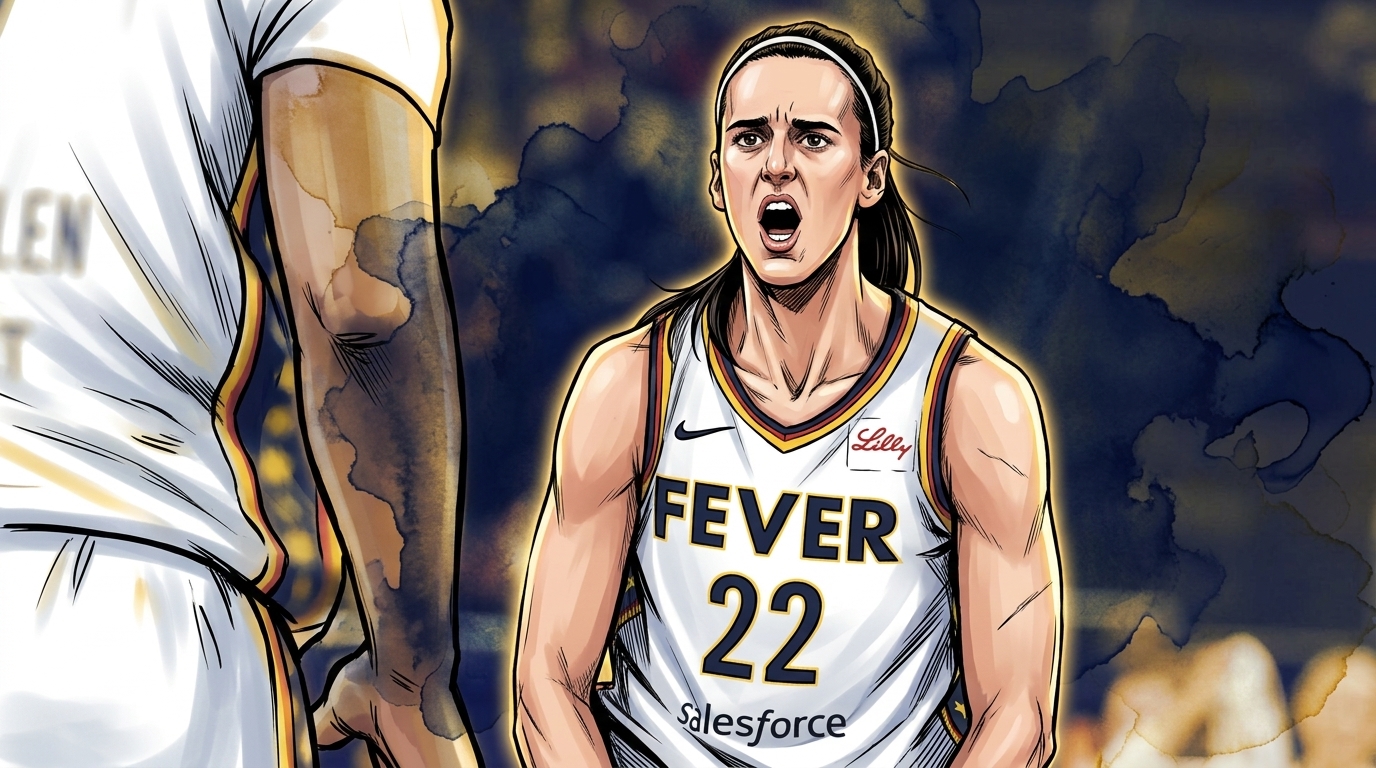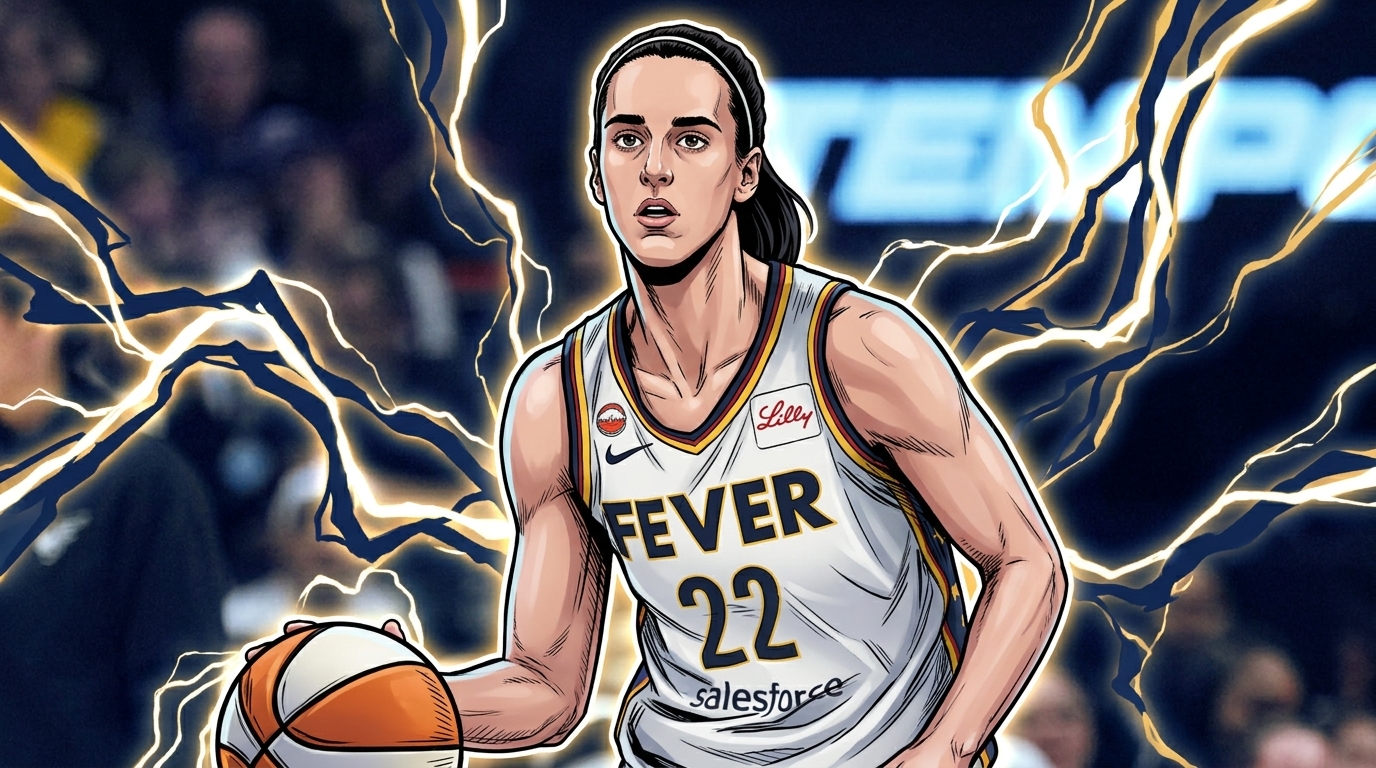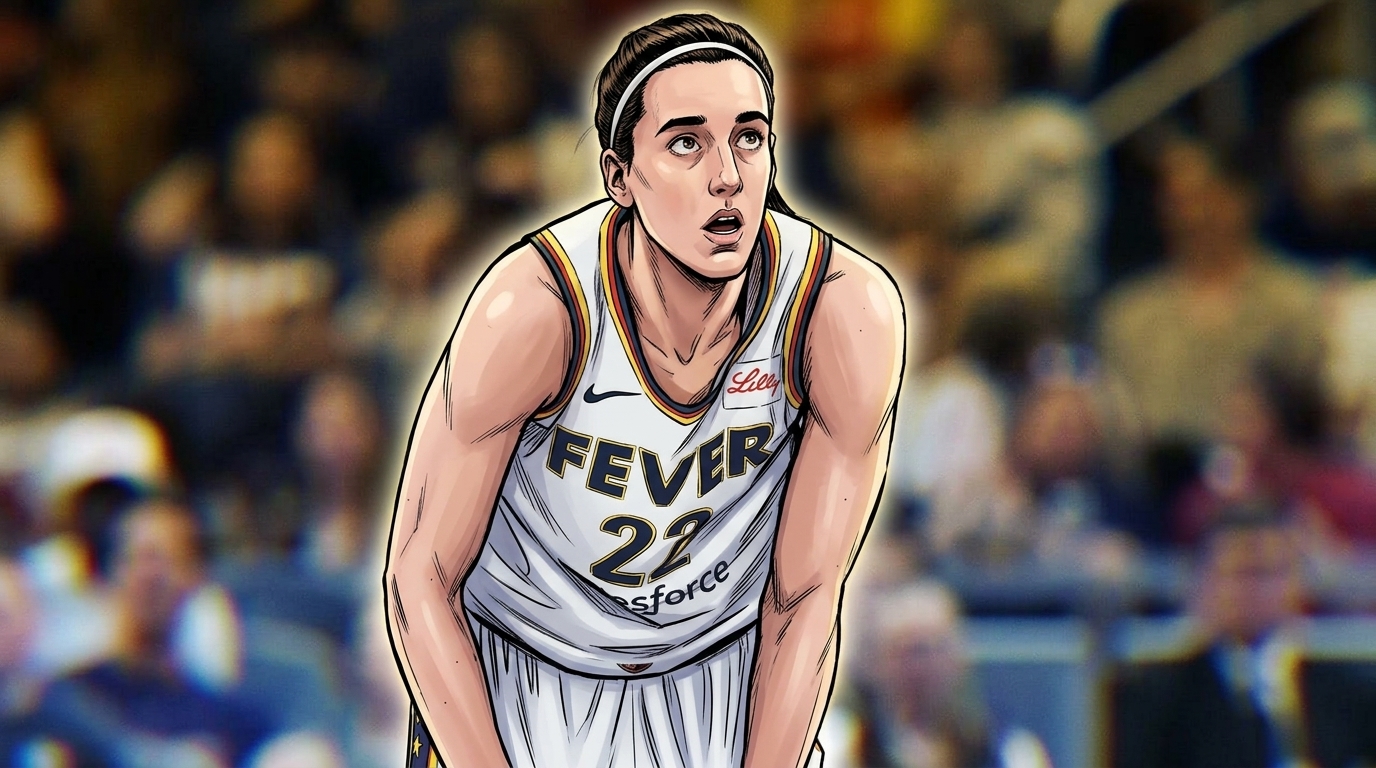

Caitlin Clark left Wednesday’s Fever-Mercury game at the 5:15 mark of the third quarter with a back injury and did not return — and the conversation that should be happening right now is barely a murmur.
She had put up 19 points and 8 assists in 20 minutes on 5-of-9 shooting. The Fever lost 111-109.
https://x.com/IndianaFever/status/2069950998194360757
This was game 13 in a row where Clark appeared on the injury report with a back ailment. Thirteen. The double standard doesn’t require any hypothetical stretch — just a basic comparison. If LeBron James had been listed as “probable” for 13 consecutive games with a back issue visibly affecting his movement, ESPN would have cleared its schedule. We’d have biomechanics consultants on the 6 PM SportsCenter and a First Take segment about whether the Lakers were being reckless with a generational asset. Instead, Clark’s been grinding through it, and the dominant story last night wasn’t her health — it was that she had to leave early after taking what looked like Alyssa Thomas pressing a fist into her neck during a loose-ball scramble. No foul called. Officials standing right there on the baseline.
Coach Stephanie White came out of that game looking like she’d been personally wronged by the sport itself. “We have a generational talent and WNBA superstar who had two cheap shots right there that weren’t called. Absolutely unacceptable.” Then: “It’s absolutely egregious and utterly disrespectful.” She told officials at halftime; they told her they didn’t see it.
I’ve been following the Mercury for years — Clark’s the reason I’ve been locked into Fever games this season — and I keep watching the same dynamic play out. Something happens to Clark that would generate weeks of outrage in the NBA, and it generates a news cycle, and then it evaporates.
In Q4 last night, Indiana was called for 11 fouls. Phoenix: 2. White didn’t hold back: “[Clark] is not called the same way as everybody else is called.”
The WNBA’s institutional response has been equally revealing. When the Fever failed to list Clark on the day-before injury report, announcing her out roughly 100 minutes before tipoff, the league issued a warning. No fine. NBA teams get fined routinely for identical reporting violations. The WNBA warning the Fever for injury reporting produced no real consequence, and the league’s own standards clearly apply differently when the player at the center of it is a woman — even the woman who has done more for WNBA visibility in the last two years than anyone since Diana Taurasi. Clark’s comment on the situation: “I had every intention of playing.” She was out in the third quarter of the next game.
This pattern isn’t just a media coverage problem — it’s about what the league signals it values when its star players get hurt. The NBA treats its stars as protected assets. The WNBA’s approach to player safety has always been reactive, under-resourced, and insufficiently enforced, which is the same dynamic behind the WNBA’s structural failure around player protection. Clark’s back is the latest evidence.
She’s 24, the best player in the league, and has been managing a back injury for over a month while absorbing physical play that would draw immediate Flagrant 2 review in the NBA. The Thomas neck shove would have had the league office on the phone before the final buzzer.
The conversation still hasn’t started.