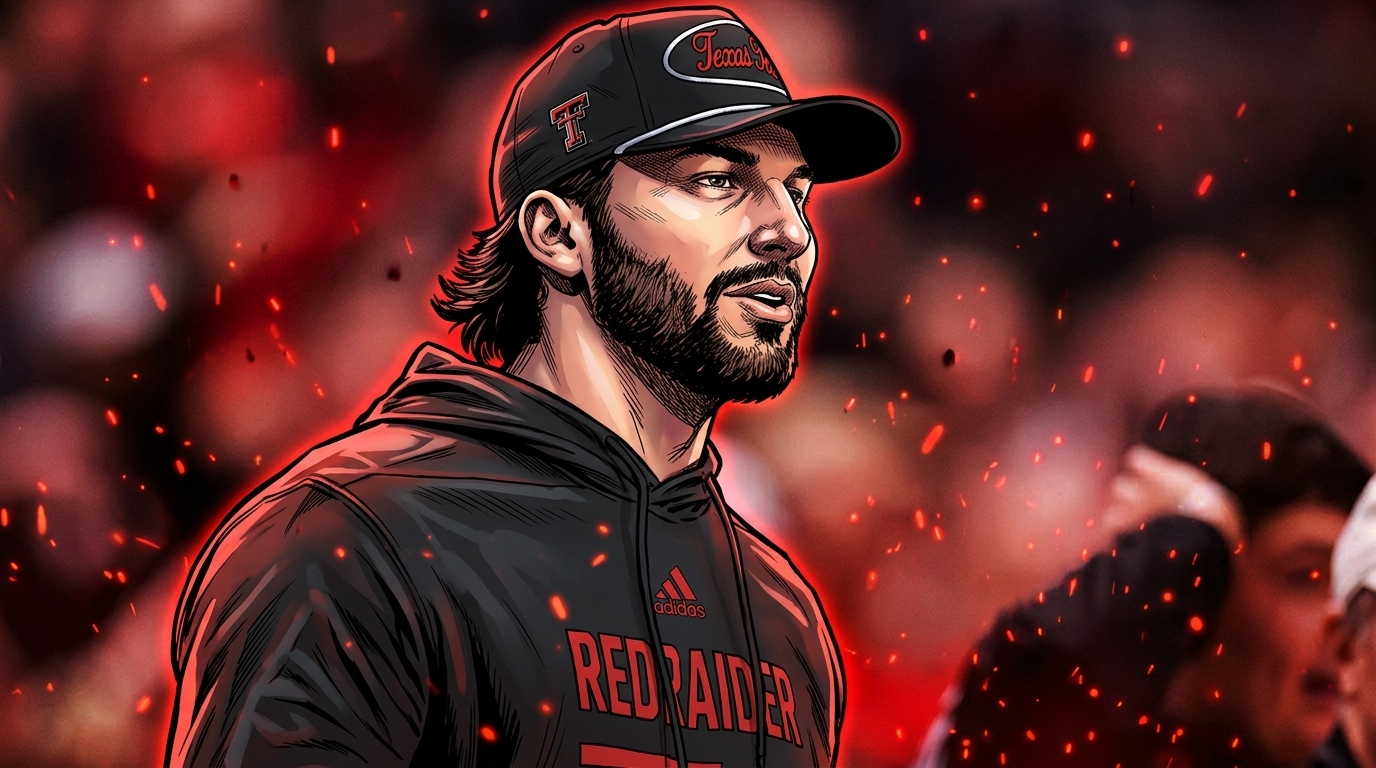

Brendan Sorsby beat the NCAA in federal court this summer, an outcome so rare it should have been the whole story. Instead, the actual story is that a man who spent four years and roughly $90,000 proving he couldn’t leave a bet alone went and did the exact same thing to his own legal victory.
Start with the underlying case, because it’s serious and deserves to be taken on its own terms. Sorsby, the Texas Tech quarterback who transferred in from Cincinnati, admitted to wagering nearly $90,000 over his college career, and court documents show more than $60,000 of it was funneled through a FanDuel account registered to his brother-in-law. He’d also placed at least 40 bets involving Indiana football while a redshirt freshman on the Hoosiers’ own roster, the type of detail that usually ends a career with a press release and a shrug. It’s one more entry in the gambling stories that keep swallowing college rosters whole. The NCAA ruled him permanently ineligible and denied his reinstatement request; that’s usually where these stories stop.
This one didn’t. Sorsby actually beat the NCAA in federal court: a Texas judge named Ken Curry granted him a preliminary injunction in early June, blocking the NCAA from keeping him off the field and restoring his 2026 eligibility, minus a two-game penalty, contingent on seven conditions including gambling and anxiety treatment and monthly compliance reports. An athlete credibly accused by his own governing body walking into federal court and winning is close to unheard of. The NCAA responded the way an organization with more lawyers than self-awareness tends to, calling the ruling “damaging, far-reaching and broadly destabilizing” and filing an appeal, as if the destabilizing force here were a judge’s signature and not the four years of wagering that produced it.
There’s a particular kind of gambler who understands that quitting while ahead is the entire discipline; the skill is recognizing the moment you’re up and walking away from the table with it. For one of the only stretches in this saga, Sorsby had become that guy. He had the injunction, the eligibility, the conditions, the plan.
The stack was sitting right there.
He pushed it back onto the table anyway. With Texas Tech having decided it could no longer support his participation given the threat of Big 12 sanctions, Sorsby walked away from that win for a supplemental draft that, it would turn out, didn’t exist, abandoning the NCAA lawsuit on June 16 ahead of a June 22 declaration deadline. Dropping the suit meant he was, per ESPN’s reporting on the NFL’s eventual decision, “once again permanently ineligible from NCAA competition for his repeated gambling violations.” He’d cashed out a winning hand to buy into a table that wasn’t even open, which is one hell of a way to lose twice in a single month.
That bet lost too. On June 23, the NFL rejected the petition outright, and it wasn’t close. NFL Management Council general counsel Larry Ferazani wrote that Sorsby’s application was filed “without any supporting information or documentation, and only after abandoning your recent litigation efforts to avoid NCAA sanctions.” The league didn’t even hold a supplemental draft in 2026; there was no draft to lose, just a petition somebody had to bother rejecting. Sorsby’s attorney, Jeffrey Kessler, said he’d pursue the matter “immediately” with the NFLPA, which is a sentence lawyers say right before several more months happen.
The NCAA gambling case cost him the CFL too. On June 28, the Canadian league barred Sorsby from signing with any member team, citing the integrity of the league, which meant a quarterback who’d already lost his NCAA eligibility and his NFL supplemental bid was now unwelcome north of the border too, on the exact same set of facts. Two days later, the dispute quietly closed out.
https://twitter.com/TomPelissero/status/2072062576008032565
He settled for the 2027 draft eligibility he already had. No discipline for anything already on the record, just standard-issue eligibility for next year’s class, the exact status he’d have carried into 2027 if he’d never touched a phone with a betting app on it. He can do the Senior Bowl, the pro day, the team visits. He just can’t sign a contract until the process that would have happened to him anyway happens to him anyway.
Sorsby has said the parts of this that were real were real: “I accept 100% responsibility for my actions. I did not have control of my gambling problem, and it took getting caught for me to realize that, but it was truly the best thing that could’ve happened to me.” Nobody should read the rest of this as mockery of that; the addiction is documented, and he completed a 35-day inpatient program to treat it. But the decision-making pattern underneath the addiction didn’t go anywhere, and anyone following the rest of our college football coverage this season should expect to see it again in someone else’s case before long. He beat the house once, in a federal courtroom of all places, and instead of cashing out, he shoved the chips back onto a table that wasn’t even open that year.