
Goldman Sachs says the creator economy is worth $191.55 billion right now and will hit $470 billion by 2027. I think about that number every time someone in my mentions calls Georgina Rodríguez a distraction.
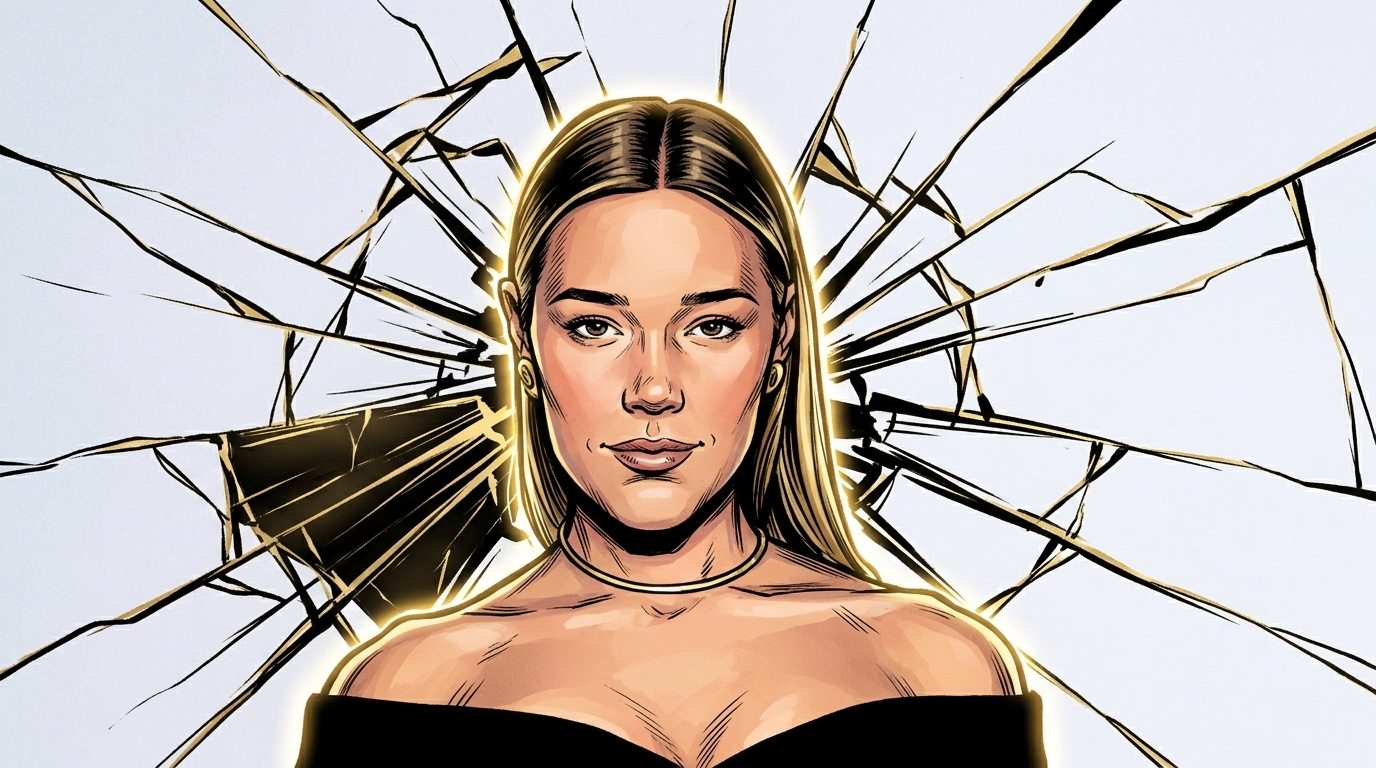
A distraction from what, exactly? From soccer? From the actual tournament? Because when Georgina announced her Harper’s Bazaar España July/August cover on June 23 — posting it to her 73.2 million Instagram followers while Cristiano Ronaldo was on the pitch playing Portugal versus Uzbekistan — she wasn’t pulling focus from the beautiful game. She was running a separate business that happens to use the World Cup as a backdrop. The distinction matters, and the fact that most people won’t make it tells you something about who they think these women are supposed to be.
That’s what I keep returning to: not the WAGs themselves, but the audience that can’t stop talking about them. We want them visible enough to photograph at the stadium. We want them present enough to anchor storylines about the men. We want them glamorous but not calculating, available but not mercenary. The moment they start operating like the brands they actually are — booking magazine covers, dropping sponsored content timed to maximum traffic, monetizing the eyeballs that follow them into the stands — suddenly there’s something unseemly about it. We wanted decorative. We got entrepreneurs. That’s the cultural discomfort underneath the WAG economy at the World Cup, and it’s worth naming.
Georgina Rodríguez didn’t stumble into 73 million followers — she built a Netflix show (“I Am Georgina”), inked deals with Chopard, L’Oréal, Charlotte Tilbury, and Aroya Cruises, and turned the question of “who is Ronaldo’s girlfriend” into a content empire with an estimated $716,000 per sponsored post. She is, as pop culture expert Toni Ferrara put it, “arguably the blueprint for the modern WAG economy.” Every camera at a Portugal match will find her. She has made sure of that. That is not luck; it is strategy.
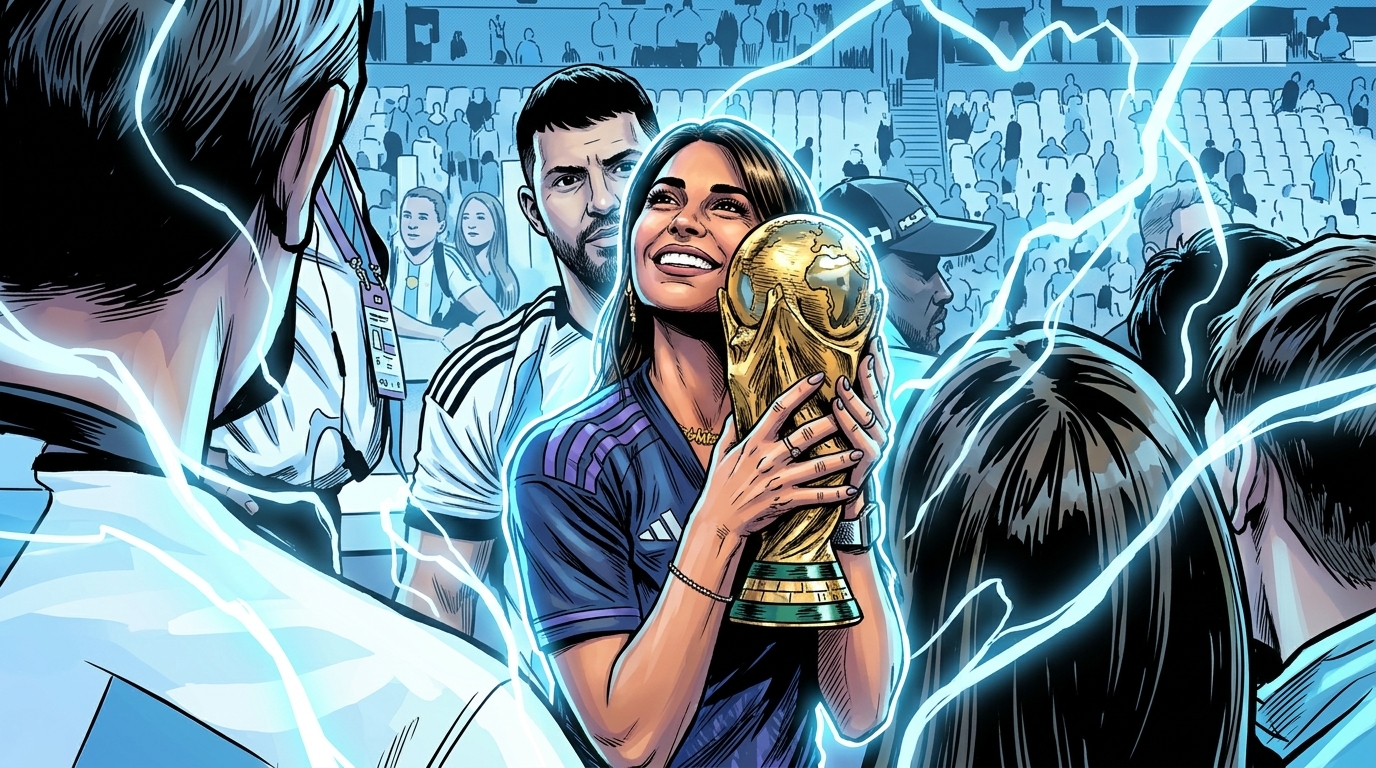
Antonela Roccuzzo operates differently, which is its own kind of strategic. Where Georgina maximizes exposure, Antonela calibrates it. Her 39.3 million Instagram followers watched her post a bikini photo on June 8 — before Argentina’s opener — that pulled 2.4 million likes in under 24 hours. After Messi broke the all-time World Cup scoring record this tournament, reaching 18 career goals, she posted a family photo: her three sons in Argentina number 10 jerseys, caption in Spanish, “What a privilege to watch you make history over and over again.” The math on that post — the understated pride, the sons’ faces, the singular image rather than a carousel of branded content — is as deliberate as anything Georgina does. It just runs on a different frequency. Antonela’s estimated $391,000 per sponsored post and her deals with Adidas, Alo Yoga, Stella McCartney, and Tiffany & Co. reflect the same truth: influence does not always require maximal exposure.
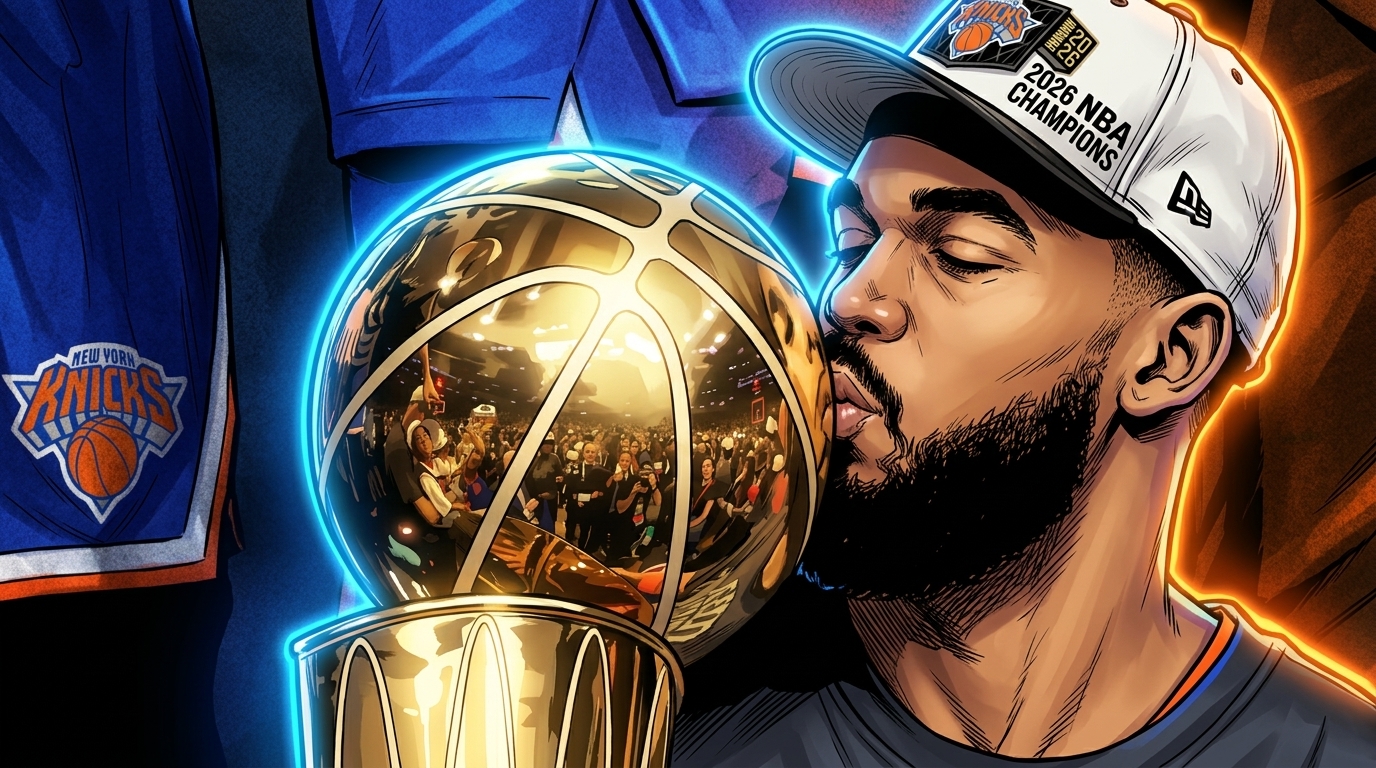
There is a version of this same economy playing out at the NBA Finals right now, the Jordyn Woods phenomenon that the Knicks run covered in real time. The soccer version is older, more global, and operating at a scale that makes the American sports WAG circuit look like a proof of concept.
https://twitter.com/NOT_MOTD/status/2069136257406353715
What’s interesting about that tweet — and the viral thread it references, the one that kept calling each tournament “Messi’s last World Cup” across more than a decade — is that it captures the precise mode in which we consume these men. We watch them through the lens of finality, of legacy, of the last-ever-moment. We’re sentimental about Messi and Ronaldo in a way we rarely are about active athletes, already grieving them while they’re still scoring goals. That grief gets extended to the people around them. Antonela and Georgina arrive at this World Cup accompanied by a particular kind of nostalgia-adjacent attention, and they have both figured out how to monetize the emotion without being consumed by it.
https://www.instagram.com/antonelaroccuzzo/
https://www.instagram.com/georginagio/
When Georgina posted a video of her daughter Alana Martina singing recently, Antonela left a heart emoji in the comments. Fans flagged it immediately, treating it as a diplomatic gesture between two camps “on opposite sides of the Messi-Ronaldo debate,” as one write-up framed it. Which is absurd on its face — two women exchanging warmth over a child singing — but also revealing. The debate that has consumed football supporters for fifteen years has been projected wholesale onto the women involved, as if Antonela and Georgina are also competing. And in a way, the content economy around them has encouraged that reading. The WAG economy at the World Cup runs partly on the same fuel as the GOAT debate: comparison, hierarchy, which family’s aesthetic wins.
The actual tournament standings will be what they are. Messi has his record. Ronaldo scored in a sixth different World Cup, which is its own kind of record. Both men are at the edge of something ending, or maybe not — the thread keeps being wrong. What Antonela Roccuzzo and Georgina Rodríguez have built runs parallel to all of that and will continue well past whatever these tournaments produce. The World Cup has been the most watched sporting event on the planet for decades. It also turned out to be a remarkable content environment for the women who arrived alongside the players. Whether that’s a commentary on the sport, on media, or on us — the audience that watches both screens simultaneously — I’m not sure the answer is singular. The WAG economy at the World Cup is too big to have a single meaning. That might be the most honest thing to say about it.
Ester Expósito, Kylian Mbappé’s girlfriend, topped WAG influence rankings at this World Cup despite having nothing to do with soccer — 24.2 million followers, a Spanish actress whose presence alone generated coverage. The hashtag #wagaesthetic has 1.7 million TikTok views. The content empire alongside the actual World Cup is real, measurable, and growing. Whether it’s good or bad for the sport is the wrong question. It’s just what the sport looks like now, from a particular angle, if you know where to look.