
There is a particular kind of cultural vertigo that arrives when something that has always existed, a phenomenon everyone could see but no one wanted to name, finally becomes undeniable. The WAG, as a media category, has been in slow metamorphosis for years. I noticed it most acutely not during a soccer match but scrolling through a Netflix algorithm that served me “I Am Georgina” between a true crime docuseries and a cooking competition, as though the taxonomy of celebrity was being quietly reorganized around me without anyone asking permission.
That is what is happening at the 2026 World Cup WAGs cycle on American soil, and it tells us something specific about what the audience actually wants from sports in 2026 — which is to say, everything. The discourse around wives and partners at soccer tournaments has long carried a note of condescension, as though paying attention to them was a guilty pleasure, a step down from the serious business of tactics and scorelines. What the framing always missed was that the audience was never embarrassed. The embarrassment was editorial, not popular. Millions of people were already treating Georgina Rodríguez as a primary character, not a footnote. The only lag was in official sports media catching up to what the traffic data had been saying for years.
The 2026 FIFA World Cup, happening in Los Angeles, New York, Dallas, the cities most culturally fluent in the mechanics of fame, has collapsed that lag entirely.
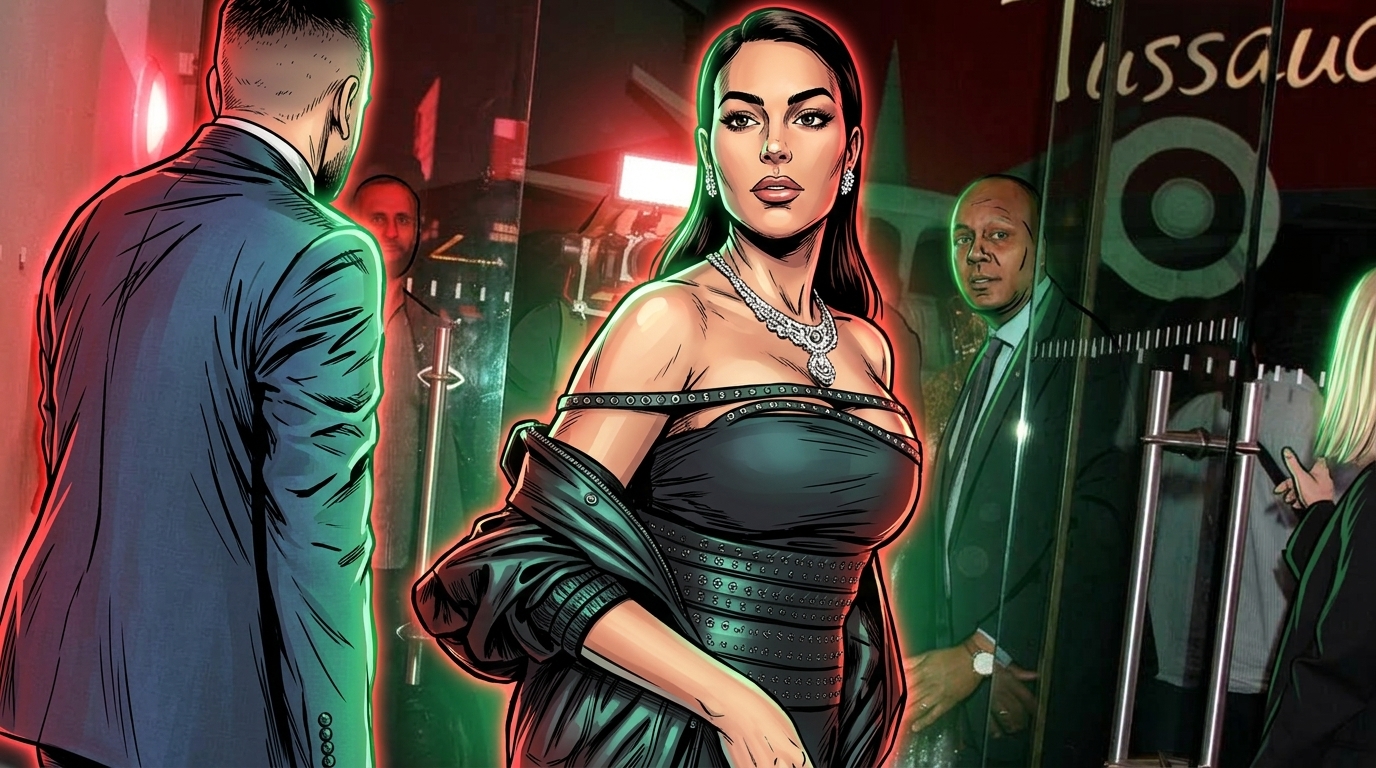
Georgina Rodríguez arrives at this tournament with more than 72 million Instagram followers and a Netflix show, the kind of infrastructure that makes her more famous than a significant percentage of the players Cristiano Ronaldo will line up against when Portugal faces DR Congo in Houston on June 17. She met Ronaldo in a Gucci store in Madrid in 2016, a biographical detail that functions almost too neatly as origin myth for a celebrity pairing in the luxury-brand era. Now she is engaged to him, wearing a ring reportedly worth three million dollars, and the cameras at every Portugal adjacent event will not be pointed primarily at Ronaldo’s footwork. The WAG economy on American soil has a different metabolism than in Europe or Qatar: the US celebrity-industrial complex does not treat a Netflix-documented household name as a supporting character. It treats her as the story.
Antonela Roccuzzo has been navigating her own version of this for longer. Messi’s childhood sweetheart from Rosario, Argentina (they grew up together before fame arrived, which is the detail that keeps getting quoted because it resists the standard celebrity couple origin story) has become a genuine brand in her own right, ambassador deals in athleisure and lifestyle accumulating around her in a way that has nothing to do with whatever Messi scores on June 16 when Argentina opens Group J play. Argentina hasn’t played yet. The attention to Antonela Roccuzzo in American sports media is already running ahead of the tournament schedule.
What the Gio Reyna moment revealed, though, is that this shift is not only happening at the superstar level.
In the 98th minute of the Paraguay match, with USMNT leading 4-1 and the crowd at LA Stadium already celebratory, Reyna scored a trivela and immediately tucked the ball under his shirt and sucked his thumb. He is 23 years old. His parents, Claudio and Danielle Reyna, both former US internationals, were in the stands. Mauricio Pochettino sprinted off the sideline. Postgame, Reyna said: “My wife’s pregnant. I’ve known for a couple months now. This sort of felt like the perfect time.” He posted on Instagram: “Just the start! Celebration was for the little one on the way.”
https://twitter.com/FOXSports/status/2065680354200162577
What makes this moment instructive is how completely it collapsed the boundary between sports story and personal narrative. The pregnancy announcement via goal celebration is an old soccer tradition, but it landed differently in Los Angeles in June 2026, at a tournament where Paris Hilton and David Beckham were in the same crowd, where Tom Cruise is confirmed on the attendance list, where Victoria Beckham’s presence at a soccer stadium is covered as fashion news. The personal life of a USMNT midfielder became, for a news cycle, the most-shared story of the night. The WAG economy we described at the NBA Finals has arrived at soccer’s biggest stage.
https://www.instagram.com/p/DX92WoDCGpT/
The American celebrity machinery running in parallel with this World Cup has no equivalent in European or Middle Eastern tournament history. When Beckham played his last World Cup cycles, celebrity coverage was a sidebar to the sporting press. Now it is a co-equal track with its own audience, its own metrics, its own star system. Kim Kardashian posted a Nike “SCCR-MOM” campaign with her son Saint West on June 5. That post circulated through sports media the same week FIFA was publishing venue information. The signals about what this tournament was going to mean culturally were arriving before a single ball was kicked.
https://www.instagram.com/reel/DWZA1uZgUs9/
Georgina Rodríguez, Spanish-Argentinian and positioned at a tournament on American soil with enormous Latin audiences to cut across multiple World Cup 2026 WAGs fanbases simultaneously, stepped into that infrastructure as a known quantity. Her Netflix audience already exists. Her Instagram engagement dwarfs most athletes’. What changes in LA and New York and Dallas is the physical proximity to the American celebrity press corps, which covers arrivals and outfits and stadium sightings with a thoroughness that the European sports media has never applied to the partners of international players. Ronaldo’s 6th World Cup, a men’s soccer record, will generate its own coverage. Georgina’s presence at this World Cup will generate a separate and not necessarily smaller body of coverage.
This is the thing the “WAG” framing, with its implication of passivity and periphery, was always unable to account for: at some point, the secondary character accrues enough cultural mass to become a primary one. That happened sometime between 2020 and now, and the 2026 FIFA World Cup in America is where the reclassification becomes official. For the full who’s who of World Cup partners, the roster is deep: Luis Díaz’s wife Gera Ponce is celebrating her first wedding anniversary today while he trains, Isabel Haugseng Johansen recently gave birth to Erling Haaland’s son, Bruna Biancardi is in Neymar’s orbit. But the central question the tournament is answering in real time is not who these women are. We know who they are. The question is whether American sports culture is ready to stop treating their prominence as a novelty and start treating it as a fact.
Based on three days of a World Cup in Los Angeles — the Reyna moment, the Beckham sighting, the Georgina entrance that immediately became its own news cycle — I think the answer is already arriving. The WAG economy on American soil has not peaked. It is only getting started.