
Before England has played a single minute at this World Cup, I have read more words about two women who are not on the roster than I have about the actual squad. That is not a complaint. It is data.
The Guardian ran a profile. So did The Athletic. British Vogue and Harper’s Bazaar got there first. Yahoo, AOL, the Daily Mail: all of them, in the ten days before England vs. Croatia in Dallas, producing careful, well-sourced, thoroughly-reported pieces about Tolami Benson and Ashlyn Castro. The WAG media cycle is back, and this time it came with L’Oréal deals and a mother in a Los Angeles shelter, and the algorithm did not care which story you found more interesting. It served them up at equal volume.
This is what I keep thinking about when I think about World Cup WAGs 2026: not the women themselves, but the attention, and what that attention reveals about the people giving it.
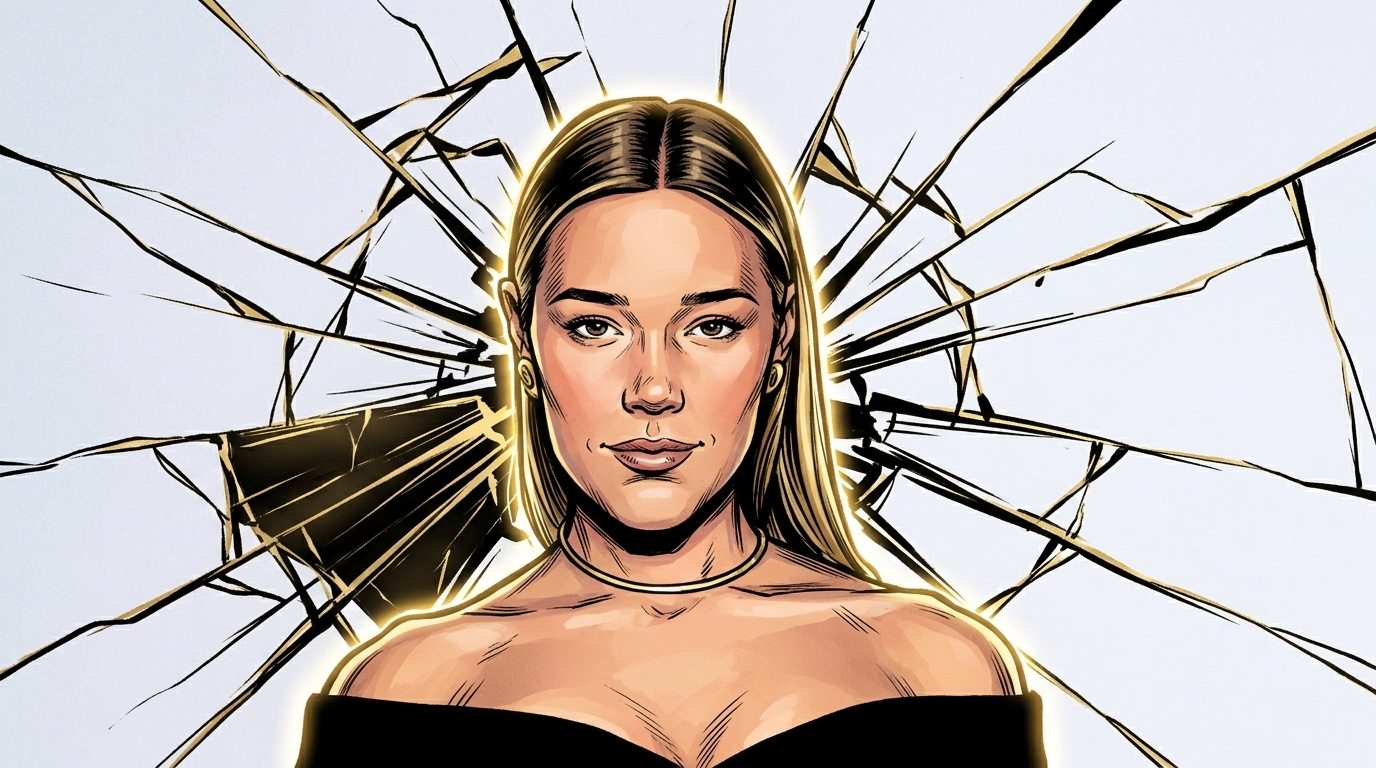
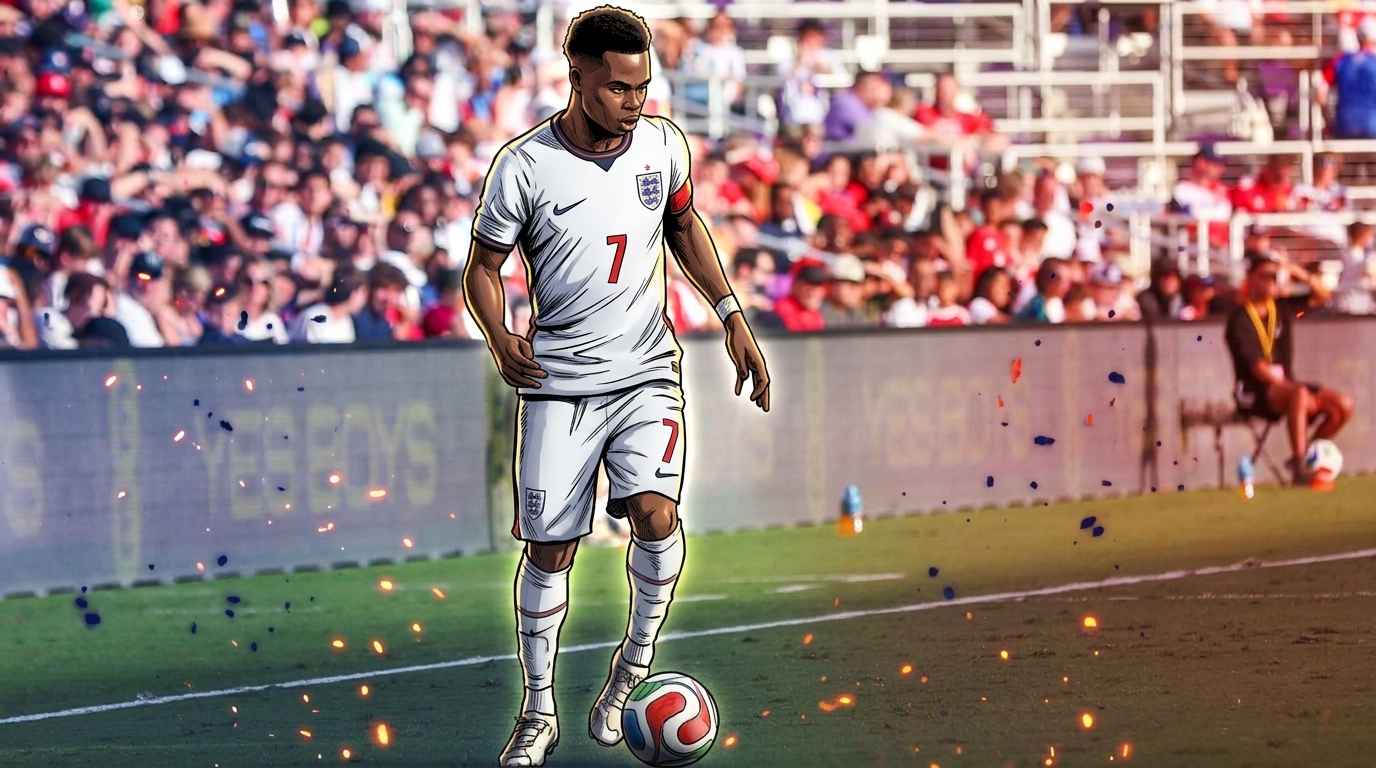
Tolami Benson is 25, British-Nigerian, holds a PR and Media degree from Birmingham University, worked at Harrods, and is engaged to Bukayo Saka, England’s number 7 and their most electric attacking threat going into this tournament. She chose the World Cup over her wedding. “It can wait,” she said, in a phrase that got clipped and quoted everywhere because it performed perfectly — devoted but unbothered, supportive but not self-erasing. She is repped by United Talent Agency. She has a River Island collaboration and an L’Oréal Paris ambassadorship. She is, by any reasonable measure, a professional with a career she built before the tournament and will continue after it. Style expert Toni Ferrara called Benson “fashion forward, editorial, and effortlessly cool” and said she had “quietly become one of football’s most influential style stars.” Under 300,000 followers. Industry projections put her earnings from England’s World Cup run at £500,000 through brand deals alone.
https://www.instagram.com/p/DN6erItDFxe/
Ashlyn Castro’s path to the same level of visibility ran through a different kind of moment entirely. She is 28, a California native, started dating Jude Bellingham (Real Madrid’s number 10, 22 years old, one of the two or three best young players on earth) in late 2024. She went public in 2025. Then, in the weeks before England’s opener, her mother Tina Marie Young — 61, a former model, currently living in an LA homeless shelter — posted on TikTok. The accusations were stark: “You disobeyed your mother, lied to her, and left her in shelters.” Complaints about bedbugs. About cockroaches. About a daughter who travels the world while her mother is in crisis.
Castro responded on Instagram, in a post that circulated faster than anything she had previously posted. “My mom is mentally ill. I shouldn’t have to talk about this. But moving forward, I will talk about things that are important such as mental health.” She revealed her mother had stopped taking medication for schizophrenia more than a decade ago. She announced plans for a nonprofit. The post was careful, measured, and devastating, and it made her a trending topic in four countries simultaneously.
https://www.instagram.com/p/DVl8P6SjQBe/
Pulse Sports Nigeria reported the full exchange in detail, and the piece got shared tens of thousands of times. Same expert, same quote machine: Ferrara called Castro “young, stylish, and attached to one of the sport’s biggest rising stars” with “all the ingredients to become a household name during the tournament.” It was the same framework applied to a completely different situation. The machinery does not distinguish. It just processes.
https://twitter.com/PulseSportsNG/status/2066094552046252358
What the discourse about World Cup WAGs 2026 reveals, if you watch it long enough and count the pieces and track the framing, is a particular kind of audience hunger that has very little to do with football. In 2022, Georgina Rodriguez and Antonela Roccuzzo were the story: women attached to the two undisputed kings of a generation, their presence at the tournament inseparable from the mythologizing of Messi and Ronaldo. They had 40 million followers. They were the subject of Netflix docuseries. The attention made a certain kind of sense as an extension of their partners’ cultural footprint.
What is happening with Benson and Castro is different, and stranger. Benson has under 300,000 followers. Castro has 646,000. They are not icons. They are women who happen to be in proximity to Saka and Bellingham at the precise moment the sports media calendar needed something to write about before a ball was kicked. The same outlet that profiled Benson’s meticulous brand-building also ran the Castro mother drama as a comparable story, stacked in the same content block, offered to the same reader. The subtext is: these are both WAG stories. The fact that one is about a carefully managed career trajectory and the other is about a family in crisis dissolves in the packaging.
This is what I mean when I say the audience’s attention is the subject worth examining. The word “WAG” does a lot of quiet work. It flattens. It groups Benson, who made deliberate choices about UTA and L’Oréal and timing, with Castro, whose visibility arrived uninvited, through her mother’s grief. It implies a category of woman defined entirely by adjacency, even when the actual women refuse the implication. There is a Substack called “The Return of the WAG” arguing that modern tournament companions represent a “style renaissance,” that they are “successful in their own right.” That argument is not wrong, exactly. It is also doing the same flattening in reverse: rebranding the category rather than questioning why the category exists.
England play Croatia tomorrow in Dallas. Saka, apparently recovered from the Achilles concerns that shadowed his spring, is expected to start. Bellingham will almost certainly be the most-watched player on the pitch. There will be goals, or there will not be goals. There will be results, and there will be the football itself, which, depending on Thomas Tuchel’s setup and Germany’s 7-1 demolition setting early tournament tone, may or may not produce the kind of moments that generate their own media gravity.
But right now, before any of that, two women who did not make the squad and did not ask for this particular spotlight are trending higher than most of the scorers. One of them planned for it meticulously and is executing it well. The other had her family’s pain go viral while she was just trying to get through her week. The algorithm is not capable of telling the difference, and neither, it seems, are most of the people clicking.
I keep watching the watchers. I am not sure what I think it means yet. Maybe that is the honest place to leave it.