
The WAG as a concept was invented in 2006, in a single chaotic week in Baden-Baden, when the British tabloids decided that watching Victoria Beckham shop for handbags was more interesting than watching England not score goals. They weren’t wrong, exactly. The discourse that followed — who these women were, what their presence meant, whether they were distraction or decoration — told you more about the audience consuming it than about the women themselves. That frame is, I think, the only honest way to watch what happens when the camera sweeps the stadium seats as the biggest World Cup in history kicks off tomorrow with 48 nations, 104 matches, and two women who have completely outgrown the category they keep getting sorted into.
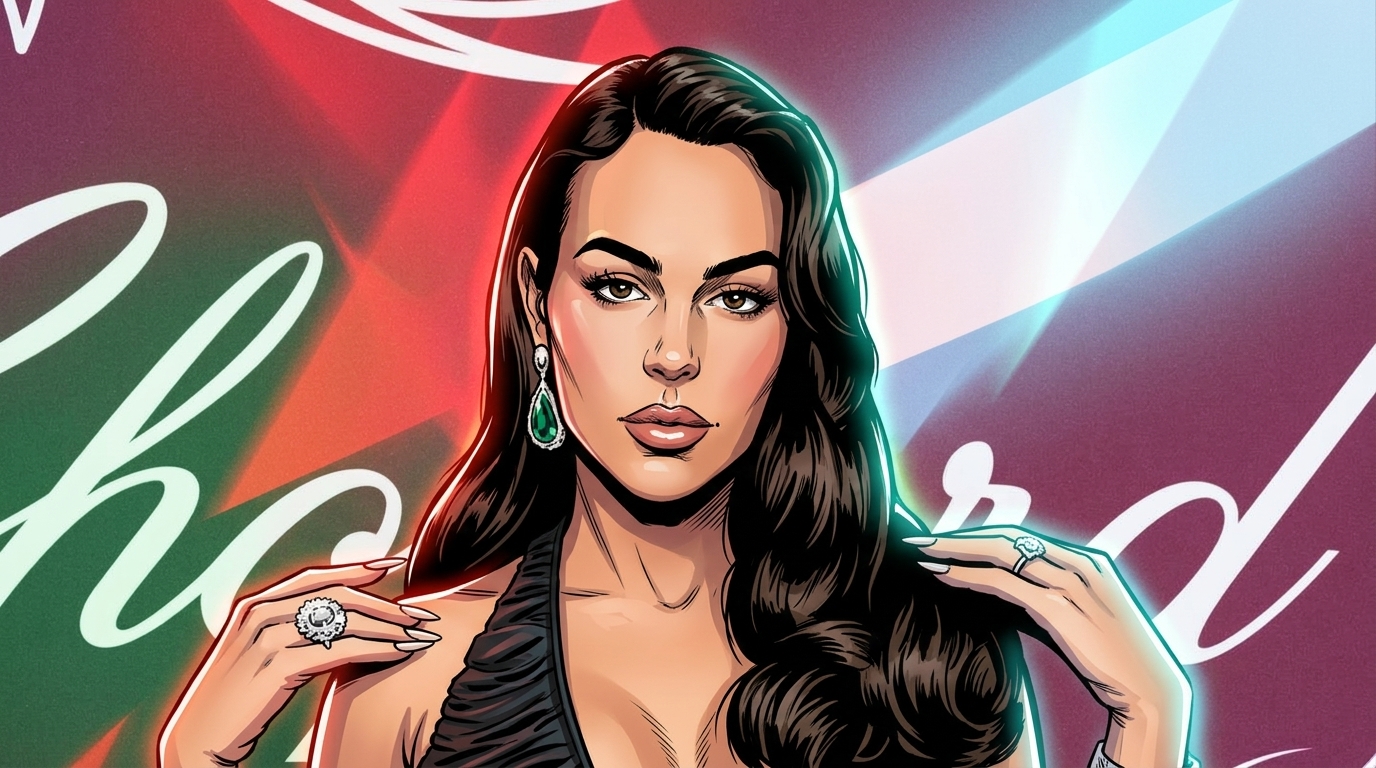
Georgina Rodríguez has 73 million Instagram followers. That number needs context: it’s more than the entire population of France. She has a Netflix series that topped charts in 46 countries after its second season. She attended the Met Gala this spring — not as a plus-one, as a guest. She has brand ambassadorships with Chopard and other luxury houses. She met Cristiano Ronaldo at a Gucci store in 2016 when she was a shop assistant, and what she’s built since then isn’t a celebrity adjacency story, it’s a celebrity story. Georgina Rodriguez World Cup 2026 will generate more Google searches than some participating nations’ squad announcements.
https://www.instagram.com/p/DX9iFVdEeuD/
The WAG frame doesn’t just undersell her. It fundamentally misdescribes her. A “footballer’s girlfriend” is defined by proximity. Georgina is defined by scale. When she posts, 73 million accounts receive the notification. The sport is the backdrop now, not the other way around.
Antonela Roccuzzo operates differently, which is exactly why she’s the more interesting case study. She has 39 million Instagram followers and a quieter profile: Adidas collabs, Alo Yoga, Anastasia Beverly Hills, the occasional family photo that doesn’t feel staged because her family has been documented since before anyone was paying attention. She and Messi were childhood friends in Rosario. They grew up together, drifted apart, and came back together in 2005 after she lost a close friend in a car accident and Messi flew home from Barcelona to be there. They’ve been building something since before he won a Ballon d’Or, before Qatar, before Paris, before Miami. She is the continuity thread through Messi’s entire career, and tomorrow she will be sitting in a stadium watching him play what is almost certainly his final World Cup.
https://www.instagram.com/p/DTlFecDmE_e/
There’s a generational split here that the Georgina Rodriguez World Cup 2026 conversation mostly ignores. Antonela represents a version of celebrity that predates the current attention economy: she wasn’t performing for followers, she was living a life that followers eventually found. Georgina represents what that life looks like after it’s been fully optimized: the Netflix doc, the runway appearances, the engagement ring that reportedly cost $3 million. Ronaldo has called her “the woman of my life” and said they plan to marry after the World Cup. Both things are true — it’s a genuine declaration and also, for a man of his visibility, a branding decision.
https://twitter.com/FOXSports/status/2051270969457778957
The WAG narrative reveals something uncomfortable about how sports media processes women who are adjacent to power. It wants them visible enough to generate content but not so visible that they require actual coverage. Georgina blew past that threshold years ago. She’s not a sidebar to Ronaldo’s story — she’s running a parallel media operation of comparable size. The people who still reach for the WAG label are usually the ones who find this threatening rather than interesting.
https://www.instagram.com/p/DX7dPifHCTA/
The Lamine Yamal situation this spring showed the uglier version of this dynamic. The Lamine Yamal girlfriend discourse was a mess of territorial fan outrage dressed up as concern for a teenager. The camera will find the people in the stands. It always does. The question of what it means when it lingers on certain faces is the question the discourse is never quite willing to sit with.
Tomorrow the matches start. Mexico vs South Africa at the Azteca, the giant tournament finding its feet, 48 teams trying to figure out if this format makes any sense. By the second week, whoever the camera finds in the prime seats will be everywhere. That apparatus is not neutral, and the women at the center of it know exactly how it works. Georgina built a brand that runs on it. Antonela has simply been present for so long that the camera finds her anyway.
Neither of them needs the World Cup to matter. That may be the whole point.