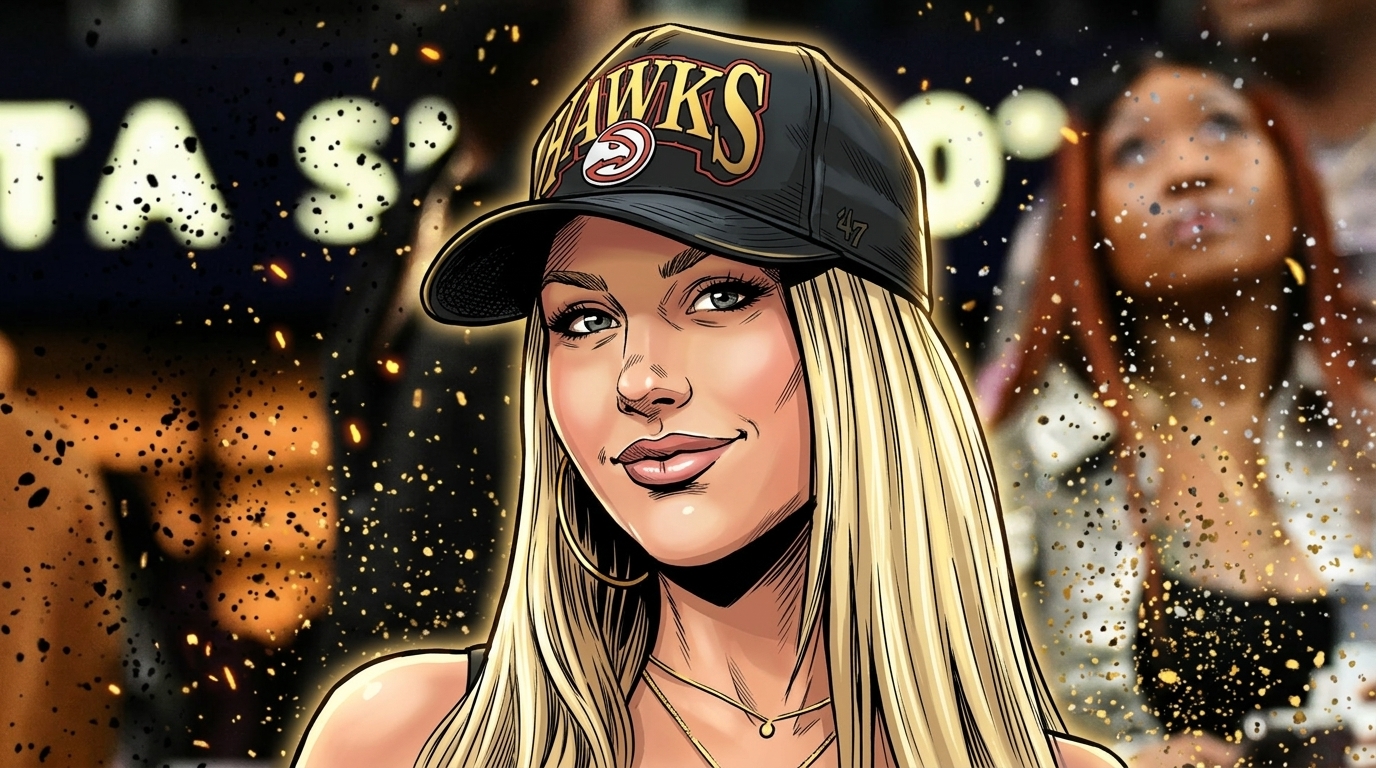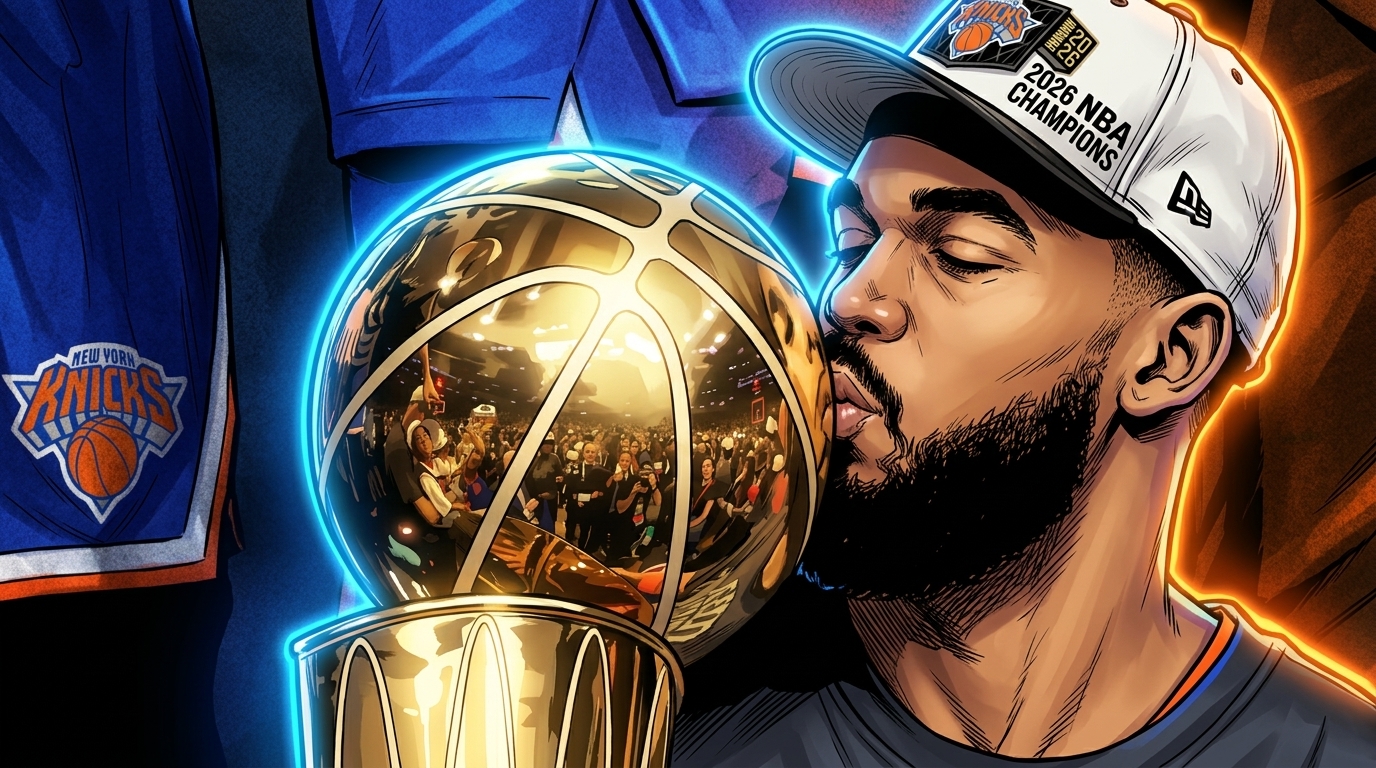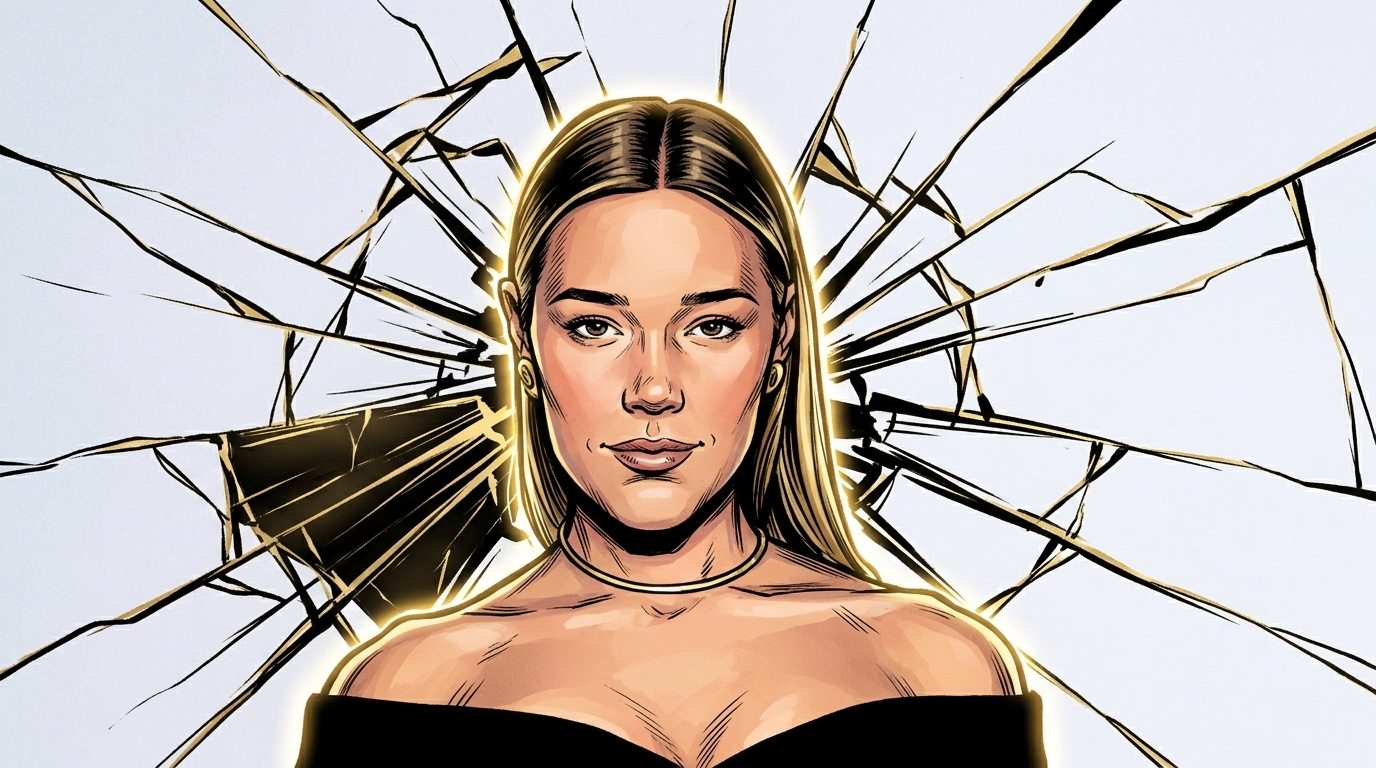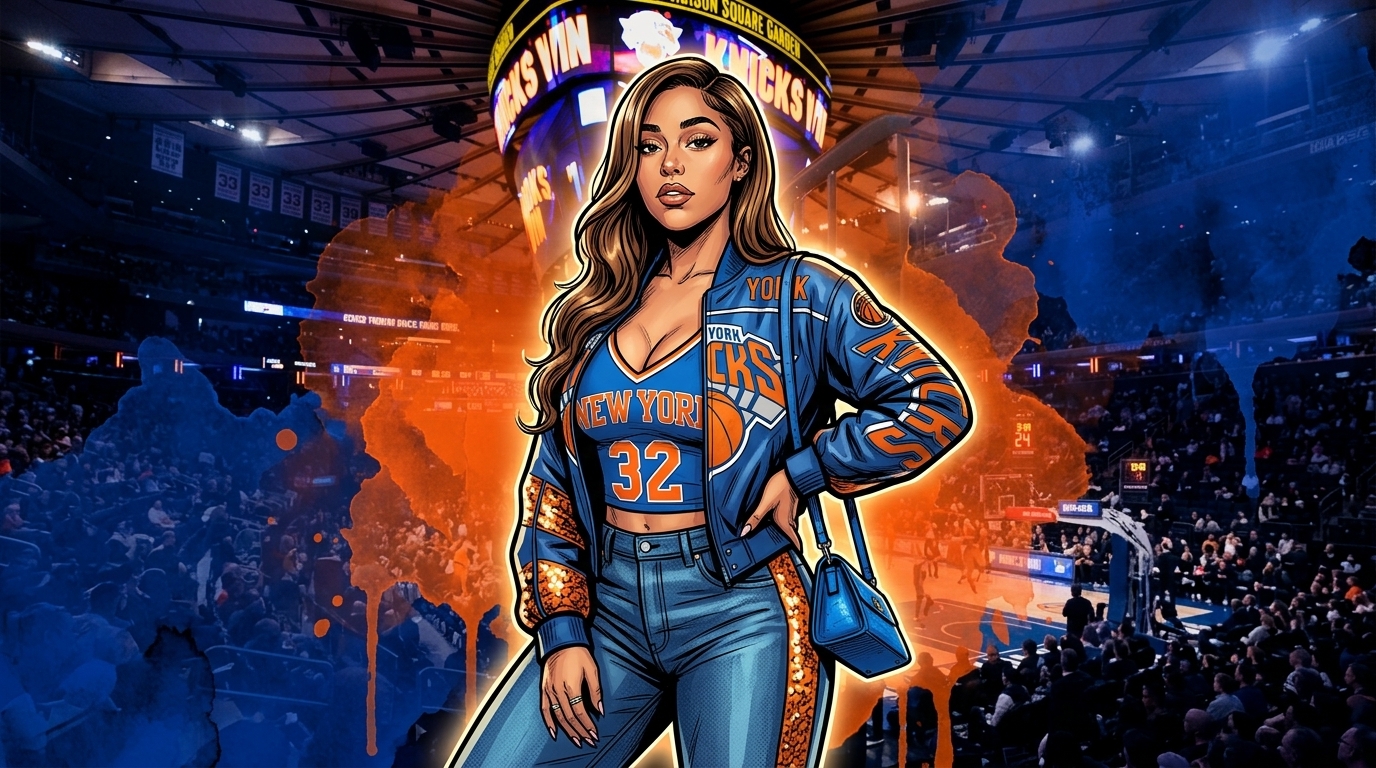

There is a moment in every major sporting event when the broadcast crew decides who the story is about. Not the players — the players are obvious. I mean the people sitting in the expensive seats, the ones whose faces the camera finds between whistles and replays, the ones who get a caption bubble and thirty seconds of airtime that can move a thousand units of a handbag. Game 5 of the NBA Finals tips off tonight at Frost Bank Center in San Antonio, Knicks up 3-1, and I already know whose faces we’re going to see. It will not be anyone sitting on the Spurs side.
What this tells you about the audience, immediately and without ambiguity, is that the audience for the NBA Finals is not watching a basketball series. It is watching a New York media event that happens to have basketball attached. The people tuning in want to see Jordyn Woods’ outfit confirmed, Ali Brunson’s pre-game jewelry, Shannon Hart eating a Reese’s Oreo cup in the tunnel. They want to feel like they are accessing a cultural moment bigger than the game. And production teams know this. The camera does not point itself.
Jordyn Woods has been courtside for all 14 Knicks playoff wins this postseason. She is engaged to Karl-Anthony Towns, yes, but she is also the founder of Woods by Jordyn and a fashion influencer with the kind of social gravity that turns a $125 orange Tux Clutch Mini into a national story. The bag was there when the Knicks came back from 29 down in the second half of Game 4. The bag became the comeback. You can read our look at the Knicks sideline through Games 1 through 4 to trace how the outfit documentation became its own parallel narrative arc: game by game, custom piece by custom piece, the cowboy hat she picked up in San Antonio for Games 1 and 2, the corseted orange-and-blue tank for Game 3, the return of the clutch for Game 4 when the bag policy had kept it away at MSG. The machine was deliberate and the machine was documented.
https://twitter.com/Complex/status/2064081547108450799
Ali Brunson’s story operates on a different frequency. She is a doctor of physical therapy out of Northwestern, founder of the AMB Method. Her ritual is quieter: she wears the same wedding jewelry to every game. She synchronizes her breathing with Jalen’s at the free throw line. She has a Reese’s Oreo partnership, and Shannon Hart (Josh Hart’s wife, an RN who prays through the national anthem) eats the cups before tip-off. These are the kinds of details that go viral not because they are dramatic but because they feel like interiority, like access. “I’ve just been wearing the same jewelry,” Ali told someone somewhere, “my wedding jewelry every game, that’s been keeping me sane.” That quote has now circulated further than most player interviews from this series.
https://www.instagram.com/p/DZdZgT-Jcj1/
And then there are the Spurs WAGs, who are right there. Reece Fox, De’Aaron Fox’s wife, played college basketball at UCLA, Texas Tech, and Cal. She won gold with USA Basketball youth teams. She is a former McDonald’s All American with more athletic accomplishment than most people in any arena on any given night. JoJo Lacey, Dylan Harper’s girlfriend, averaged double figures at Rutgers and posted a full season of real basketball before her boyfriend became a lottery pick. Brittany Barnes has donated a quarter million dollars to AlamoPROMISE. Jackie Olynyk is a CPA. Anissa McLaughlin is a meteorologist with a podcast. These are interesting people with actual lives and none of them are getting a caption bubble in San Antonio tonight.
The asymmetry is not a mystery. New York sports fandom is an industry — a content infrastructure that runs continuously whether the team wins or loses, whether the season is interesting or dead. The Knicks were in the Finals in 1999 and have not been back since, and in the intervening 27 years the ecosystem around the franchise never stopped producing: media personalities, influencer pipelines, celebrity proximity, fashion cycles. The Kylie Jenner-Jordyn Woods reunion courtside didn’t just happen organically; it dropped into a media environment that was already primed, already organized, already hungry for it. San Antonio has Wembanyama, five championships, and a franchise that has operated with quiet dignity for three decades. What it does not have is that infrastructure.
https://www.instagram.com/p/DSs5CFLlQON/
I grew up watching the Spurs play basketball in a way that felt almost deliberately un-telegenic: Tim Duncan’s bank shot, the fundamental precision, the collective shrug. That was the identity, and it was real, and I loved it. But that identity never produced an industry around itself. It produced championships, which is supposed to be the whole point, and yet here in 2026, the Spurs have a generational talent in a sport having its highest-rated Finals since Michael Jordan, and they are losing the off-court cultural narrative to a team that came back from 29 down on a tip-in with 1.2 seconds left and still has the audacity to make their WAGs the story.
What’s interesting to me is not the injustice of it. The Spurs are not owed camera time, and nobody put a gun to anyone’s head and told them to start an orange bag brand. What’s interesting is how completely the fans are directing this. The rage from San Antonio supporters is real, and it reveals something uncomfortable: they want the coverage, which means they have absorbed the premise that WAG screen time is a form of cultural legitimacy. The discourse about who isn’t getting cameras has made Reece Fox and JoJo Lacey visible in a way that the cameras refusing to find them never did. The audience taught itself to care about who the audience watches.
The game tips at 8:30 tonight. The Knicks need one win. The Spurs need four. And somewhere in Frost Bank Center, Jordyn Woods’ orange clutch is either present or absent, which is now, somehow, a data point worth tracking. The camera will keep finding it whether I think it should or not. That’s the part that stays with me — not the coverage itself, but the fact that I already know what I’m going to see, and I’m going to watch anyway.