
The BTS ARMY has a playbook. They coordinate streaming parties, flood trending tabs, show up in numbers so organized it makes political campaigns look amateur. I’ve followed K-pop fandom dynamics for years — not as a fan, but as someone who finds the infrastructure of organized attention genuinely fascinating. The way ARMY moves looks less like fandom and more like logistics. So when FIFA announced BTS would perform at the World Cup 2026 halftime show at MetLife Stadium, my first thought wasn’t about soccer. It was: those fans are going to watch a World Cup Final.
That’s the tell.
FIFA has spent decades insisting the product speaks for itself. The sport, the ball, the ninety minutes: that’s the pitch. No pyrotechnics. No intermission spectacles. Halftime is fifteen minutes of tactical adjustments and players catching their breath. Except this Sunday, halftime has a show. Shakira, BTS, Madonna, Justin Bieber, Burna Boy, and Coldplay’s Chris Martin, who curated the whole thing: eleven minutes of music inserted into a break that has never had one.
The World Cup 2026 halftime show is the first of its kind in ninety-six years of the tournament. FIFA didn’t edge into this. They cannonballed.
https://twitter.com/Complex/status/2076335702908780576
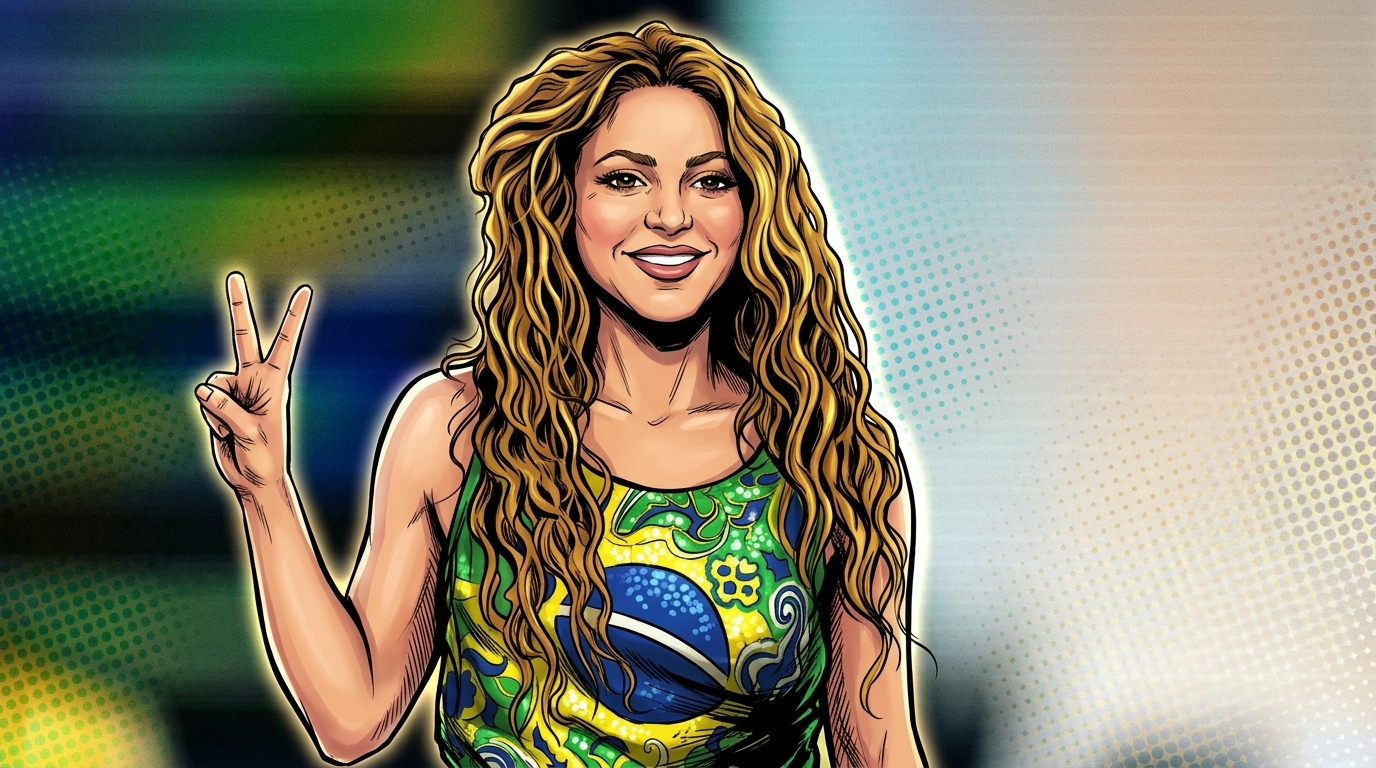
Shakira called it “pretty historic,” and she’s right, but not for the reasons FIFA’s press release would prefer. Her World Cup legacy is already enormous. “Waka Waka” holds the Guinness record for most-streamed World Cup song on Spotify — hundreds of millions of streams and counting. She is, at this point, the unofficial sound of soccer’s biggest stage. Adding her here isn’t a creative choice so much as a confirmation of something that was already true: the music has become part of what people show up for. Her World Cup anthem with Burna Boy, “Dai Dai,” was performed at the opening ceremony last month. It belongs to the tournament now.
https://www.instagram.com/p/Da6CL3wllX9/
What’s new is the explicit acknowledgment. FIFA didn’t sneak this in. They announced Justin Bieber last, on July 8, as the headline addition, strategically dropped after the lineup was already generating coverage. That’s not booking. That’s sequencing. The move maps directly to soccer’s collision with celebrity culture that’s defined this entire tournament, from the tournament’s celebrity subplot to a Final that was already playing out like a cultural event with ninety minutes of soccer attached.
The discourse reaction has been instructive. Soccer purists are irritated. Pop fans are suddenly checking the kickoff time for the actual soccer happening today: Spain versus Argentina, defending champions, 3 PM ET. That split response is exactly what FIFA wanted, even if admitting it would be uncomfortable. You don’t hire the BTS ARMY’s attention and then claim the point was always artistic.
https://www.instagram.com/p/DZabhYnFgS1/
This is the World Cup going full Super Bowl, and the Super Bowl comparison cuts both ways. The halftime show made the Super Bowl bigger than football. It also made the Super Bowl dependent on borrowed audiences — people who show up for Beyoncé and stay for the last two minutes of a game. Whether FIFA can convert those borrowed viewers into people who follow Spain next season, who know what a false nine is, who care about the result in four years. That’s the actual bet. Shakira performing “Waka Waka” to an ARMY-coordinated viewing party is not a sports moment. It’s a cultural moment that happens to include ninety minutes of soccer on either side.
Maybe that’s enough. Maybe the World Cup doesn’t need every viewer to become a soccer fan. Maybe it just needs the numbers, and the numbers follow the spectacle. I genuinely don’t know what this means for the sport yet. What I can’t stop thinking about is that FIFA knows it too — and they answered the uncertainty by booking Shakira, BTS, Madonna, and Justin Bieber and calling it eleven minutes.
That’s not confidence. That’s a confession dressed up as a concert.