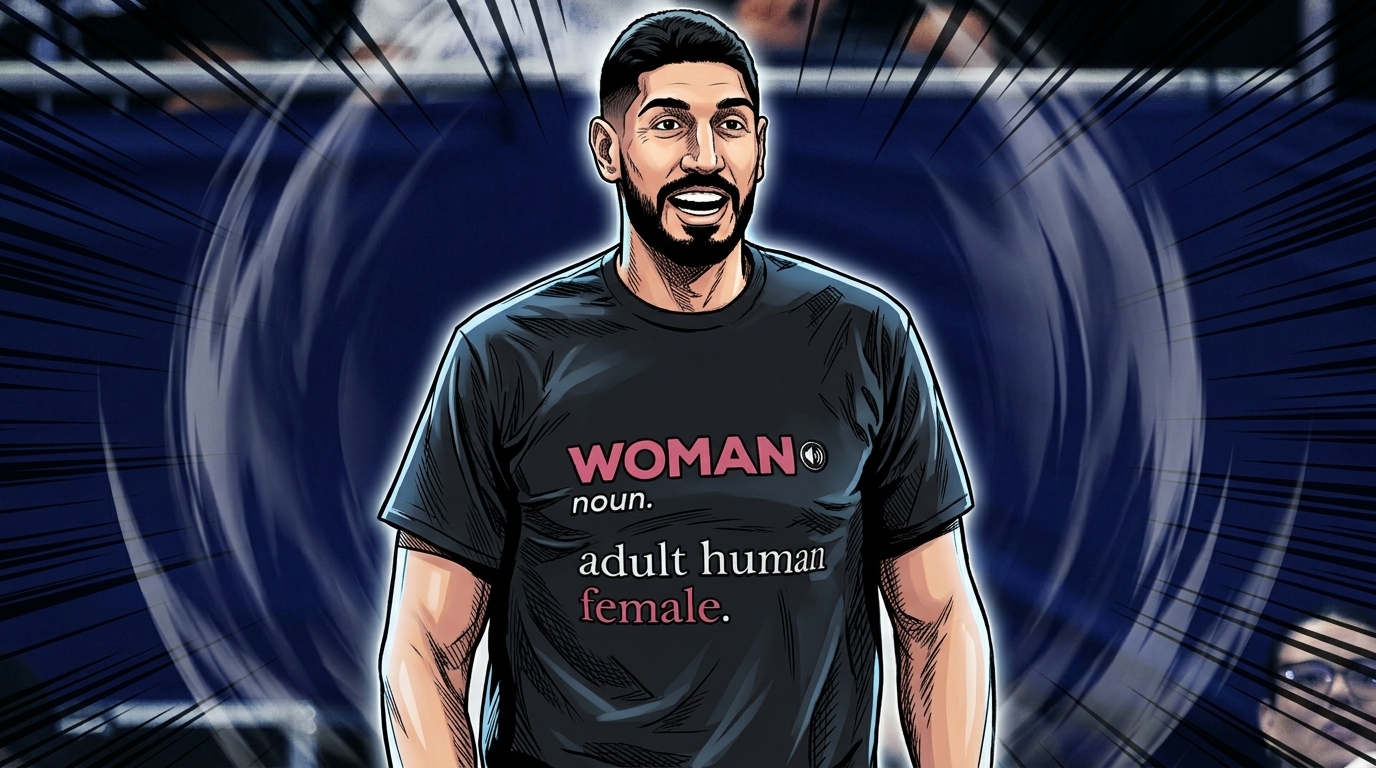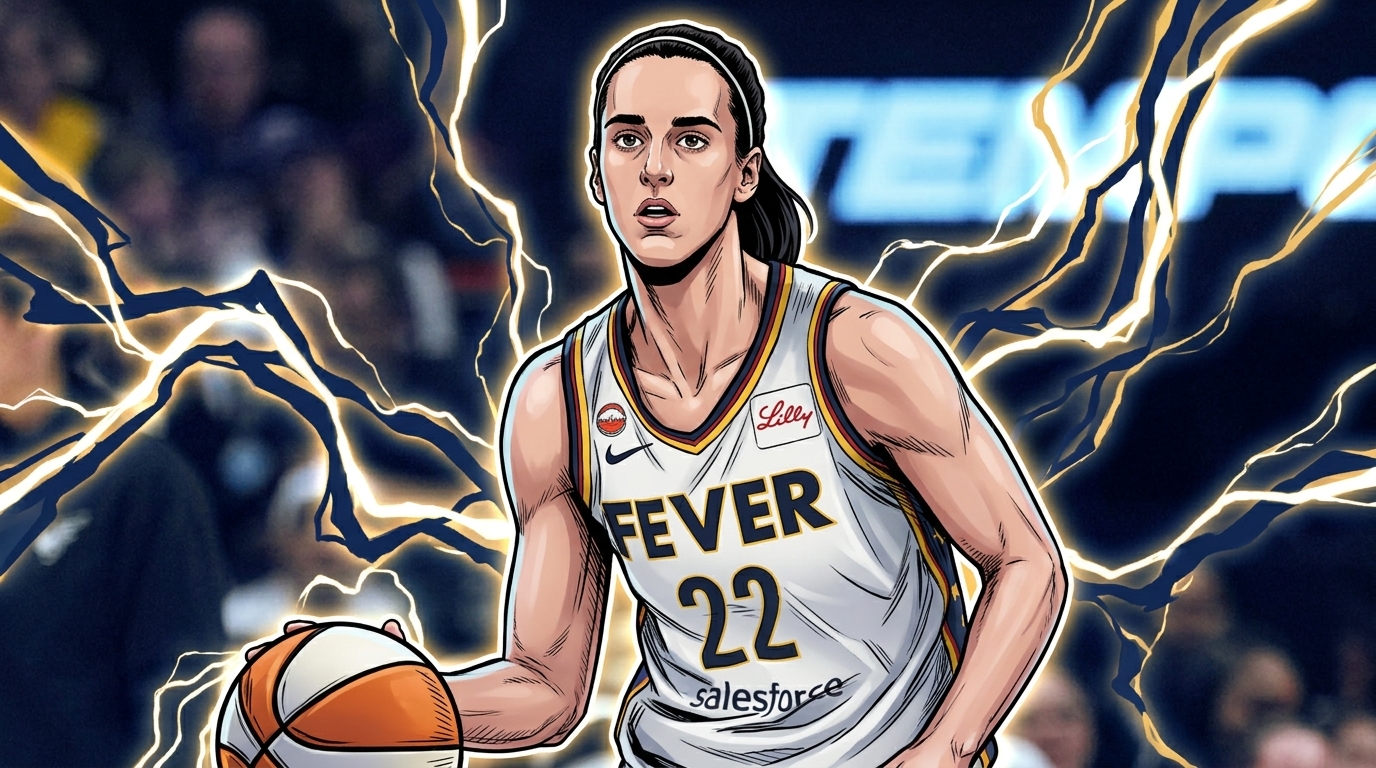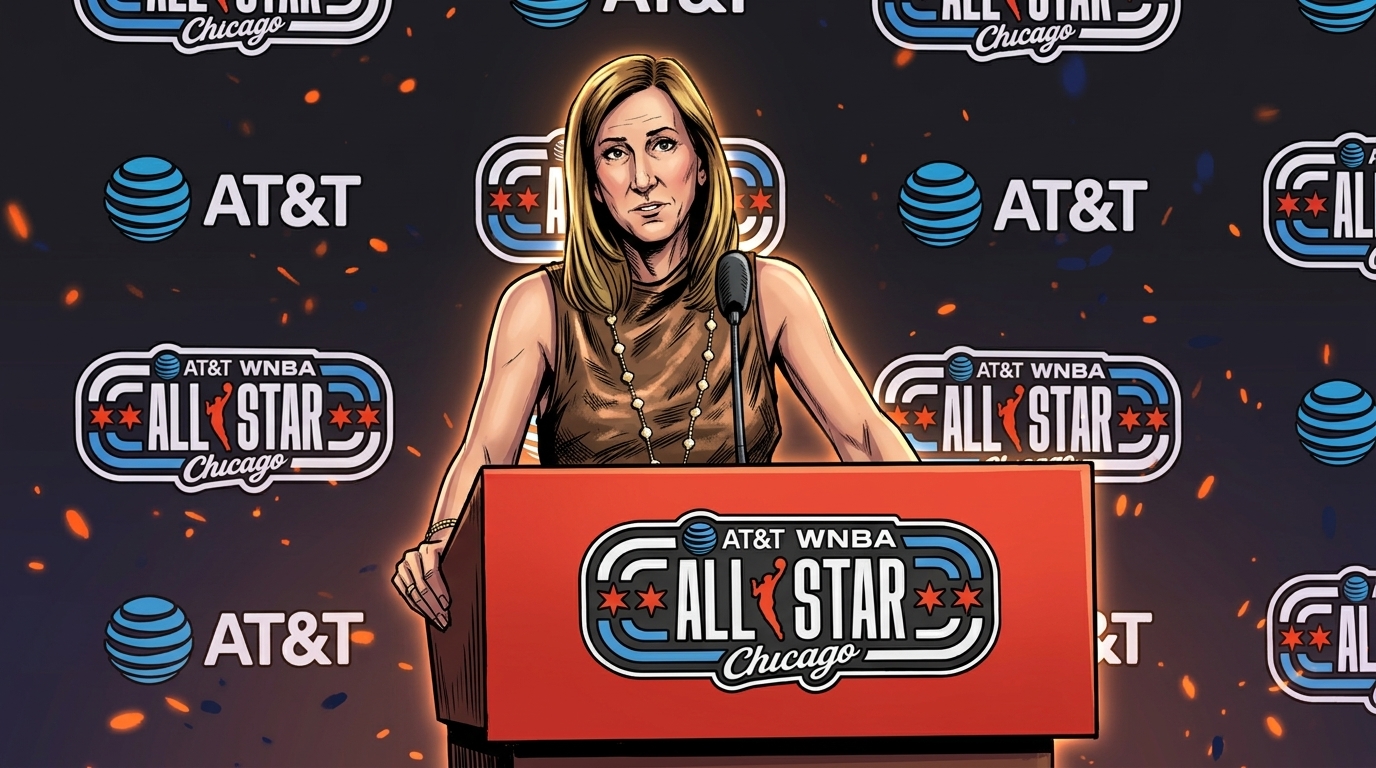

We’ve spent the past few days watching people ask whether the WNBA scrambled to build a task force to deal with Enes Kanter Freedom and Royce White. It didn’t scramble, and it didn’t build anything new. The task force already existed. Commissioner Cathy Engelbert just added this topic to an agenda that was already set.
That distinction is doing more work than it looks like. Kanter Freedom and White declared for the 2027 WNBA draft on Aug. 7, saying they identify as women, and neither has filed the paperwork that would turn the declaration into anything beyond a press release (their combined NBA stat lines are the least interesting part of this, and Swipe already ran the numbers). The WNBA’s collective bargaining agreement says only “players who are women are eligible to play in the league” and never defines the term or sets any biological-sex criteria. Kanter Freedom has cited a self-identification standard he says the league already follows, an eligibility rule the CBA doesn’t actually contain and never has. Whether that framing holds up matters less than what happened after it landed: an institutional response that already had somewhere to go.
On Friday afternoon, Engelbert sent an internal memo to team presidents and general managers, later obtained by the AP and ESPN. ABC News, Yahoo Sports and The Hill all ran versions of the same wire language independently, which is usually a sign it’s accurate. The operative line: the topic “will be discussed further by a task force of team presidents and general managers at a previously scheduled meeting next week.” Previously scheduled, not summoned in response. A meeting that was happening anyway just picked up a new agenda item.
The rest of the memo reads like every institutional memo reads: careful, padded, built to survive being quoted out of context. Engelbert wrote that the league will “continue to have important conversations with all of you and the Players Association in the weeks and months ahead,” and that it plans to “convene additional discussions and offer listening sessions for any team leaders who would like to participate.” (If you’ve ever sat through a corporate all-hands, you know what a “listening session” is: a meeting where nothing gets decided and everyone leaves with an action item to schedule another meeting.) The league, per the memo, will handle the topic “thoughtfully, respectfully, and in alignment with the longstanding values of our league,” language engineered to be unobjectionable to the point of meaning almost nothing by itself.
One detail got lost under all the memo coverage: this is a standing group. (League task forces are built for deliberation, not speed, by design.) A standing group reconvenes, generates agendas, and eventually produces minutes that somebody leaks. Whoever benefits from keeping this story alive now has a recurring venue to point back to every time it meets again, instead of a single news cycle that burns out on its own.
White’s version of that incentive is the more concrete one. He’s an active Republican candidate for the U.S. Senate in Minnesota, challenging Sen. Tina Smith after losing to Amy Klobuchar in his last run. Minnesota’s primary is Aug. 11, just days after Engelbert’s memo went out. A national sports story carrying his name into the week of his own primary isn’t a coincidence worth debating.
Kanter Freedom’s angle is different, and it’s worth getting right, because the loose version of this story has him running for Senate too. He isn’t. He’s said he plans to run for Congress in 2028, once the waiting period on his citizenship clears — a future ambition, not a campaign with a filing deadline this month. He doesn’t need votes right now. He needs attention on a longer clock, and a task force that meets again on a schedule is a better vehicle for that than one loud week would have been.
Here’s how the reaction is playing out on X:
https://twitter.com/EricLDaugh/status/2086822225953300903
The specifics shift by the hour. The shape doesn’t: a memo written to sound procedural gets read as proof the league is playing along, because in the most literal sense, it is.
None of this is happening in a vacuum. Indiana Fever guard Sophie Cunningham said last month that she supports barring trans girls and women from women’s sports, so the memo landed on a locker room that wasn’t unified on the underlying question before Kanter Freedom or White said a word. That’s backdrop, not the trigger, but it’s part of why the league can’t just wait this one out quietly.
There’s a pattern underneath this specific memo, and it isn’t really about eligibility rules at all. It’s about how a modern institution absorbs a provocation: not by ignoring it, and not by overcorrecting for it, but by routing it into the nearest process that already has a name and a meeting time on the calendar. The process becomes the story almost as fast as the provocation did. That’s not unique to sports leagues, but the WNBA just handed everyone a fairly clean demonstration of it, days before anyone had time to plan one.
I think the standing task force ends up being the more consequential fact here, not the smaller one. A brand-new committee formed under pressure would have looked reactive, and reactive things have natural endpoints: someone announces a conclusion, the story closes. A standing body just absorbs the topic into its normal rotation, the way it presumably absorbs other agenda items. That means this doesn’t resolve. It recurs. Every time the group meets, someone will ask what happened, and the WNBA will have to answer, whether or not there’s anything new to report.
That’s a gift to White regardless of what happens Tuesday, and it’s a gift to Kanter Freedom whether or not he ever actually runs for anything in 2028. Neither of them had to invent a way to stay relevant to this story. The league already had one built, and now it belongs to them too.
Watch what actually comes out of next week’s meeting, if anything does — a memo about a memo would be the tell that the loop is self-sustaining. This adds to Engelbert’s already rocky year with the league’s own fans, and an institution absorbing criticism from multiple directions doesn’t get to choose which controversy ends up defining its season.