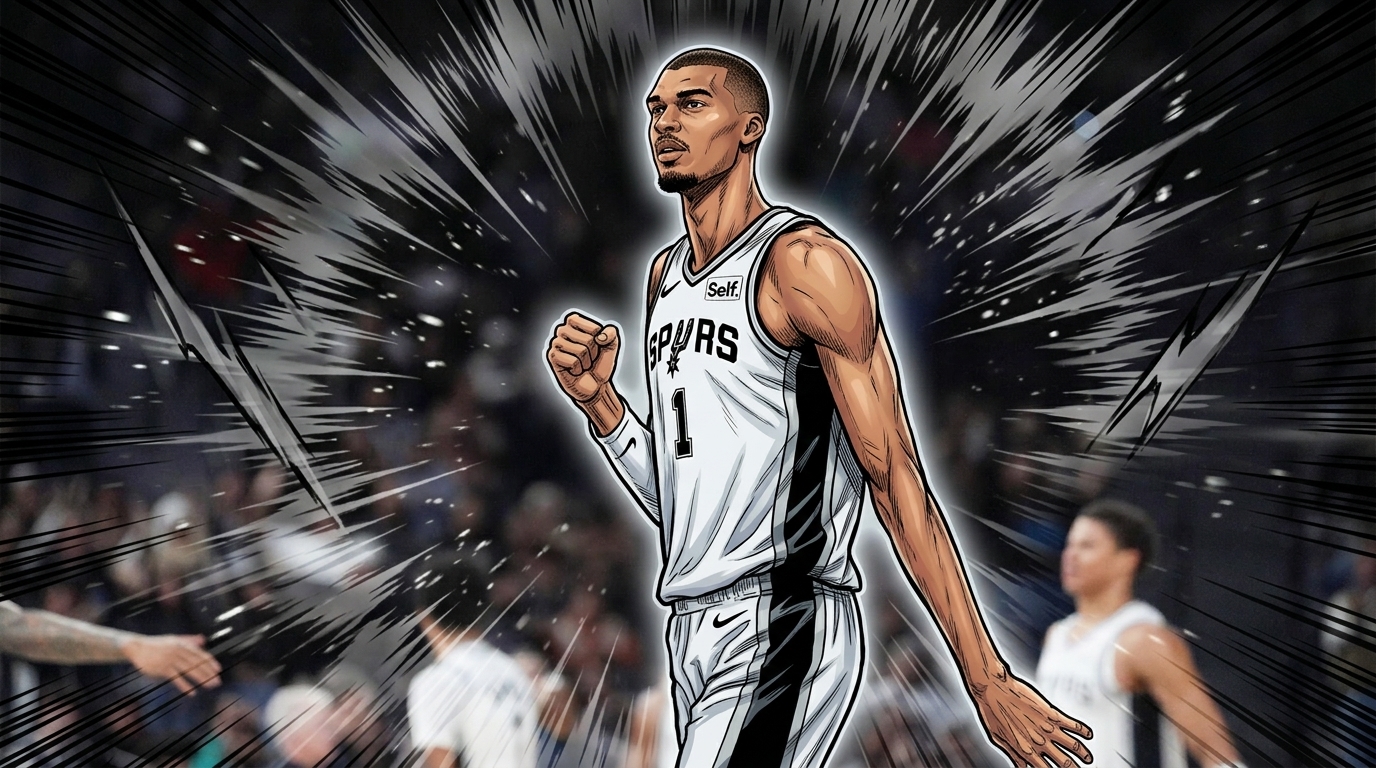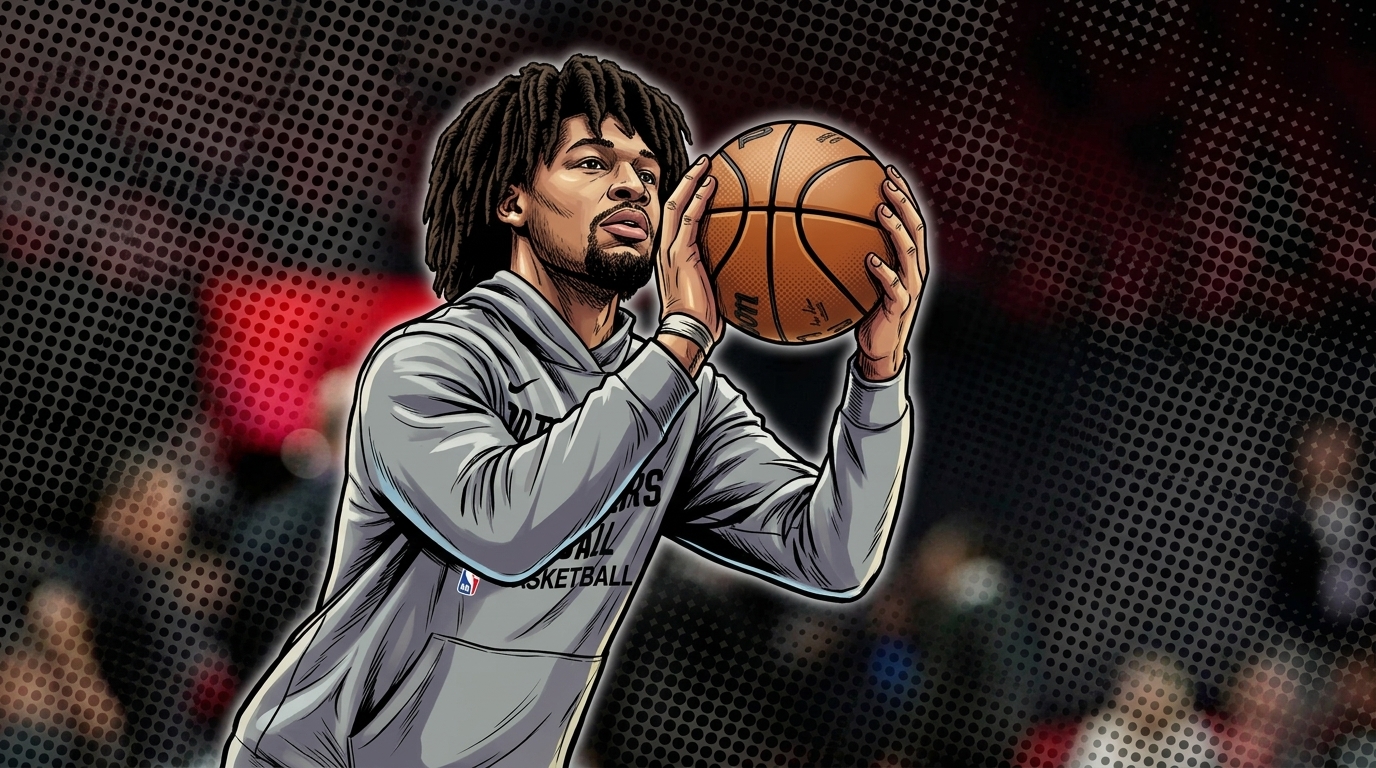

The conversation around Victor Wembanyama has a strange habit: it keeps reaching for adjectives when it should be reaching for a calculator. “Generational.” “Other-worldly.” “We’ve never seen this.” All of it true, and none of it as useful as the actual number sitting at the top of the leaderboard for first-career postseason points by a center — a number that has been remarkably absent from prime-time coverage.
That number is 372.
The Number Nobody Is Saying Out Loud: 372
Through six games of the Western Conference Finals, Wembanyama has put up historic numbers in his first postseason run that place him in a category occupied by two names from very different eras. Kareem Abdul-Jabbar scored 352 points in his first career playoffs with the 1969-70 Milwaukee Bucks across 10 games. Nikola Jokic matched that mark — exactly — in his first postseason with the 2018-19 Denver Nuggets across 14 games. Wembanyama passed both of them. He did it in 16 games, but 16 games of a difficulty and pressure that Kareem and Jokic’s first-round departures didn’t involve — Wembanyama is still playing, in a Game 7, tonight.
The full postseason line: 23.3 PPG, 11.0 RPG, 2.8 APG, 3.7 BPG, on 51.2% from the field and 35.5% from three. He is 22 years old. The youngest player ever to average 20 points, 10 rebounds, and four blocks across 10 or more playoff games — a threshold that Hakeem Olajuwon and David Robinson didn’t reach until their age-24 seasons.
https://twitter.com/NBA/status/2051507042305630652
In Game 1 alone — a 122-115 double-overtime win — he went 41 points and 24 rebounds. The only other player to post 40 points and 20 rebounds in a Conference Finals debut was Wilt Chamberlain. Wembanyama is the fourth player ever to record 40+ points and 20+ rebounds in a Conference Finals game at all, joining Moses Malone, Charles Barkley, and Kareem. He was 22 years, 144 days old when he did it.
Kareem Did It in 1970. Jokic Did It in 2019. Wembanyama Just Did It Better.
The ClutchPoints breakdown of the scoring record is worth sitting with, because it reframes something the highlights don’t capture. Kareem in 1970 was a force — sky-hook already in development, Bucks went 56-26 that season — but his first playoff run ended in five games against the New York Knicks in the semifinals. Jokic’s 2019 run went seven games against the Spurs but ended in the second round. Wembanyama is six games deeper into his first postseason than either man was at the point they set their records, and he’s done it against a Thunder team that finished the regular season with the best record in the Western Conference.
The per-game breakdown gives you the full shape of it. Game 4 was 33 points, 8 rebounds, 5 assists in a 103-82 win. Game 6 — his fifth historically notable performance of the series — was 28 points, 10 rebounds, 2 steals, 3 blocks in 28 minutes, which is how you know the Spurs were in complete control of the building. When the best player on the floor plays only 28 minutes in an elimination game and it’s because the game was already decided, the margin of victory was 27 points, the largest in Spurs franchise history facing elimination, you’re looking at something other than a modest performance. Twenty-two of those 28 points came in the first half. San Antonio ran a 20-0 third-quarter run that held OKC scoreless for 7 minutes and 27 seconds.
Wembanyama is also the first player in Spurs franchise history to record 25+ points, 10+ rebounds, 2+ steals, and 2+ blocks in an elimination game. That franchise includes Tim Duncan, David Robinson, Tony Parker, and Kawhi Leonard. He is 22.
On the defensive end, he is the 2025-26 Defensive Player of the Year — the first unanimous DPOY in NBA history, receiving all 100 first-place votes. SGA shot 37.9% against Wembanyama’s paint anchoring across this series. The offensive numbers are the ones that get the headlines, but the defensive architecture is what makes the comparison to historical centers coherent rather than premature.
OKC Is Running on Empty. Wembanyama Played 28 Minutes Last Night.
Game 7 is tonight at Paycom Center, 8 PM ET, and the asymmetry entering it is real. The Thunder are playing on the same rest as the Spurs, but they are not playing in the same physical condition. The Thunder are heading into Game 7 without Jalen Williams, a significant absence against a Spurs team that has now won consecutive games by a combined 48 points. Oklahoma City is playing at full playoff exertion. Wembanyama left Game 6 with 20 minutes still on the clock.
Harrison Barnes articulated the dynamic as clearly as anyone after the game: “Just his approach after the game, the things he said in the locker room to us as a team — when you say all these things, then you back it up with actions, it kind of has an effect.” That locker room speech came after Game 5, a loss Wembanyama chose not to address with reporters. He spoke to teammates only. Game 6 was the response.
Coach Mitch Johnson’s framing was less about inspiration than method: “He’s comfortable with that regardless of the outcome…attack the moment, have the right approach and live with the results.” That’s the description of a player who is not being swept up in the moment — which, given the moments he keeps producing, is its own kind of remarkable.
Wembanyama’s own postgame read was characteristically spare: “We played together. We passed the ball and trusted the game plan as always.”
The record is 372 points. The arithmetic is earned. And there is one game left to add to it.