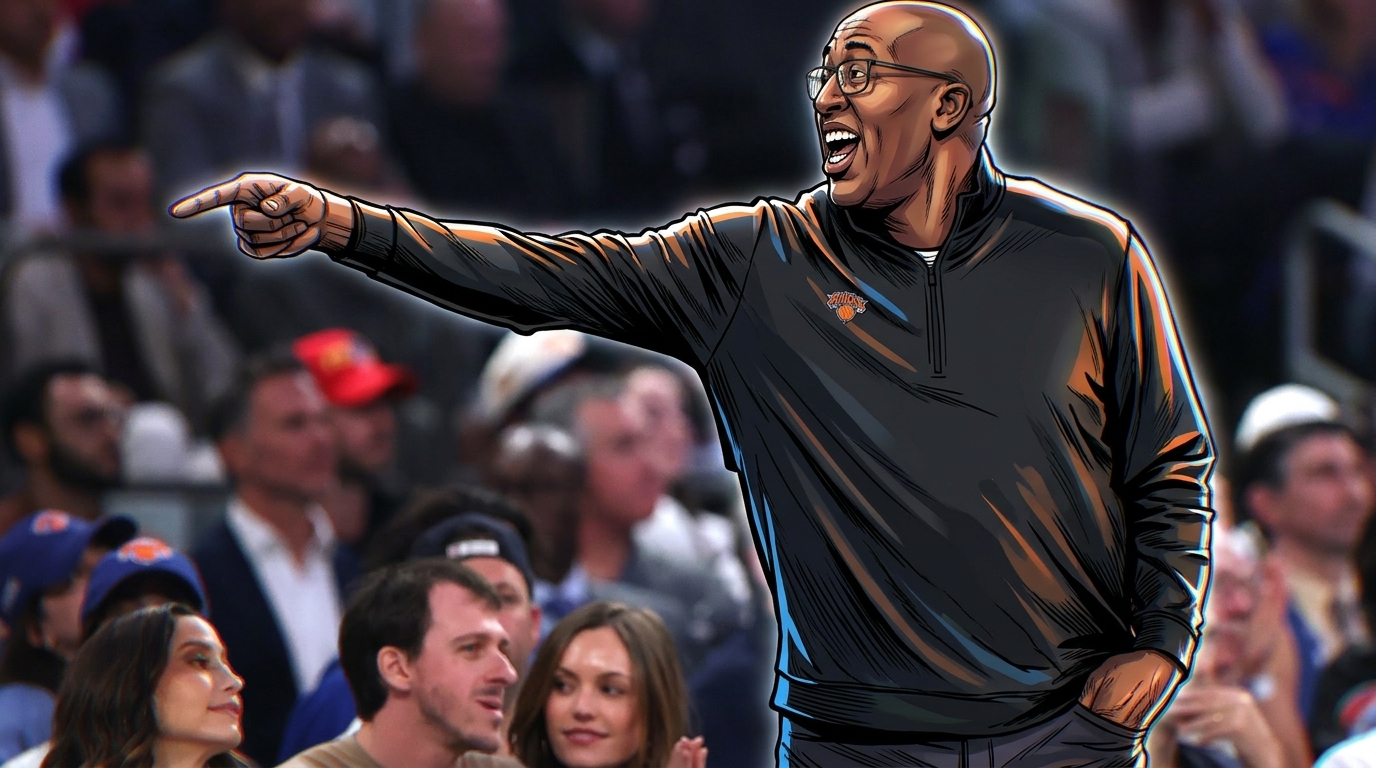

The Mike Brown Knicks coach story is, at its core, an indictment of NBA coaching searches: the Knicks asked five people, all five said no, and the sixth guy won the championship.
Think of it as a broken thermostat. The settings are wrong — the dial is stuck, the mechanism is busted — but the room somehow ends up at exactly 72 degrees anyway. The Knicks’ search process was a broken thermostat; the front office just got lucky that “keep turning the dial until something clicks” eventually landed them on the right temperature. The search was not a plan. It was a process of elimination that ran out of names at the correct moment.
Tom Thibodeau got fired in June 2025 after the Pacers knocked the Knicks out of the Eastern Conference Finals. What followed was a parade of refusals: Jason Kidd said no; Quin Snyder said no; Billy Donovan said no; Ime Udoka said no; Chris Finch said no. Each declination was reported with the gleeful specificity of a league that cannot keep a secret, which meant every subsequent candidate understood exactly how far down the list they were. Eventually the Knicks landed on Mike Brown, who had most recently been fired mid-season by the Sacramento Kings. Marc Stein reported that Brown was “at best the sixth choice for this job.”
https://x.com/sny_knicks/status/2066017113840493038
The sixth choice just won the NBA championship.
James Dolan did his best to frame this as intention. “The No. 1 quality was collaborative,” he told HoopsHype after the Knicks beat the Spurs 4-1 in the Finals. “Somebody who strategically could avail himself of all the minds around him and put it together, particularly at game time, between halves, that was a big thing. And we were looking for flexibility.”
What Dolan is describing, in the vocabulary of a corporate leadership retreat, is a coach who would not tell the front office to go to hell. The word “collaborative” is doing a hell of a lot of work in that sentence. The coaches who said no presumably did the math on “flexibility” and decided they had better offers; Brown, fresh off a mid-season firing with leverage over nobody, said yes. The thermostat got set.
And then the broken process accidentally produced the right outcome, because Brown was not the guy anyone wanted — he was the guy who had spent decades absorbing championship DNA without getting the credit. He went 11-0 as Steve Kerr’s emergency replacement in the 2017 playoffs; he won the first unanimous Coach of the Year award in 2023 with Sacramento; he had four championship rings as an assistant across the Spurs and Warriors rosters before he got sustained runs as a head coach. The thermostat was broken, but the mechanism that had been slowly calibrating Brown for thirty years was not.
The Knicks went 6-2 in playoff games where they trailed by ten or more points. Jalen Brunson dropped 45 points in the clincher and became the unanimous Finals MVP. The franchise ended a 53-year drought. Brown, afterward, said he had focused on what he could control, because “I had zero control over who else was interviewing, who was denied permission.” The equanimity of a man who had been told, repeatedly, that he was not the first choice — and turned out to be the only one who could do the job.
The Knicks didn’t deserve him. The process didn’t deserve to work. None of that mattered once the dial finally clicked into place.