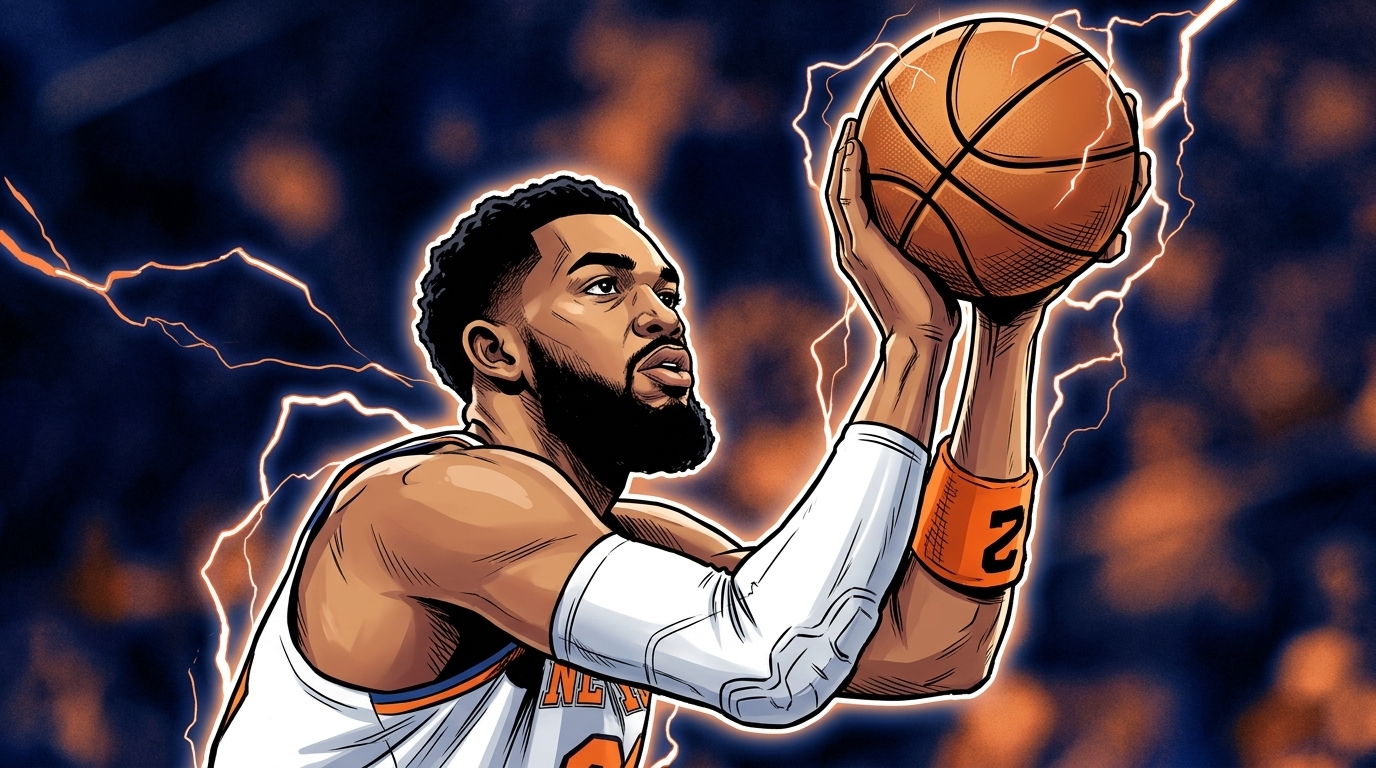
Karl-Anthony Towns played two points worth of basketball in Game 5 of the NBA Finals — foul trouble swallowed him alive for most of the night — and when the buzzer sounded and the Knicks were champions, the first thing out of his mouth was the one sentence that made everything else irrelevant.
“Y’all heard my story. Y’all know my story. I just wanna say, thank you, mama. I appreciate you getting me one.”
His mother, Jacqueline Cruz-Towns, died in April 2020 from COVID-19 complications. She was 58 years old. KAT lost several more family members to the same disease that same year. And I am furious, in the specific way that lives somewhere between grief and contempt, at every institution that touched Karl-Anthony Towns’s life in the years between that April and last night — because the system that killed his mother is the same one that spent four years calling him soft for crying about it.
The Timberwolves held his career for nine years and never built anything around him worth a damn. They drafted him first overall in 2015, watched him grow into one of the most decorated big men of his generation, and when they finally decided to trade their franchise cornerstone, they got back Julius Randle, Donte DiVincenzo, and a late first-round pick. Widely panned as a light return. The trade was finalized in late September 2024, and the only thing KAT posted before the news dropped was three dots — ”…” — on X. A single piece of punctuation.
That dot-dot-dot is doing an enormous amount of work. It’s nine years of dysfunction contained in punctuation. It’s a man watching his career get auctioned off by an organization that couldn’t figure out how to win around him, preparing to land in New York, where the discourse immediately pivoted to mocking the Knicks for overpaying for a choker.
The trade machine and the media’s grief-policing operation ran in parallel. When KAT cried publicly about his mother — and he was open about it, consistently, because he is that kind of person — the coverage treated visible grief as a character defect. He was emotional. He was a distraction. He was too sensitive for a winner’s mentality. You could track the word “soft” in the same sentences as his name for the better part of three years, and understand exactly what the NBA commentariat thinks a Black athlete is allowed to feel in public.
This is, at its core, a story about what happens when you refuse to let any of that break you. “You work your whole life for this moment,” he said after Game 5. “Throughout my career, I’ve seen myself fall down. People were telling me to stay down, and I got back up, even when I was in the mud.” He said he felt a certain presence during the Finals run — comforting, loving, his mother in the stands somehow. A Brooklyn funeral home held a 120-person watch party for Game 4 because his openness about grief had reached grieving people who needed something to hold onto. The man didn’t hide anything and it turned out that was exactly right.
He barely touched the court in the clinching game, which is its own kind of bitter joke that this narrative somehow absorbs completely. He put up 18 and 12 in Game 1, 21 and 13 in Game 2, made a crucial deflection in the Game 4 comeback that the 1999 rematch nobody saw coming turned into the series pivot point. He was there for all of it. Then Game 5 took him out of the equation and the Knicks won anyway, with Brunson’s own family story running alongside KAT’s lighting up 45 points for the night, and KAT got to stand on that floor with two points and a championship and say thank you to his dead mother.
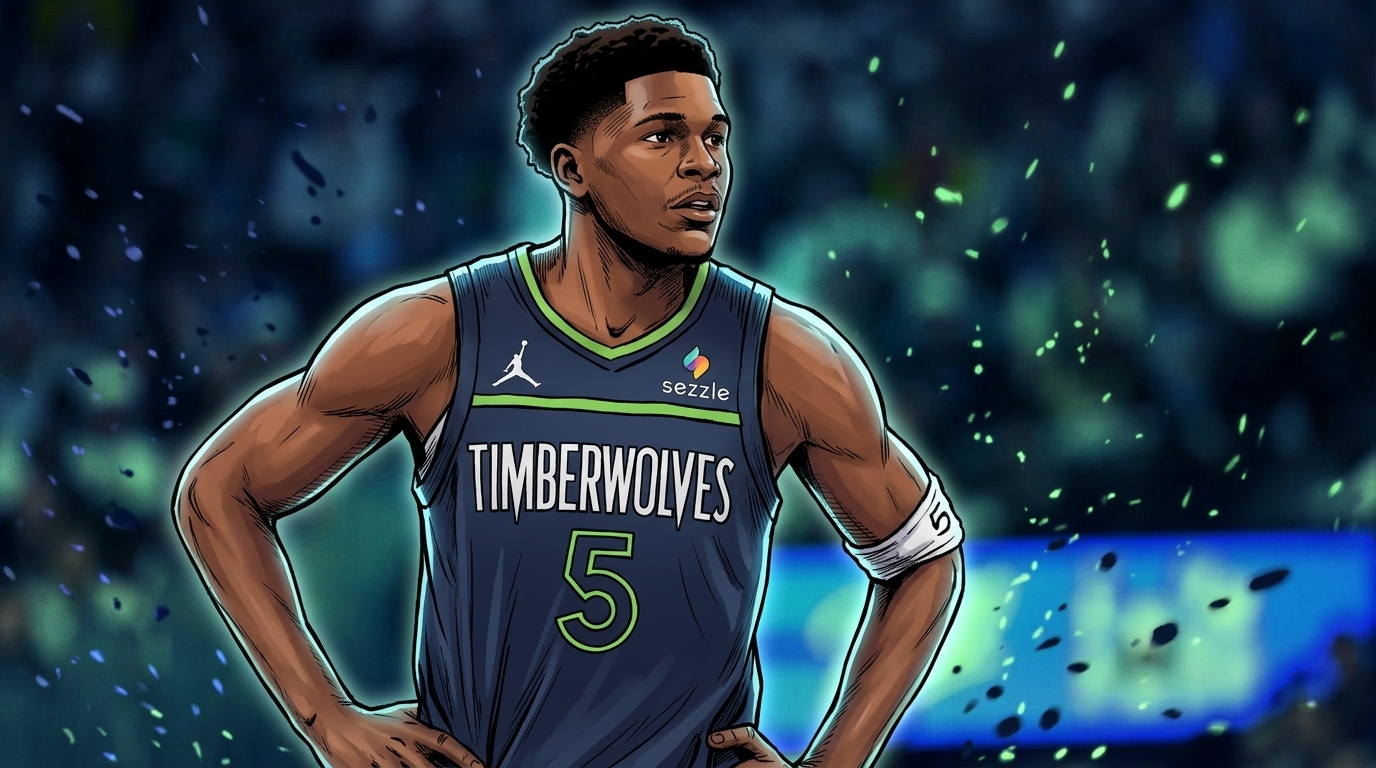
After the mama tribute, the next thing he did was shout out Anthony Edwards.
https://twitter.com/TheDunkCentral/status/2066022431014199492
“Shoutout to my brother Anthony Edwards. Those guys made me better. They made me a better leader, they made me a better player, and made me the man I am today. Forever grateful for them.” Minnesota dysfunction and all, he’s grateful for it. That’s the part that should really embarrass everyone who spent years cataloging his supposed failures, because the man they called too soft to win just held the Larry O’Brien trophy and his first instinct was gratitude. Not vindication. Not I told you so. Just: thank you, mama. Thank you, brother.
Jackie Cruz-Towns never got to see this. That’s the part that doesn’t resolve, the part that sits underneath all the confetti and the celebration and the “it is written” mantras. The system that killed her didn’t account for what her son would do with the grief she left him. He carried it visibly, wore it in public, refused to perform toughness over it, and then he won a championship anyway, in New York, in a building full of cameras, crying for her on national television. The institutions that called him soft got something exactly wrong about what softness is.
You just wanted one break, Karl. Looks like you got it.