
The Spurs lost the 2026 NBA Finals 4-1 to the Knicks. Their three best players are 22, 21, and 20 years old. Before anyone eulogizes this team or starts printing dynasty banners, I want to run a specific analytical exercise. I’m calling it The Age Floor Test. It says more about what’s coming than anything that happened in these five games.
The Age Floor Test
The framework works like this: take a young Finals team, find every comparable in NBA history (Finals appearance with a core player 22 or under), and track what happened next. Not to the team — to the players. The franchise context changes. Coaches change. But player development trajectories don’t lie.
The Spurs just became the second-youngest Finals team in NBA history, trailing only the 1976-77 Portland Trail Blazers by a hair (average age 25.06, weighted by playoff minutes). They’re also the first Finals team ever with their top two scorers both aged 22 or under. That’s not trivia. That’s an asset with a twenty-year shelf life.
The Age Floor Test produces one clean output: at what age did a player reach his first Finals, and did he have enough runway to come back and capitalize? Tim Duncan: 21 at his first title. Kobe Bryant: 21 at his first title. LeBron James: 26 at his first Finals loss (Dallas, 2011). He came back and won in 2012.
Wembanyama is 22 right now. He will be 26 in 2030.
The evidence here is unambiguous: the Spurs have more runway than any losing Finals team I can find in the last thirty years.
The Three Numbers You Need to Know
I ran this three different ways and kept landing on the same data cluster.
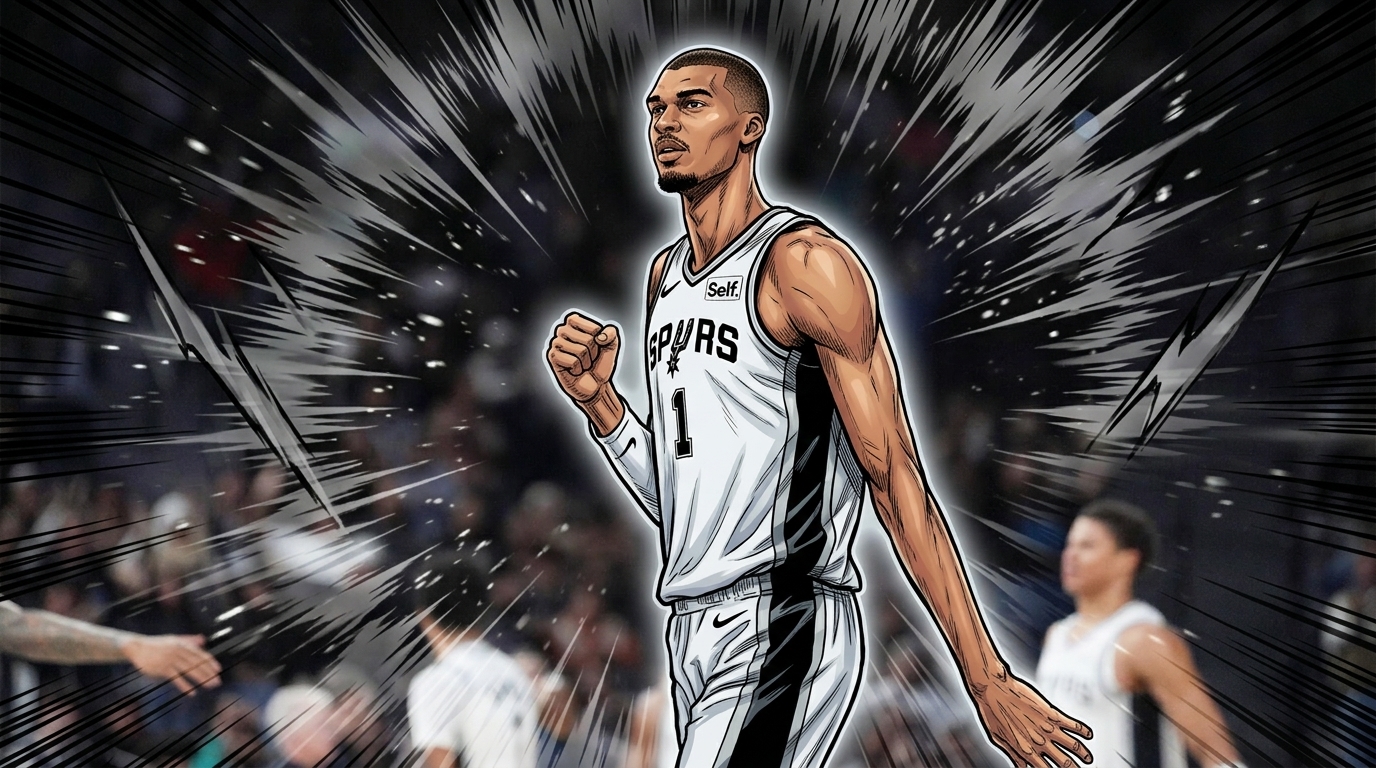
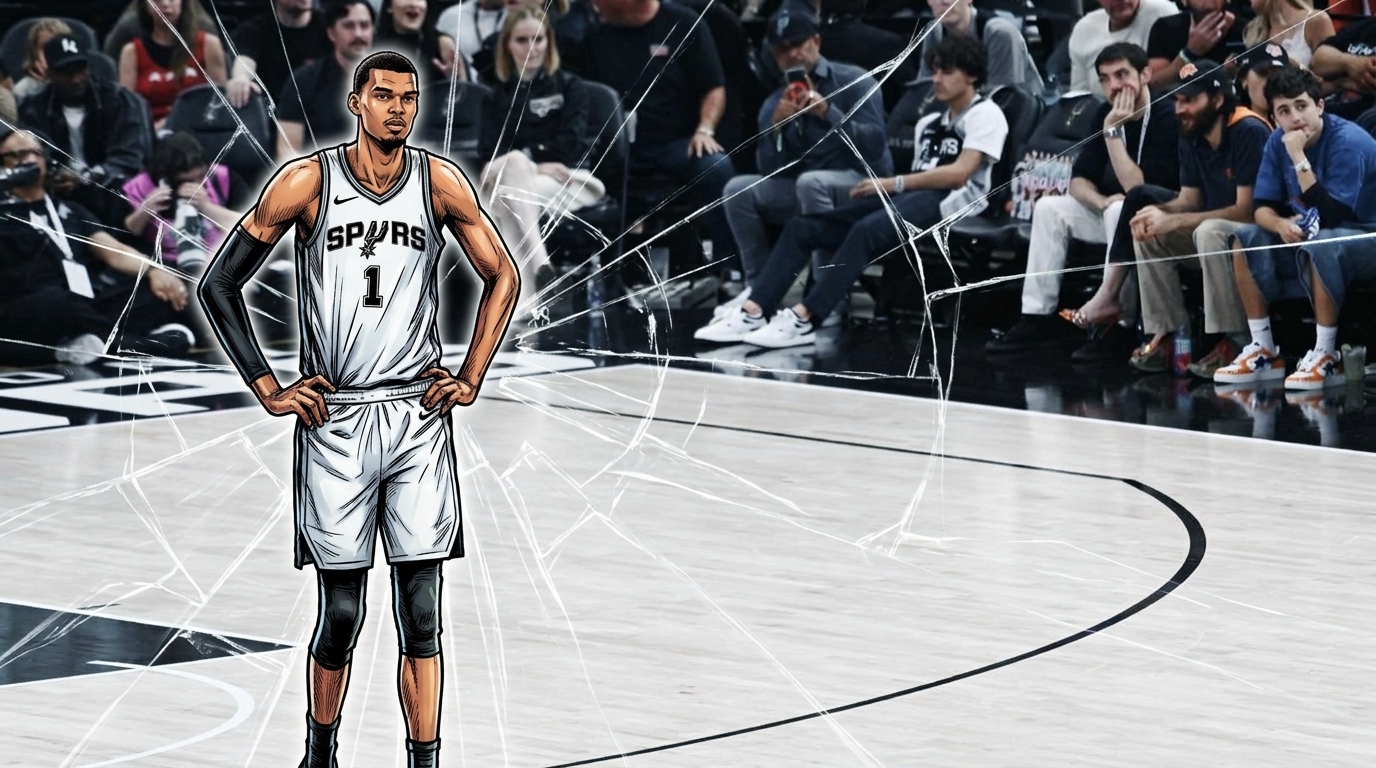
Victor Wembanyama averaged 26.0 points, 11.2 rebounds, and 3.6 blocks per game in the 2026 Finals. He was 22 years old. He won Defensive Player of the Year this season and was WCF MVP after posting 41 points and 24 rebounds in double-overtime Game 1 against OKC. That performance alone would anchor most players’ careers. For Wembanyama, it’s a third-year data point.
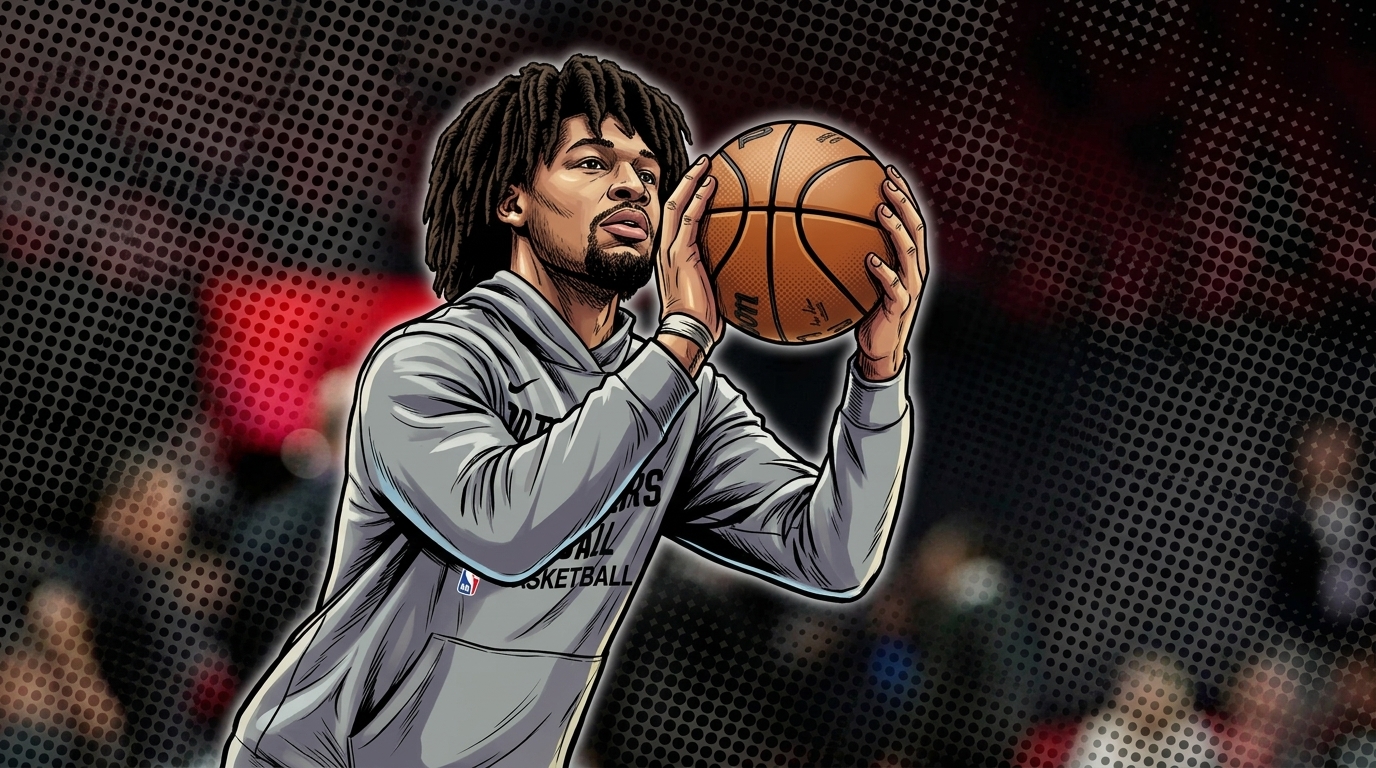
Stephon Castle, 21, was drafted 4th overall out of UConn in 2024. Regular-season numbers: 16.7 points, 7.4 assists, 5.3 rebounds on 47.1% from the field. Playoff numbers: 18.2 points, 6.2 assists, 5.0 rebounds on 45.9% from the field. His three-point percentage climbed from 33.2% in the regular season to 35.0% in the playoffs.
Dylan Harper, 20, was drafted 2nd overall from Rutgers in 2025. Rookie year: 11.8 points, 3.9 assists, 3.4 rebounds on 50.5% from the field.
Woof.
Harper shot 50.5% from the field. As a 20-year-old. In the NBA. In his first season. Castle’s three-point percentage improved under playoff pressure as a 21-year-old. Both of them, in their first or second seasons, made a deep playoff run and came out of it with a higher offensive floor than they entered with. That is not a small-sample artifact. That is a development profile.
The combined salary for Wembanyama, Castle, and Harper in 2025-26 was approximately $40 million, all on rookie contracts with years remaining. The Spurs drafted first overall in 2023, fourth overall in 2024, and second overall in 2025. Three consecutive lottery picks. Three consecutive hits. Growing up watching the Warriors dynasty, I learned that roster construction efficiency at the top of the draft is the variable that makes everything else possible. San Antonio has pulled it off in three straight years.
Is This the Jazz Problem or the Heat Problem?
Every time a young team loses a Finals, two ghosts show up in the conversation. I want to name them and bury one.
The Jazz Problem: John Stockton (33) and Karl Malone (34) lost the 1997 and 1998 Finals to Michael Jordan’s Bulls. They never won a title. People cite it as the cautionary tale for teams that keep running into a wall. The lesson: you can hold a great core together and still never close.
That comparison doesn’t fit here, and the reason matters. Stockton and Malone were old by the time they reached those Finals. The window was already closing when they arrived. That’s the Jazz Problem: getting to the right place at the wrong time in your career.
The Spurs’ core will be 26, 25, and 24 in 2028. Not a closing window. The beginning of a prime.
The Heat Problem (or rather, the Heat Solution): a young core reaches the Finals early, absorbs the loss, comes back better. The 2004 Detroit Pistons won a title with a group shaped by early playoff exits. LeBron’s 2011 loss to Dallas rewired how he approached winning; he came back in 2012 with a different operating system and won back-to-back. The WCF series against OKC showed what this Spurs core can do when operating at ceiling level. The 4-3 series, the double-overtime opener, the WCF MVP run: none of that signals a team with a fundamental talent ceiling.
The data says this is a Heat Problem, not a Jazz Problem. Youth is the variable that separates them.
Will the Spurs Win a Championship With This Core?
Yes. The evidence points to at least one title before 2031, with 2028 and 2029 as the highest-probability windows. Three players who all improve under pressure, all on rookie contracts, with De’Aaron Fox (28), Devin Vassell (25), and Keldon Johnson (26) providing depth. Every significant contributor is still pre-decline. The franchise has demonstrated front-office competence across three consecutive drafts. The comp that fits best is the Spurs themselves: they built a dynasty around Duncan at 21, gave him the right pieces over time, and let the timeline work.
Tim MacMahon said it on ESPN: “I think they’ve got this generation’s version of Duncan, Parker, and Ginobili.” The analogy holds more weight when you remember that Duncan’s first ring came at 21 and his fifth came at 31. The original Spurs dynasty ran for fifteen years. San Antonio appears to be running the same play.
What the Jordan and LeBron data tells us about Wemby’s loss gets at the psychological dimension: early Finals losses at this age tend to produce obsession rather than resignation. Wembanyama confirmed that himself after Game 5, and his postgame quote lands differently when you know the historical pattern.
https://x.com/AirlessJordan/status/2056534001150517275
During the Western Conference Finals, Jordan Howenstine noted that the Spurs were rolling out the youngest starting lineup in the all-time history of the NBA Conference Finals, averaging 22 years and 346 days. That number has since aged into something that looks less like a stat and more like a warning.
The Verdict: 2028 Is the Window, Not 2027
Wembanyama’s quote after Game 5 deserves to be read slowly:
“What I’m pissed about is that there’s probably 100 games before we can get back to the Finals. I’m going to have to hold that inside of me and slow down and wait.”
He is not processing grief. He is doing math. One hundred games. Two regular seasons. He knows the timeline and he’s already living inside it.
The Age Floor Test produces a clean answer: teams with Finals-level talent at age 22 and below, on rookie contracts, with competent front offices, win championships. The historical exceptions fail at least one of those three criteria. The Jazz were old. The Barkley-era Suns had the talent but not the front-office infrastructure to build around it. Anthony Davis’s early Pelicans lacked a credible second star at 22 and 23. San Antonio passes every check.
2027 is probably one year premature. The roster needs another piece, one more offseason of Castle’s shot climbing toward 38%, one more season of Harper as a primary option. The supporting cast is good, not yet championship-deep.
2028 is the window. Mark it.
The Spurs are 62-20 this season, 4-1 Finals losers, and the youngest team in that position in half a century. I ran The Age Floor Test expecting to find a cautionary tale. What I found instead was a franchise operating exactly on schedule.