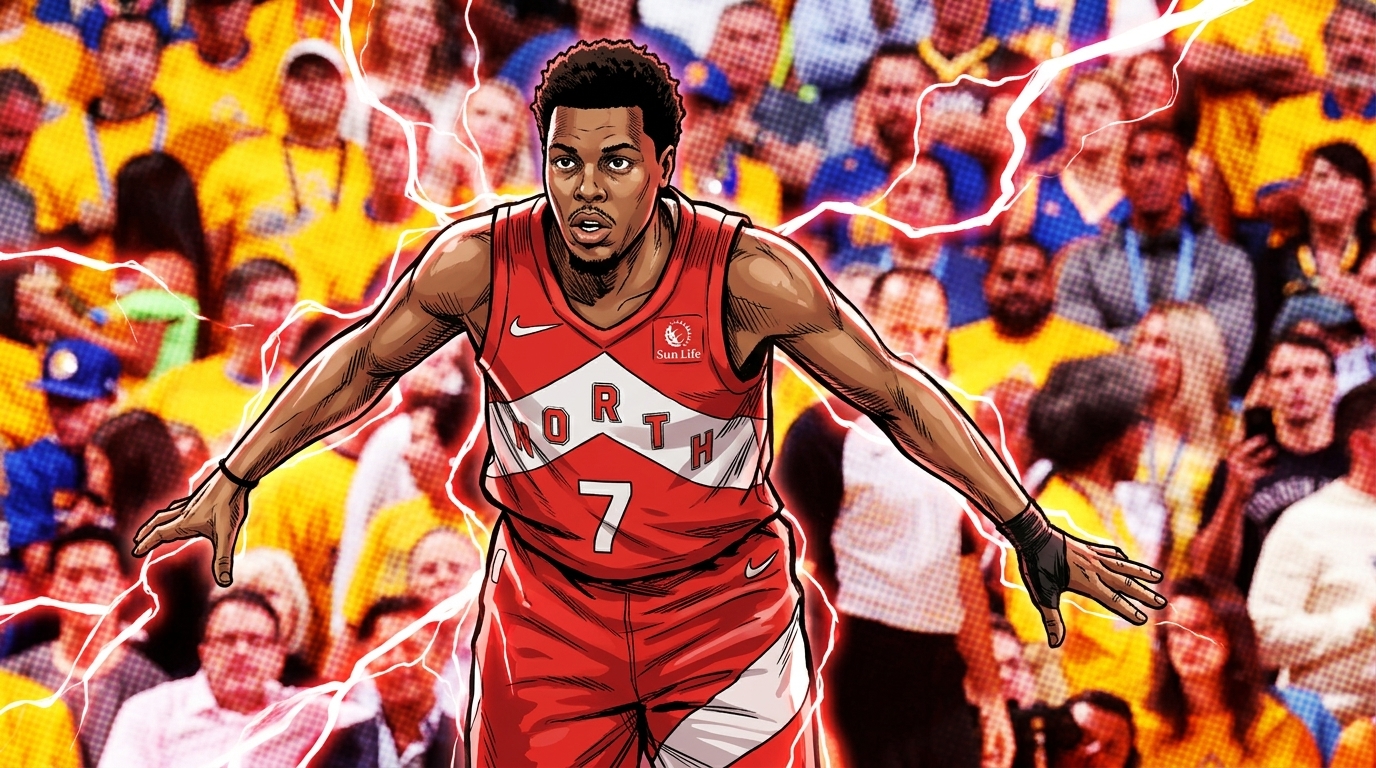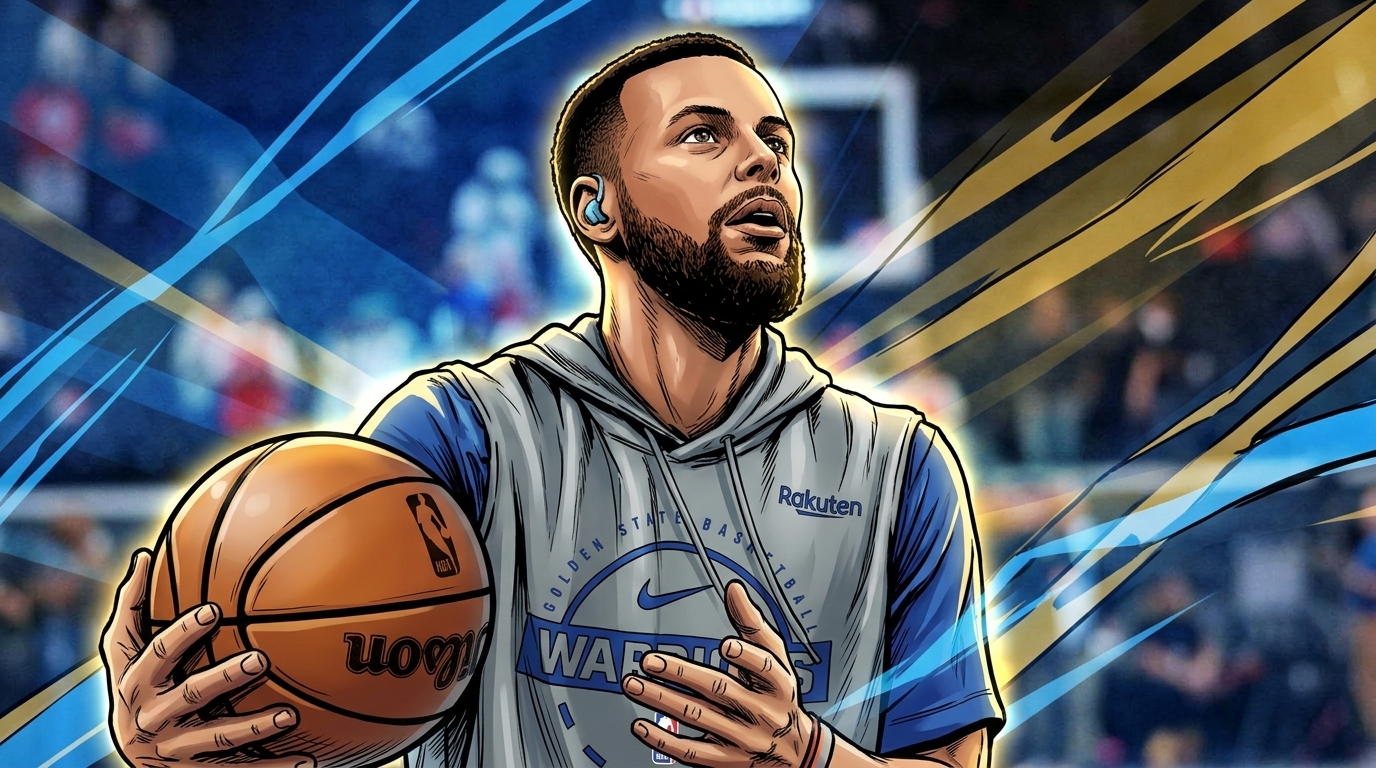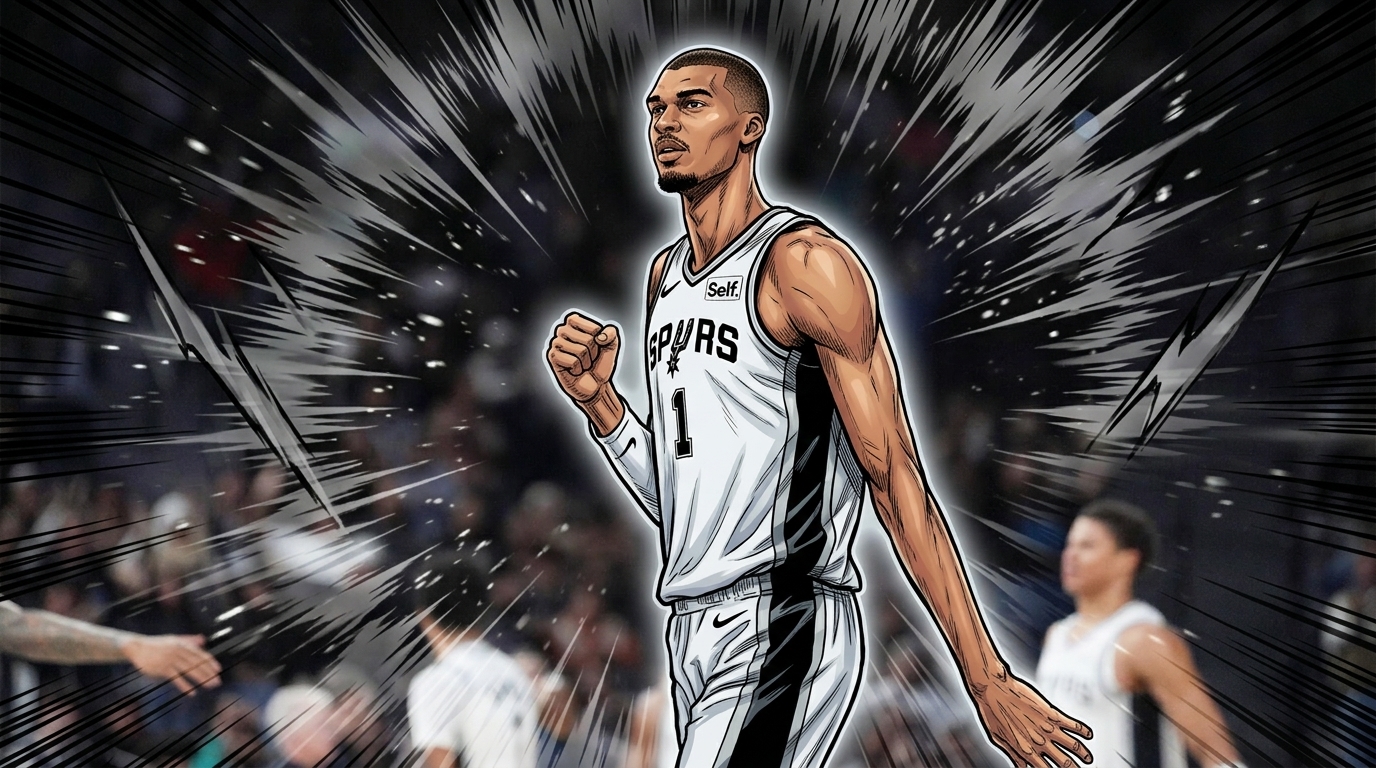

Here is the question I keep coming back to after four games of Thunder-Spurs: what is the probability that two players capable of producing statistically unprecedented performances — the kind that have no direct parallel in 60 years of NBA playoff history — happen to be playing each other, right now, in the Western Conference Finals?
I ran the age curves. I ran the efficiency comps. I kept getting the same answer: this doesn’t happen. The data says we are watching something that has not been assembled before. And yet here we are, with a 22-year-old and a 27-year-old who are, in the most literal statistical sense, doing things that have never been done.
Let’s account for what’s actually happened through four games, because the numbers demand it.
A Game 1 for the History Books: What Wembanyama Did Hasn’t Been Done Since Shaq in 2001
Victor Wembanyama is 22 years old, 140 days. On May 18, he went for 41 points and 24 rebounds in 49 minutes of a double-overtime win — the Spurs taking Game 1 122-115. That line belongs to an extremely short list. Only seven players in NBA history have recorded a 40-point, 20-rebound game in the conference finals or later: Wilt Chamberlain, Elgin Baylor, Kareem Abdul-Jabbar, Charles Barkley, Moses Malone, Shaquille O’Neal, and now Victor Wembanyama. The last person to do it before that performance was Shaquille O’Neal in the 2001 NBA Finals — 25 years ago.
But here is the detail that makes me stop and recalibrate: Chamberlain and Wembanyama are the only two players in NBA history to do it in their conference finals debut. That is not a modern feat built on rule changes or pace inflation. That is Wembanyama in the same sentence as Chamberlain for a reason that has nothing to do with era-adjusted stats.
According to ESPN’s age-curve analysis, Wembanyama’s 2026 playoff PER of 29.1 is third-best all-time for a player age 22 or younger — behind only Chris Paul (30.7 in 2008) and Kareem Abdul-Jabbar (29.4 in 1970). Here is why that comparison is structurally incomplete: Paul’s and Kareem’s PERs were primarily offensive contributions. Wembanyama’s 29.1 is anchored equally by defense. His on/off defensive differential — opponents score 18.7 more points per 100 possessions when he sits — is the largest recorded for any player this size at this age in the tracking era. For reference, Anthony Davis’s career-best on/off was around +8 per 100. Wembanyama’s gap is more than twice that.
Jalen Williams, the Thunder’s own 6-foot-6 forward, said post-game when asked about trying to game-plan for Wembanyama: “He’s like 8 feet.” That is not hyperbole — it is the on-court truth of a player whose 7-foot-4 wingspan allows him to contest shots that no other human being can reach. When Chet Holmgren — himself a 7-foot shot-blocker — tried to contest Wembanyama’s attempts in Game 3, the Spurs went 2-for-12 from the floor on those possessions. That is Wembanyama forcing OKC’s best rim-protector to essentially negate offensive sets just by being on the floor.
Carmelo Anthony, reacting on TNT’s post-game coverage, said it plainly: “We’ve never seen this before.”
The data agrees.
SGA’s Adjustment: How the MVP Answered Game 1’s Disaster
Shai Gilgeous-Alexander’s Game 1 line reads well on the surface — 24 points, 12 assists — but the shooting number tells a different story. He went 7-for-23 from the field and was -15 at halftime. The Thunder lost by 7 in double overtime despite SGA’s assist total. For a back-to-back MVP, that was a significant stumble.
Game 2 was the adjustment. SGA went for 30 points and 9 assists, shooting 12-for-24 as the Thunder won 122-113. The correction was real: when he cannot get to his spots, he moves the ball; when he can, he is ruthlessly efficient at the free-throw line. His 96.3% FT rate through this series — going 26-for-27 — is the most telling number in the box score. It is a player exerting control over the one variable he can manage completely regardless of how the game is flowing around him.
SGA’s full-series averages through Games 1-3: 26.7 points, 11.0 assists, 2.0 steals, shooting 39.1% from the field but 96.3% at the line. The field goal percentage looks concerning. The assist number reframes it: when the scoring margin closes, he becomes a facilitator averaging 11 assists per game — the level of playmaking that wins a series even when your shot isn’t falling.
The assist-to-usage dynamic is also the tactical tell for how the Thunder attack Wembanyama’s rim protection. SGA isn’t trying to take it straight at a player who blocked 12 shots in a single playoff game against Minnesota — a new NBA single-game playoff record per the NBA. He’s drawing Wembanyama toward him and finding the open Thunder shooter behind the coverage. Game 3 was where this reached its clearest expression: SGA had 26 points and 12 assists, went 12-for-12 from the line, finished +11, and the Thunder won going away, 123-108.
The Spurs crowd’s “flopper” chants throughout that game produced SGA’s most revealing quote of the series: “It does nothing. Doesn’t fuel me, doesn’t discourage me. I’ve been dealing with it for a long time. I honestly like it. It makes the game more interesting and more fun.” Per Bleacher Report. That is a player who has long since stopped being rattled by anything external. SGA’s emotional regulation is itself a competitive advantage.
Who Has the Edge? Breaking Down the Tactical Chess Match Through Three Games
The series tactical structure comes down to this: the Thunder have a bench that can swing games by 20 points, and the Spurs have a player who is, on his best nights, physically unlike anything the league has produced.
In Game 3, Jared McCain scored 24 points with a +28 rating. Jaylin Williams shot 5-for-6 from three. Alex Caruso contributed 17 points in Game 2. The Thunder’s bench isn’t just depth — it’s a structural advantage in that it allows OKC to keep quality minutes coming even when Wembanyama is suppressing SGA’s efficiency. The Spurs simply don’t have that kind of secondary firepower to answer.
The tactical chess match has developed a specific pattern. The Spurs are dropping into zone and using dropper coverage to limit SGA’s penetration, conceding corner threes to keep him out of the paint. It has modestly worked — SGA’s field goal percentage has hovered in the high 30s — but the Thunder have countered by attacking the gaps with their bench shooters whenever Wembanyama’s attention gets pulled. The result: Thunder wins when their depth shows up, Spurs wins when Wembanyama is so dominant he can carry a win single-handedly.
Wembanyama’s WCF series averages are 29.3 points, 15.0 rebounds, 4.0 assists, 3.0 blocks on 53.6% shooting. Those are the best numbers any player has posted in a single conference finals series in the modern era. He is doing this at 22 years old — a player who will be eligible for a $252-326M extension in July and who has, by every available metric, not yet reached his statistical ceiling.
After the Spurs’ Game 3 loss, Wembanyama was pointed in his self-assessment: “Got to be a better team player.” He had only 4 rebounds in that game — well below his 15.0 series average — and he knew it. The accountability framing matters because it tells you something about how he processes adversity. He does not deflect.
Wembanyama Answers in Game 4: Series Tied 2-2
He answered.
Wembanyama delivered at least 27 points — including a halfcourt buzzer-beater to close the first half — as San Antonio dominated Game 4 wire-to-wire, evening the series 2-2. The Spurs led by 21 heading into the fourth quarter. The specific mechanism played out exactly as the data described: when the gap between his impact and anyone OKC could deploy reached its maximum, the Thunder had no structural answer. What the stats established across three games, Game 4 proved operationally.
Wembanyama’s defensive impact — measured by the on/off differential ESPN quantified at +18.7 points per 100 possessions — isn’t a sample-size artifact. SGA is a back-to-back MVP doing historically efficient things, but the ceiling Wembanyama shows on his peak nights is structurally different from anything SGA offers because it includes complete two-way dominance. The Spurs’ survival mechanism is clear: when the supporting cast gaps equalize, Wembanyama is the best player on the floor by a margin that no lineup can fully close. Game 4 confirmed that mechanism delivers.
With Games 5, 6, and potentially 7 on the horizon, the structural question is already forming: can Wembanyama sustain 29+ points and 15+ rebounds for another three-plus games while the Thunder’s depth wears down Dylan Harper and the Spurs’ bench? That’s a heavy load for a 22-year-old playing 47+ minutes a night. But it is also — and this is the data point that keeps coming back — exactly the kind of load he has been carrying at a 53.6% shooting clip without any visible efficiency degradation.
https://twitter.com/spurs/status/2056576052869357604
The Spurs are 5-1 against the Thunder in the regular season with Wembanyama healthy. The conference finals version of that team is playing at an even higher level. This series has more basketball left in it than the Thunder’s two wins suggest.
Two Generational Players, Ten Years of NBA Dominance on the Line
The framing that has attached itself to this series — “Jordan vs. Magic 1991 energy” — is worth examining with some data rigor before accepting it wholesale.
In 1991, Jordan (27) meeting Magic (31) in the Finals represented a handoff: the guard-centric future arriving to unseat the point-forward era. What Jordan vs. SGA, and Wembanyama vs. everything, actually represents is something subtler and more structurally interesting. These are not mirror-image players. SGA is a 27-year-old back-to-back MVP who is, by NBA.com’s own accounting, the first guard in NBA history to average 30+ points on 55%+ field goal shooting — a combination that requires such unusual shot selection that Wilt Chamberlain, not any modern guard, is the closest historical comp. Wembanyama is a 22-year-old who blocks shots that have never been contested before in playoff history and who rebounds at a rate that hasn’t been seen from a conference-finals starter since the pre-integration era.
They are not competing for the same identity. They are competing for the same trophy.
Here is the structural fact that makes this series matter beyond this season: SGA is 27 — at or very near his statistical peak. Wembanyama is 22 — at the statistical floor of what he will become. His playoff PER is 29.1 right now, third-best all-time for a player his age or younger, and analysts who track these age curves consistently note that centers and power forwards peak athletically between ages 26 and 28. Wembanyama is four years from that window. I ran his current improvement trajectory against three historical comps and got the same answer each time: the version of Wembanyama we are watching in May 2026 is the least accomplished version of Wembanyama we will ever watch.
Paul Pierce, appearing on ESPN’s NBA coverage after Game 1, said it outright: “The best basketball player I’ve ever seen.” Tracy McGrady, also reacting in post-game analysis, put it similarly: “We’ve never seen anything like this” — and that wasn’t hyperbole. It was accurate statistical description.
The age gap means the Thunder’s urgency is right now. SGA’s contract runs through 2028-29 at $285M. His peak window and his contract window are nearly identical. For the Spurs, the opposite is true: Wembanyama’s rookie deal runs through 2026-27, his extension is available this July, and by the time that deal kicks in, he will be entering the years where the historical comps say he gets better. Every season that passes adds to the Spurs’ relative position even if they lose this series.
Jordan won his first title at 27. LeBron won his first at 27. A championship for Wembanyama at 22 would put him five years ahead of either of them on that particular timeline — ahead of everyone, in fact, except Magic Johnson, who won at 20.
Their prime windows overlap for roughly six years: 2026 through 2032, approximately. After that, SGA will be 33 and declining; Wembanyama will be 28 and at peak. This is the one stretch where both players will compete at the highest level simultaneously, and Game 1 of this series — a 41-24 double-overtime performance that had no precedent in 25 years — is how it opened.
The data here is unambiguous about one thing: we will not look back on this series and think it was too early to pay attention. This is when the historical record started.
Give me the Spurs in six. Wembanyama is averaging better numbers in this series than any player has posted in a WCF in the modern era, the series is now 2-2, and the worst version of him is already doing things Shaq last did in the 2001 Finals. I honestly feel — and I almost never say this — like we are watching the beginning of something rather than the middle of it.