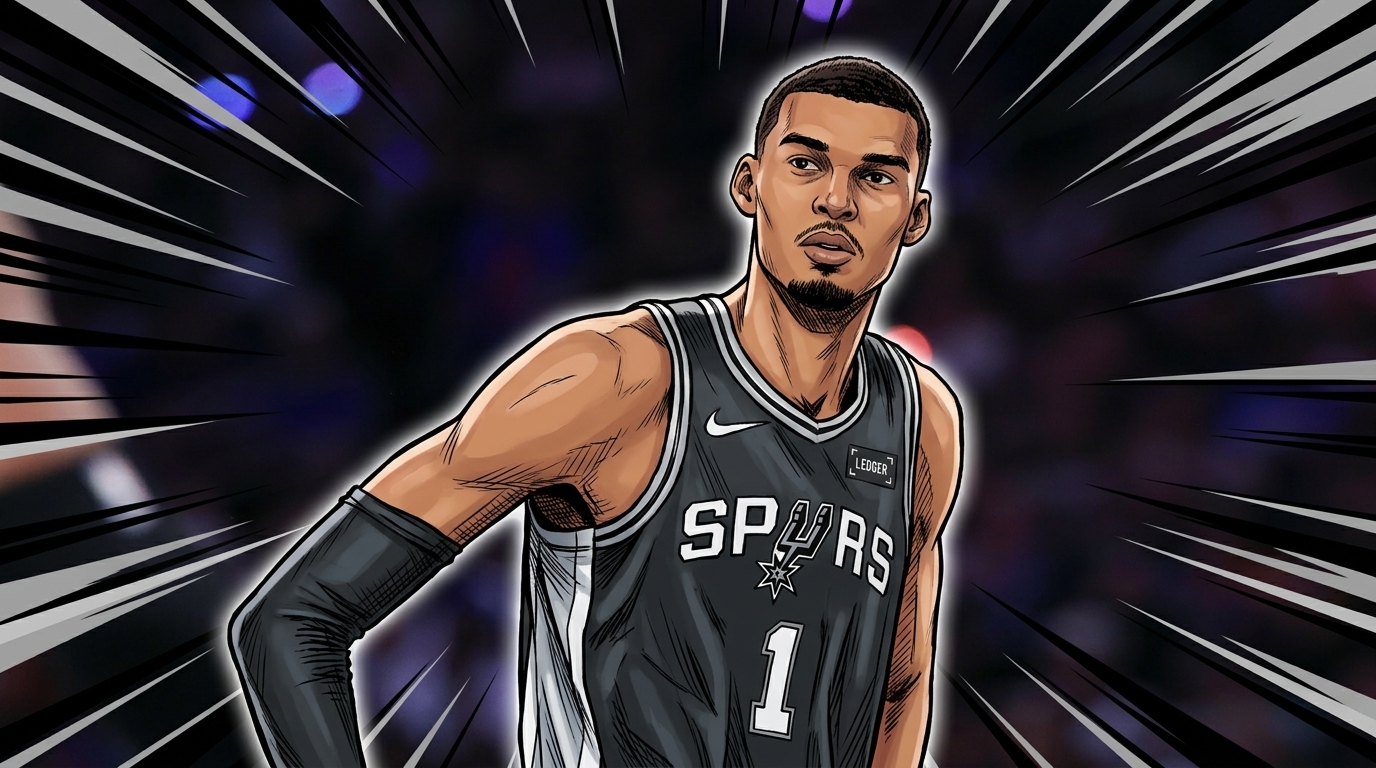

The NBA’s flagrant foul accumulation rule was drafted as a deterrent for a specific archetype: the serial cheap-shot artist, the guy who elbows people in the face because that’s just who he is. At no point in its drafting did anyone stop to ask what happens when you apply it to a 22-year-old with a 7’11” wingspan whose elbows are, geometrically speaking, just always going to be somewhere near someone’s head.
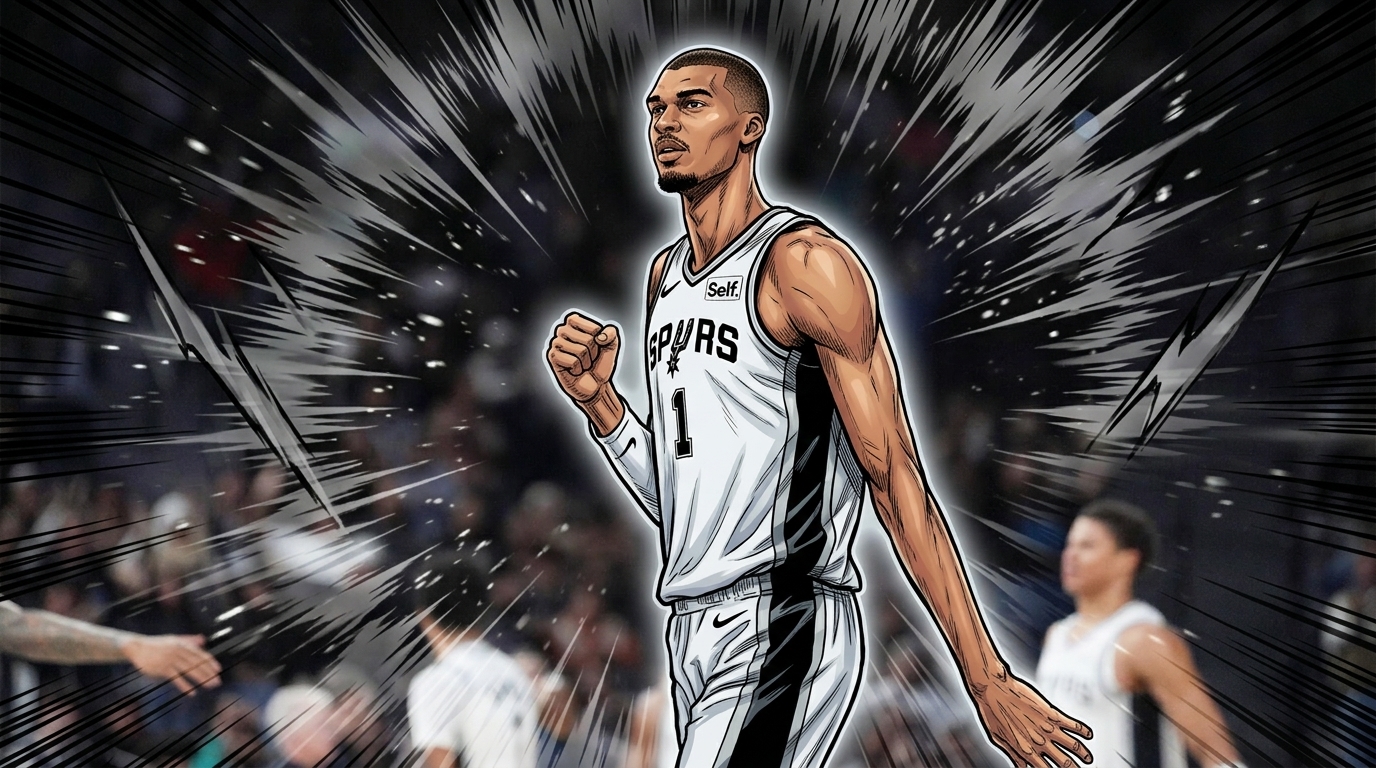
The Wembanyama suspension risk at the NBA Finals 2026 starts here: three flagrant foul points in these playoffs. Four means an automatic one-game suspension. Game 5 is Saturday in San Antonio. The Knicks lead 3-1. One more flagrant on Saturday and Wembanyama sits for Game 6 — assuming the Spurs earn one.
The rule was written for a player who no longer dominates the league’s disciplinary conversations. Think of it as a manual, published in a previous era, with a very specific type of offender in mind: the bully big, the intentional fouler, someone whose elbows find faces because he wants them to. The NBA wrote that manual carefully. It made sense. Then Victor Wembanyama showed up to the library, and nobody thought to check whether the index had an entry for him.
His first flagrant this postseason was a Flagrant 2 (two points, immediate ejection) when his elbow caught Naz Reid’s jaw in Game 4 of the Western Conference Semifinals against the Timberwolves. His second was a Flagrant 1 against Karl-Anthony Towns’ chin, with nine minutes left in the third quarter of Finals Game 4, awarded with the clinical neutrality of a league office that processes these things like invoices. One point. One point away from automatic suspension.
https://x.com/sny_knicks/status/2064897301449998812
Then there is the Game 3 incident — the shove of Jalen Brunson that the NBA reviewed and declined to upgrade from common foul to flagrant. The league admitted officials missed the call on the floor but chose not to fix it after the fact. If they had, Wembanyama would already be at four points. He would already be suspended. The championship might already be over. The league passed; the crisis was deferred by 72 hours.
Here is where the manual breaks down. The flagrant foul rule was written for intent; it functions on accumulation. It cannot distinguish between Draymond Green, who was suspended for Game 5 of the 2016 Finals because Draymond Green was Draymond Green — a man who fouled people in the groin with what appeared to be genuine enthusiasm — and a player whose most dangerous fouls emerge from the same physical motion as his most spectacular blocks. The rule treats those things identically; the rulebook has no category for “accident of dimensions.”
Wembanyama’s wingspan is 7 feet and 11 inches. His defensive value is inseparable from the threat of that wingspan; you cannot have him without accepting the aeronautical consequences of what happens when he goes vertical. The rule doesn’t care. The rule counts points.
When asked about the suspension risk, Wembanyama said: “Of course I’m going to be more careful, but it’s not going to change much.”
That is either the most zen response possible or the most damning confirmation that the problem is structural, not behavioral. He cannot alter the geometry of his arms in 48 minutes. He can be more careful; he cannot be shorter.
The Wembanyama suspension risk in the NBA Finals 2026 is real, and it is operating exactly as designed. That is the problem. The rule works. It just wasn’t designed for this player, this series, or this particular category of foul — the kind that looks flagrant on replay, feels incidental to anyone watching live, and accumulates anyway because the rulebook only knows how to count.
Draymond cost the Warriors the 2016 championship. The Warriors had a 3-1 lead then, too. That one landed because Draymond was who he was. This one would land because Wembanyama is 7 feet tall, and the NBA’s disciplinary manual never thought to write a footnote for that.