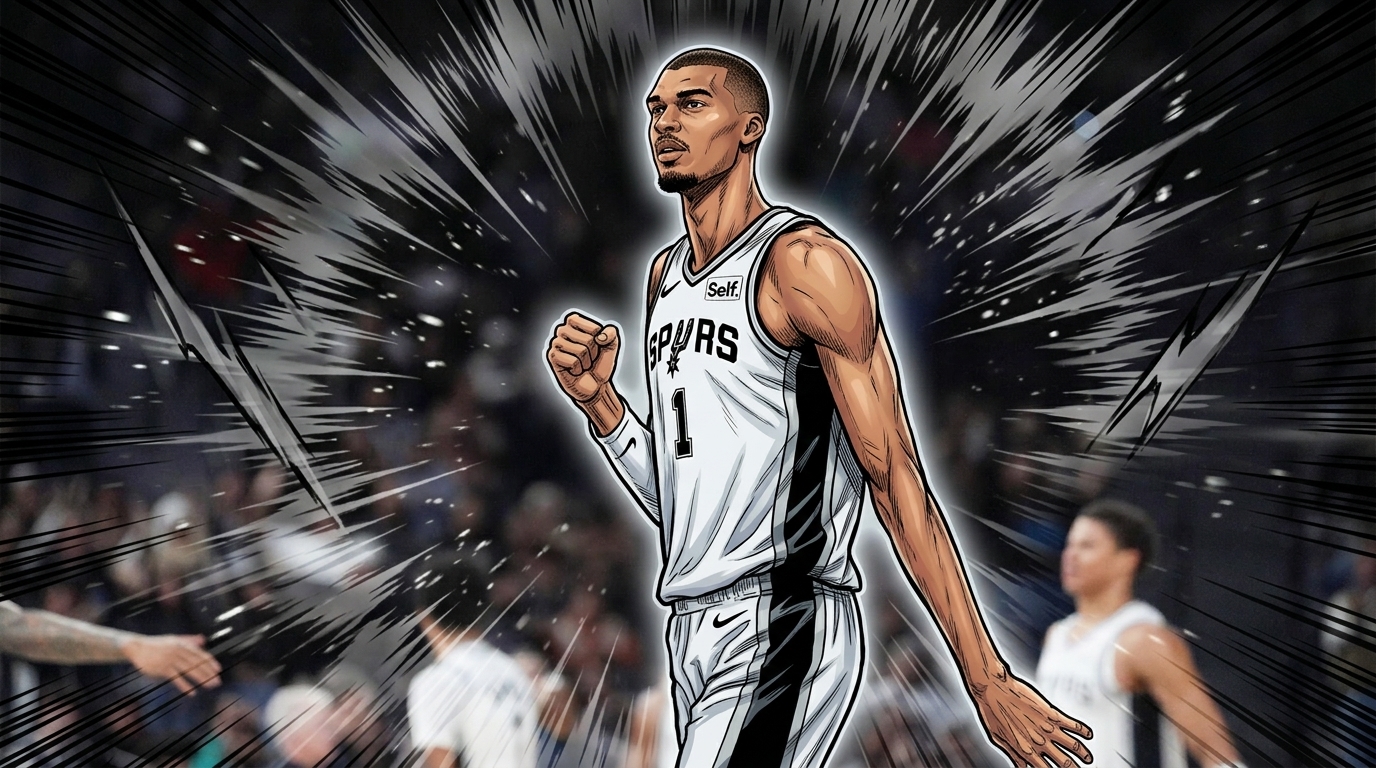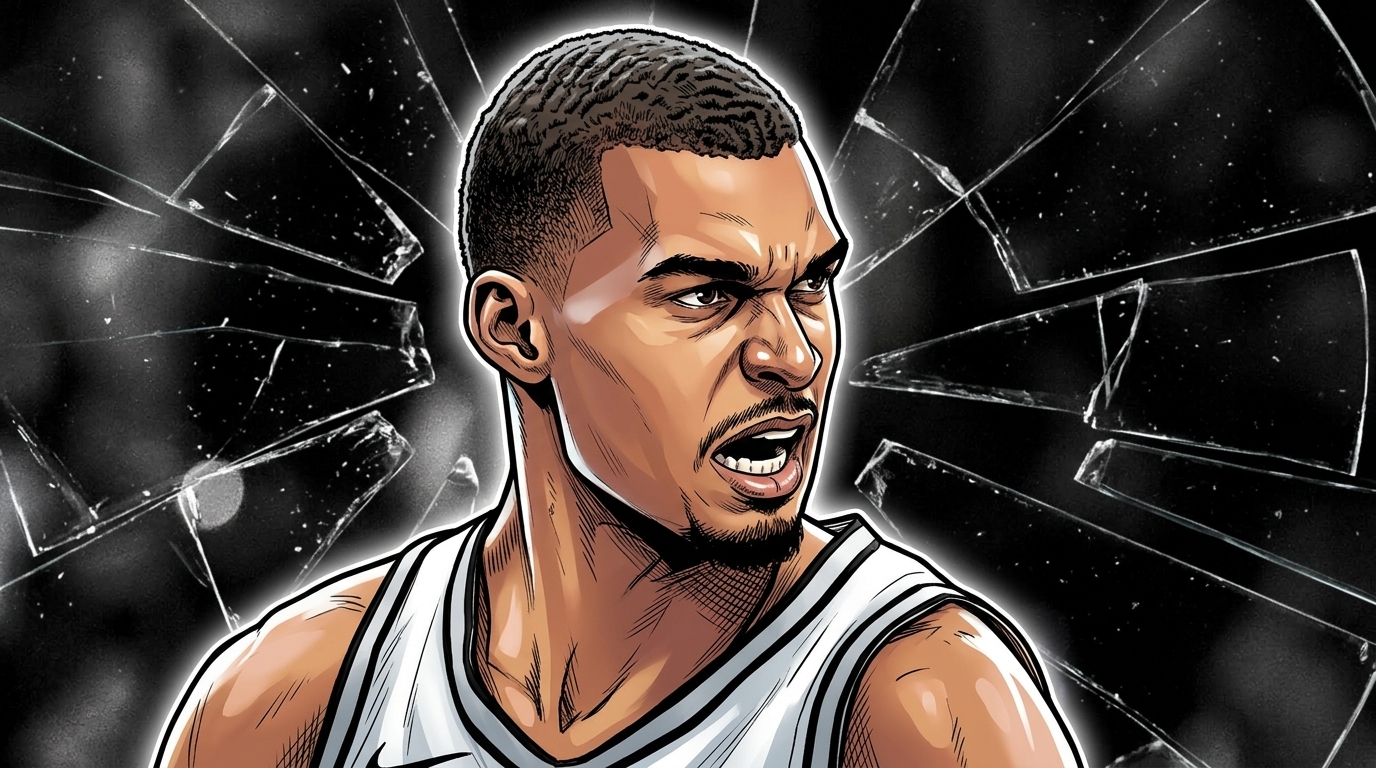

Victor Wembanyama got exactly what players spend their whole careers chasing — a clean 20-foot look at the buzzer, no defender in his face, the ball in his hands, the series on the line — and he missed it. Knicks 105, Spurs 104. New York leads 2-0. His buzzer shot cleared the rim by a foot and landed somewhere in the history books, right next to every other defining miss this sport has ever produced.
That’s not a burial. That’s a promotion.
The 30 seconds that preceded the buzzer were already a small disaster. With 29 points and 9 rebounds and having driven a 14-0 Spurs run to tie the game at 104, Wembanyama rushed a pull-up he didn’t need. Grabbed the rebound on a Brunson miss. Threw an outlet pass directly into Stephon Castle’s back for a live turnover. Fouled Brunson with 9.5 seconds left. Watched Brunson hit one of two free throws for the lead. And then, after all of that, received the ball one more time with a genuine chance to win the game.
He shot it too strong.
I watched this sequence three times, and the thing that stuck with me wasn’t the miss. It was what came before it. The way Wembanyama kept reaching for the game, kept insisting he could fix it, even as each correction created a new problem. Being great at 22, in your first Finals, means absorbing a weight that no amount of practice can replicate.
Post-game, he was honest about it in a way that most players never are: “Of course, I liked the shot. I feel like in this moment, you need to shoot to score. In moments like this, it’s like results matter more than process.” On the turnover, he didn’t hedge: “I threw that one away. I messed up. We needed to win that game. This game was ours.”
That clarity matters. The instinct to take the shot matters more.
The full picture: Wembanyama shot 57.9% from the field in Game 2. He was dominant for 47 minutes and 30 seconds. His 2026 playoff averages (23.6 points, 49.5% from the field, 62.2% true shooting) are elite by any historical measure. What happened in the final 30 seconds was not a referendum on who Wembanyama is. It was a data point. A painful, series-altering data point, but a data point.
The clutch vulnerability is real. His long midrange rate in these playoffs sits at 25%, worst among high-volume attempts in eight years. Wembanyama’s Game 2 buzzer shot from 20 feet was not his best percentage play, and in the cold light of the box score, you can build a case that he should have driven, should have drawn contact, should have done almost anything other than the pull-up. Championship basketball invites all of those arguments. They are all correct and they are all beside the point.
Kobe Bryant threw up four air balls against Utah in 1997, three of them in overtime of an elimination game, at age 18. LeBron shot 35.6% in the 2007 Finals at age 22 and got swept. Kevin Durant wilted in the 2011 conference finals when Dallas sent OKC home early. The players who become the reference points took the shot, absorbed the failure, and came back with the memory and the nerve intact.
Wembanyama already answered the question about the nerve. He took the shot. He’s already answered the question about the memory: “Am I going to regret it? Yes, of course. Am I going to use that to fuel me and to fuel us next game? Absolutely.”
The San Antonio Spurs came back from 14 down in the fourth quarter at home. That doesn’t happen without Wembanyama. Stephon Castle was a problem all night, and the Knicks still needed a Jalen Brunson free throw with nine seconds left to survive. Game 1 of the NBA Finals showed a team capable of hanging with the best. Game 2 showed a player capable of nearly willing a win out of thin air before the air ran out.
https://twitter.com/LegionHoops/status/2063100207290892594
Wembanyama’s Finals moment isn’t the made shot. It never was. Missing it, owning it, and walking into Madison Square Garden on Monday — that’s the whole story.
He missed. Now we find out what that means.