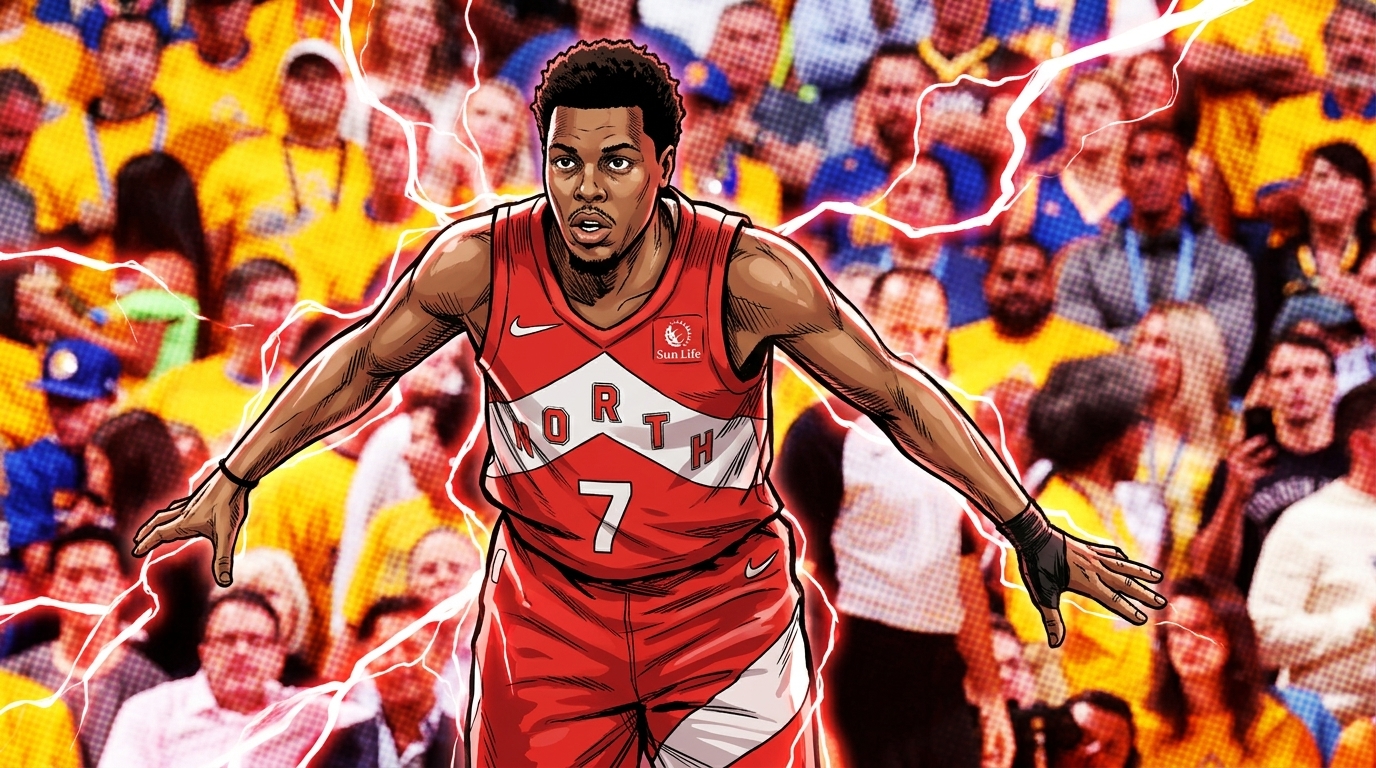

Washington’s front office just answered the central analytical question about Trae Young with $212 million worth of conviction: his catastrophic net ratings are the roster’s fault, not his.
The evidence doesn’t resolve cleanly. That ambiguity is the whole problem with this deal.
https://twitter.com/ShamsCharania/status/2069129593672310898
What Does the Data Actually Say About Trae Young?
Start with what’s genuinely exceptional. Young’s 9.8 career assists per game puts him third all-time among players who’ve played enough to qualify: behind only Magic Johnson (11.2) and John Stockton (10.5), and ahead of Oscar Robertson and Chris Paul. That’s not recency inflation or an easy schedule. That’s a historic playmaking signature. In his last full season with Atlanta, he posted a career-high 10.8 assists per game alongside 25.7 points on 43 percent shooting from the field. His usage rate has never dropped to the point where his efficiency looks artificially clean. He earned those numbers under genuine defensive attention.
The counterargument is embedded in a different column: net rating. On-court net rating measures how much better or worse a team performs with a given player on the floor versus off it. Young’s has been negative throughout his career. Not slightly negative: catastrophically negative. And not just in the Washington micro-sample — injury-shortened and statistically thin. In Atlanta. Even during the 2021 Eastern Conference Finals run, the underlying net ratings told a complicated story. A true franchise cornerstone (a top-10 player) eventually bends team performance toward positive territory. Young has never done that.
I’ve looked at this three different ways and the ambiguity holds. The assist numbers suggest generational playmaking. The net rating suggests something wrong at a deeper level: a player who creates but doesn’t protect margins.
The question is whether that’s Trae Young’s fault or Atlanta’s fault. Washington is betting hard on the latter.
The Two Contracts Every Wizards Fan Should Know
Two recent extensions illuminate what happens when a franchise makes this particular bet: building around an elite scorer on a bad team and hoping the roster follows.
The Lillard precedent. Damian Lillard’s extension in Portland looked rational at signing. He was a legitimate All-NBA scorer, the team had some young pieces, and the logic was identical to Washington’s: this player is too good to have posted these results without systemic drag. Portland then spent the next two years failing to build adequate connectors: the secondary playmakers and switchable wings that make a primary creator’s playmaking actually translate to winning. Jerami Grant was a good player. It wasn’t enough. Lillard demanded a trade to Milwaukee. The bet failed not because Lillard was wrong but because Portland couldn’t execute the second step.
The Mitchell model. Donovan Mitchell just signed his own monster extension with the Cavaliers. The difference is that Cleveland had already done the work before asking Mitchell to commit. Evan Mobley had developed into a legitimate defensive anchor, Darius Garland was a secondary creator, Jarrett Allen provided rim protection and spacing gravity. Mitchell didn’t carry Cleveland to the Conference Finals; he led a genuine four-piece core that already functioned. That’s what made his extension a rational bet, not a desperate one.
The architecture matters more than the player. Washington knows this. The question is whether they’re building like Cleveland or like Portland.
Why Washington’s Roster Construction Is the Real Gamble
The honest read on Washington’s core: they have an extraordinary amount of talent in theory, and almost nothing that addresses Young’s specific needs in practice.
AJ Dybantsa is the No. 1 overall pick, an 18-year-old forward with genuine upside. Alex Sarr is a developing center. Bilal Coulibaly, Kyshawn George, Tre Johnson, Will Riley, and Bub Carrington give them a real collection of young wings and guards. And Anthony Davis is still on his deal. On paper, there’s something to work with here, and the case for Washington’s ceiling after the Dybantsa pick is worth reading.
The problem is structural. Trae Young is a point guard who thrives when surrounded by shooters who can attack closeouts and defenders who don’t need him to bail them out on the other end. The Wizards’ young core is heavy on forwards and athletic wings who are still developing their shooting. The secondary playmaking is thin. The 3-and-D connectors are absent: the role players who take the mechanical work off a primary creator’s plate. With Young at $53 million per year and Davis on his own substantial deal, the cap flexibility to add those pieces is now constrained.
Washington’s history is also worth weighing here. The Beal-and-Wall era followed the same template: sign the star, promise to build around him, never execute the construction project. The franchise hasn’t made the playoffs since 2021. They haven’t posted a winning record since 2017-18. Pattern recognition isn’t proof, but it should inform prior probabilities.
The Condition Under Which This Works — and the One Sign It Won’t
There is a version of this that works. If Dybantsa develops into a legitimate second option within two years (a 20-plus point scorer who doesn’t need the ball in his hands to function) and if Washington adds at least two quality connectors in the next two offseasons, then Young’s playmaking has a vehicle. A young team that can shoot and play connected defense would suddenly look entirely different around a point guard averaging 10 assists per game.
The architectural read on whether Dybantsa changes the math is the crux of whether this extension is defensible or delusional. If Dybantsa emerges as the kind of connector-scorer who eases the load rather than competing with Young’s ball-handling, Washington’s math improves substantially.
The sign it won’t work is already visible: the roster construction decisions Washington has made up to this point suggest they haven’t internalized the lesson from the Lillard failure. They’ve prioritized positional versatility and youth over the specific skills Young needs around him. The pieces they’re missing: knockdown shooters who can defend, guards who can handle without needing primary creation duties. None of them were acquired before the extension was signed.
The player option in Year 4 is telling. Young can walk at 31 if Washington fails to build an adequate roster. That’s not a franchise’s confidence signal — that’s an exit clause dressed up in extension language.
Young’s net rating being negative his entire career doesn’t mean he’s not worth $212 million. It means the roster has to be constructed precisely around his specific profile, and the evidence that Washington knows how to do that is thin. The data here is unambiguous about one thing: the basketball argument for this contract works only if the front office executes steps that this front office has historically struggled to take.
I’m watching for three players to be added in the next two years, minimum: connectors, not creators. If those signings happen, this looks like foresight. If they don’t, Washington just re-ran the Beal contract, and we already know how that ends.