
There’s a genre of reality television I used to watch in college where the show’s central crisis is always the same: a woman has to move because of a man’s job. The man is framed as brave, visionary, seizing opportunity. The woman packs boxes. The show does not find this interesting enough to examine. I kept watching anyway because somewhere in the mundanity of the packing and the tearful goodbyes with neighbors, you could see the actual story the producers refused to tell.
I thought about that this week when LeBron James informed the Lakers, via his agent Rich Paul, that he was done with Los Angeles. Rich Paul told ESPN the decision came down to pursuing “complete happiness,” adding that LeBron was “100% sure that’s not a place he would want to return.” My podcast app dinged with the first of eleven hot takes about the Warriors’ championship window. Nobody said a word about Savannah James.
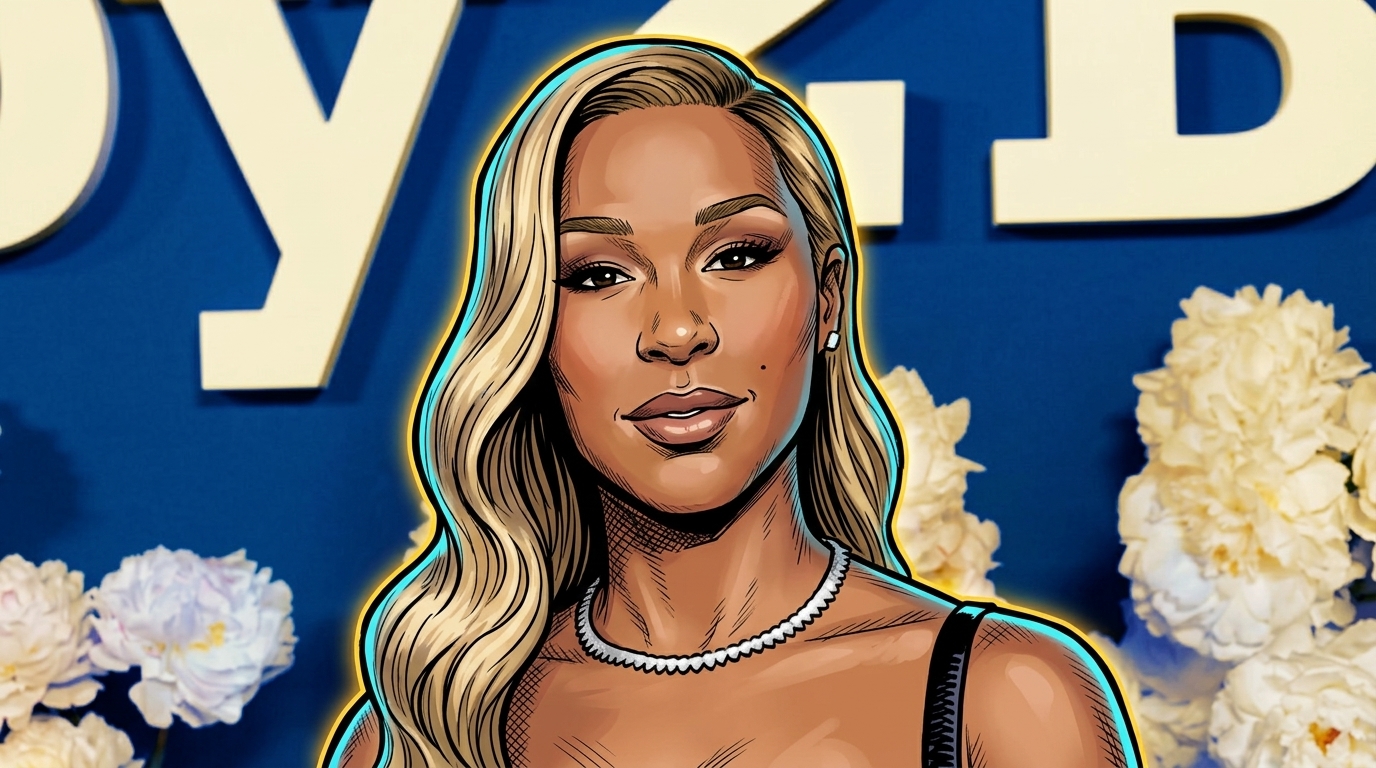
Savannah James has lived in Los Angeles for eight years. She owns a Brentwood compound. She built Reframe Beauty there, a luxury skincare line with a brightening serum at $115 and a sculpting moisturizer at $95, launched in May 2025 after years of quiet development. Her creative agency, Crown+Conquer, is there. Her membership community, Let It Break, runs from there. Her podcast, Everybody’s Crazy, records live in LA. This year she co-founded Signed, a holding company backed by Jay-Z’s MarcyPen Capital, with her business partner April McDaniel. She described it as “the result of years of intuition, trust, and ambition.” These are not hobbies. These are companies with employees and rent and operational gravity that do not pack lightly.
https://www.instagram.com/p/DYidSlImpCn/
The sports press, which ran about forty paragraphs on Golden State’s cap flexibility, ran approximately zero on what it means to uproot a business ecosystem built over a decade. The coverage template — and I’ve written inside enough of these templates to recognize one — treats wives as geography. She follows. That’s the frame. The wife-as-accessory template is so deeply embedded in the sports media playbook that it barely registers as a choice anymore. It’s just the default gravity.
Giannis Antetokounmpo was traded to the Miami Heat on June 25th (Tyler Herro, Kel’el Ware, Jaime Jaquez Jr., picks, the whole package) after thirteen seasons in Milwaukee. The trade analysis was thorough. The roster implications were thorough. Mariah Riddlesprigger, now Mariah Antetokounmpo, had spent thirteen years growing roots in that city. She and Giannis married in Greece in 2024. They have three children. Thirteen years of community. Schools. Friends. A social world that existed because someone chose to build it, not because it came automatically with an NBA contract.
After the trade, Mariah posted to Instagram. Not about the trade. Not about Miami. Just this: “Being their mama is who I’m meant to be 💛,” alongside family photos. Milwaukee fans filled her comments with the kind of emotional goodbyes you write when you know someone is leaving and you didn’t get to say it properly.
https://www.instagram.com/p/DaLq9CCCHME/
I’m not arguing that Savannah James or Mariah Riddlesprigger are victims. That would be the wrong read, and it would also be condescending in its own way. Savannah James has resources, lawyers, and a creative infrastructure that can survive relocation better than most businesses. She is not powerless. Mariah Antetokounmpo married into one of the most financially comfortable situations in professional sports. The material cushion is real.
But the counterargument that “they’ll be fine” is doing something sneaky: it conflates financial resilience with having been consulted. You can be wealthy and still have your life rearranged by a press release. You can have resources and still watch eight years of built community get subordinated to a cap calculation. The question isn’t whether Savannah James will survive whatever comes next. Of course she will. The question is why sports media processes this the same way it processes a roster transaction: a logistical footnote to the main event.
Shams Charania’s tweet confirming LeBron’s departure flooded every timeline within minutes. The discourse about how WAG coverage actually works will get a fraction of that attention, as it always does. The algorithm reflects what people choose to care about, and people (readers, editors, producers) have consistently chosen to care about the husbands.
https://x.com/ShamsCharania/status/2071988062259736871
What I keep returning to is the specific nature of the erasure. It isn’t hostile. It isn’t even a decision, exactly. It’s more like a habit so old it reads as neutral. Sports coverage is organized around the athlete. The athlete’s world (family, community, the other human beings whose lives are entangled with his) appears in the frame only when it serves the athlete’s story. Savannah James exists, in most coverage, as a detail of LeBron’s biography. Mariah Antetokounmpo exists as a warm human-interest texture on Giannis’s legacy piece.
They both built something. The edifice just moved without asking whether the foundation was attached.
I don’t know what Savannah James thinks about leaving Los Angeles. I don’t know what Mariah Antetokounmpo is feeling in her first week as a Miami resident. Neither does anyone who covered this story, because no one thought to ask, or thought the answer would matter. That’s the part that sits with me: not that the coverage got something wrong, but that it didn’t consider the question at all.